Portuguese
  Spanish


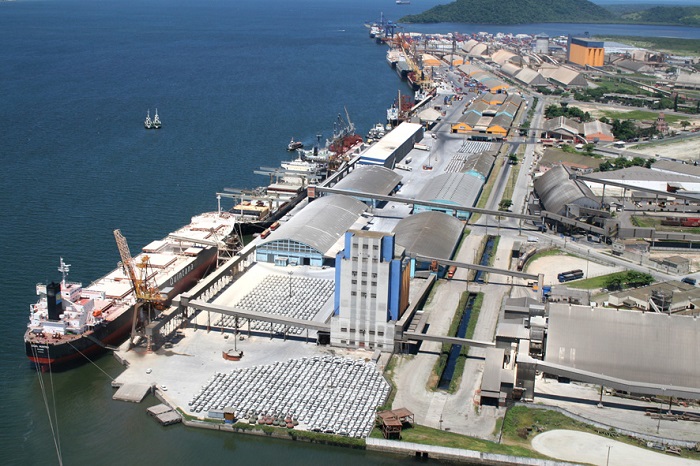

It Was Announced This Second Week of April That the Time Ships Spend Docked at the Ports of Paraná Has Decreased Considerably Compared to Previous Years.
The time was reduced by 46% of the average time ships wait to dock at the Ports of Paraná. This time in 2018 was 185 hours, and in 2019 it was reduced to 99 hours.
“This efficiency reduces costs for exporters and importers and increases the advantages of doing business through the ports of Paranaguá and Antonina,” says Luiz Fernando Garcia, president of the Ports of Paraná, referring to the operation’s duration, which has also decreased. In 2018, the average was 58 hours at the dock, 9% more than this year (52 hours).
-
Over 2,000 Tons of Discarded Fishing Nets Since 2020 Repurposed into Durable Caps, Fins, and Parts

-
Seals and Sea Lions Lose Habitat and Food as Climate Change Advances, Impacting Ice, Prey, and Coastal Communities

-
Brazilian Innovator Uses 3D-Printed Device to Cool Two Rooms with One Air Conditioner
-
China Uses 432 Robots to Move a 7,500-Ton Historic Building in Shanghai, Preserving Architecture While Creating Space for Underground Center


Regarding movement, the report highlights a 10% increase in general cargo exports, and in terms of tons of general cargo exported, nearly 1.7 million have already been exported, while in the first quarter of 208 just over 1.5 million were exported. This data was released on Tuesday (04/09) by the port administration’s statistics department.
Considering that in the quarters of 2018 and 2019, the main products handled in the segment were bagged sugar, fertilizers, boilers, cellulose, containers, steel rails, and vehicles.
“In Paranaguá, general cargo is handled at different berths of the public dock. Typically, the operations of these cargoes involve services with specialized onboard equipment, such as cranes, local road transportation, and forklifts,” reported Luiz Teixeira da Silva Júnior.
According to information, the Port of Paranaguá recorded a 14% increase in the number of containers received for import.
A total of 23,516 vehicles were handled via Paranaguá, which was also higher than in 2018. There were 96,039 TEUs handled in the three months of 2019, compared to 84,530 in 2018. The most imported cargoes were fertilizers and plastic.