Portuguese
  Spanish


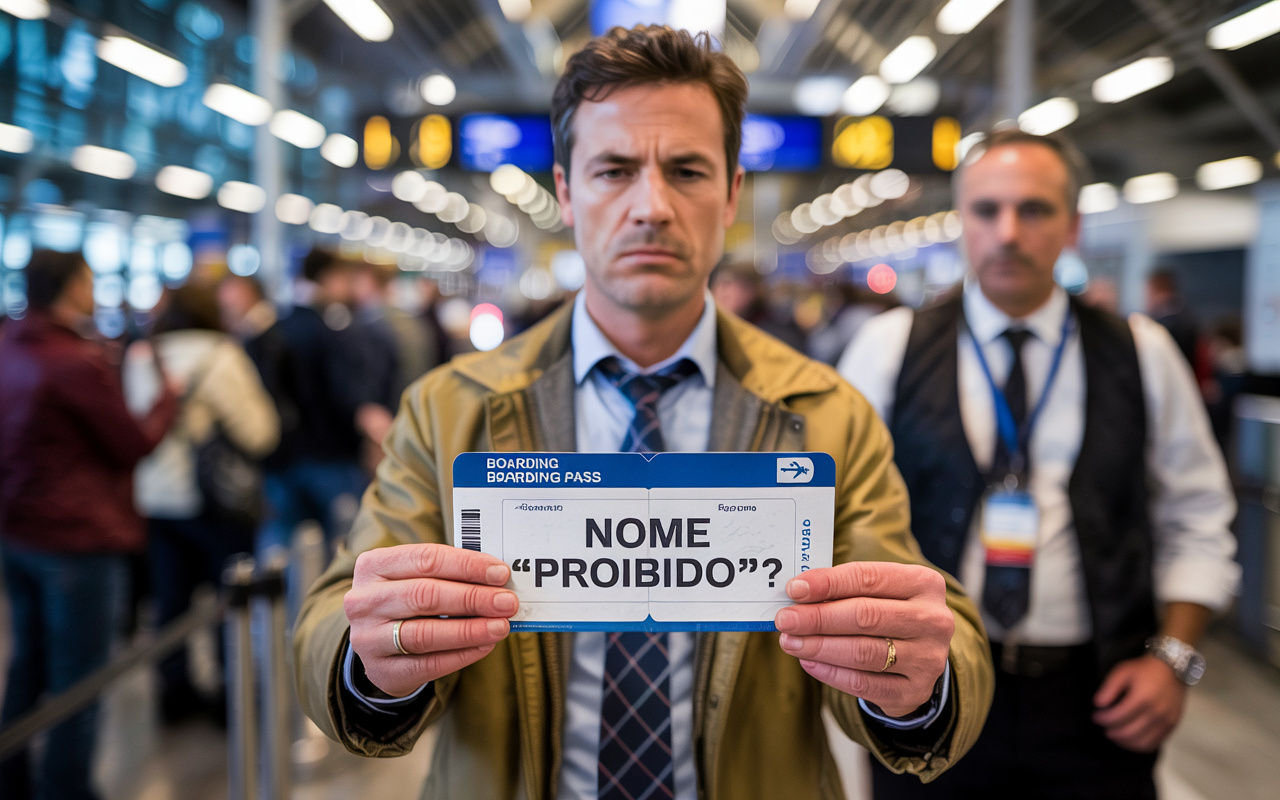

A Passenger Was Prevented From Flying For 10 Years Due To A Database Error That Caused Name Blocking In The System. Understand How A Failure In The Air Safety System Caused Restriction On Flights And Put His Name On An Unjust Air Blacklist
A curious episode involving a Brazilian passenger gained national attention after a database error resulted in a flight restriction that lasted nearly a decade. The case, which exposes flaws in the air safety system, raises awareness about how digital inconsistencies can lead to unjustified bans and harm ordinary people. Today, you will learn all the details of the case, the causes of the failure, and what to do to avoid similar situations.
Passenger Prevented From Flying After “Coincidence” Of Names
The case occurred in Florianópolis, Santa Catarina, when a passenger discovered, still at the airport, that he was prohibited from boarding commercial flights. The official justification was that his name was included on an air blacklist — a restriction list used by airlines and authorities to bar individuals deemed risky.
The surprising detail is that the passenger had never committed any serious infraction. The restriction was applied solely because his name was identical to that of a fugitive from justice. Even after presenting documents proving his identity, he was prevented from flying and only managed to resolve the situation legally after a long ten years.
-
Brazil Welcomes Spanish Wamos Air and Nigerian Air Peace, Potentially Transforming International Routes and Increasing Competition

-
Offshore air transport soars in Brazil, surpasses 2.5 million passengers, and reveals how oil has transformed Rio’s airports into key pieces of national logistics.

-
Latin America becomes the “global champion” of aviation taxes, tickets may become more expensive in Brazil, and IATA’s warning exposes risk for flights, tourism, and passengers.
-
Brazil has lost 85 air routes since 2019 and is still flying less than before the pandemic, leaving passengers with fewer destinations, fewer frequencies, and a more limited air network.


How A Failure In The Air Safety System Affects Innocent Passengers
This case is not isolated. Experts in digital security and consumer rights point out that flaws in automated systems can create serious problems. The database error, as occurred in this episode, happens mainly when monitoring systems cross information inaccurately.
According to the Brazilian Institute for Consumer Defense (Idec), flaws in automated systems have already been identified in banks and financial services, particularly involving digital security and credit granting, with direct impacts on consumers’ rights.
However, when the impact affects a passenger prevented from flying, the consequences are even more serious, as they directly affect the right to go and come, protected by the Brazilian Constitution.
The Psychological Impact Of Blockage At Airports
Experts also warn about the emotional impact faced by victims. In addition to the public humiliation of being barred at an airport, there is financial loss, as airfare, accommodations, and professional commitments are affected. In some cases, the name blocking takes months or years to be resolved, with losses that go beyond financial.
What Is The Air Blacklist And How Does It Work?
The air blacklist is a resource used in airports and airlines to ensure the safety of commercial flights. This system is fed with information from judicial agencies, federal police, and other public security institutions.
Although they aim to reinforce air security, passenger control systems can present flaws due to inconsistencies and low quality of the registered data.
According to the International Civil Aviation Organization (ICAO), the accuracy and proper integration of information between countries are essential factors to avoid identification errors.
Flaws In Identity Verification Processes
In Brazil, the automatic cross-checking of passenger data is conducted through the Brazilian Airspace Control System (SISCEAB), managed by DECEA, which integrates information from flight plans and airports. This data can be compared with judicial records when there are active search warrants, arrests, or judicial restrictions.
The problem arises when there is no proper verification of documents such as CPF or RG, and only the full name is considered. The consequence? Innocent passengers end up on the restriction list for flights.
Similar Cases Have Yielded Compensations In Brazil
The Brazilian judiciary has already dealt with similar cases. One example is the 2024 decision that ordered the airline Latam to pay R$ 15,000 to a transgender passenger who suffered a restriction due to a divergence between the name on the ticket and the official document.
Consumer rights experts claim that unjustified restrictions on passengers due to flaws in automated systems are violations of consumer rights. In such cases, passengers have the right to contest the restriction and seek compensation for moral damages, as provided for in the Consumer Protection Code (CDC).
How To Protect Yourself From Database Errors?
Although errors in the air safety system are not common, there are some ways for passengers to reduce the chances of being harmed:
- Update Your Documents Regularly: Keeping documents updated prevents inconsistencies in registrations.
- Check Backgrounds Before International Travel: In countries like the United States and the European Union, namesakes may face greater difficulties.
- Seek Quick Legal Assistance: If you are prevented from flying, seek immediate help and request a record of the incident.
- Monitor Your Personal Data: Services like Registrato, from the Central Bank, help track registrations with banks and public agencies.
Experts also recommend that airlines provide more efficient customer service channels to review cases in real time, avoiding embarrassment and losses.
Technologies Can Reduce Failures, But There Are Still Risks
Technological solutions have been developed to mitigate problems such as blocked names in the system. The implementation of facial recognition in large airports, such as Congonhas (SP) and Santos Dumont (RJ), has helped in the correct identification of passengers.
The use of facial recognition technology in Brazilian airports, as part of the “Embarque + Seguro” program, has contributed to speeding up the boarding process and increasing security, with an average reduction in boarding time per passenger of up to 27%, according to data from Infraero. However, challenges still exist, especially on domestic flights operated by smaller airlines or in regional airports.
A Situation That Warns Of The Risk Of Systemic Failures And Restrictions On Flights
The case of the passenger prevented from flying for 10 years due to a database error exposes a serious problem: the excessive reliance on automated systems without efficient human verification. The failure in the air safety system caused harm, humiliation, and compromised basic rights.
Despite technological advances, the risk of unjust air blacklisting remains a reality. The guidance is for passengers to remain vigilant regarding their personal data, and for companies and public agencies to improve their verification mechanisms.
This episode reinforces the urgent need for transparency in name blocking processes and greater accountability in managing sensitive data. After all, no one should be penalized for a simple system error.