






 Portuguese
  Spanish


Know The Q’ero Nation, The Community In The Peruvian Andes That Cultivates Ancestral Potatoes And Rears Llamas To Face Extreme Cold, Preserving The Inca Cultural Legacy.
In the unrelenting heights of the Andes Mountains, over 4,000 meters above sea level, there is a community in the Peruvian Andes that lives almost completely isolated from the modern world. The Q’ero Nation, located in the Paucartambo Province in Cusco, is often described as the “last lineage of the Incas“, as pointed out by the flycuscoperu.com portal. This Quechua people survives in a high-altitude and extremely cold environment, without paved roads or basic infrastructure, maintaining a way of life focused on subsistence and spirituality.
This isolation was not an accident but a deliberate strategy for cultural survival adopted 500 years ago to escape Spanish invasion, as detailed by flycuscoperu.com. In the face of conquest, the Q’ero ancestors retreated to the most remote mountains, using the inhospitable geography as a shield. Today, their resilience is based on three pillars: the cultivation of hundreds of varieties of ancestral potatoes, the raising of llamas and alpacas that provide everything (from wool to fuel), and a deep worldview based on reciprocity with nature.
A territory of extremes: The Geography Of Isolation
The Q’ero territory is a vertical mosaic of microclimates, extending from valleys at 1,800 meters to the barren highlands above 4,500 meters, as described by Wikipedia. Its main communities are in the alpine tundra, a treeless environment where the climate varies drastically between the intense daytime sun and nighttime temperatures that plunge below zero. Living at these altitudes imposes extreme physiological stress (hypoxia) due to the low oxygen, but the Q’ero not only survive, they thrive, the result of millennia of evolutionary adaptation.
-
Brazilian YouTube Sensation “Galinha Pintadinha” Celebrates 20 Years, Amassing 65 Million Subscribers and $700 Million in Annual Revenue

-
Fifth-grader’s Project Turns Used Cooking Oil into Over 160,000 Gallons of Biodiesel, Cuts CO₂ Emissions, and Inspires Law in Rhode Island

-
Started with $80 at 17 Selling Used Clothes, Now Aiming for $18 Million with a Network of 50 Thrift Stores

-
17-Year-Old Develops Free App to Prevent Hot Car Deaths, Launches National Campaign in the U.S.



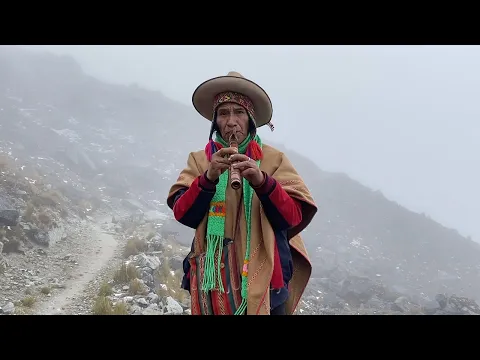
Access to this community in the Peruvian Andes is one of the greatest challenges. Located east of Cusco, the Q’ero villages are connected by treacherous trails that, until recently, could only be traversed on foot or horseback, a journey that could take days, according to the kahtoola.com portal. In a remarkable effort of self-determination, the community itself financially contributed to the municipality to clear part of the road, allowing vehicle access for the first time. Nonetheless, the geographical isolation, though arduous, has been the main guardian of their culture.
The Triad Of Survival: Potatoes, Llamas, And Reciprocity

The base of the Q’ero diet and food security is the potato, from which they cultivate hundreds of ancestral varieties, a deep knowledge documented by Wikipedia about their agricultural practices. They practice a “ecological floors” system, an ancient Andean wisdom that consists of growing different types of food at different altitudes to mitigate risks from frosts or droughts. In the highlands, they produce chuño, a freeze-dried potato (frozen and dehydrated in the sun) inherited from the Incas, which can be stored for years, ensuring survival in times of scarcity.
Equally vital are their herds of llamas and alpacas. These animals are key to life in the highlands: alpaca wool, soft and insulating, provides the raw material for textiles that offer vital protection against the biting cold. Llamas serve as indispensable pack animals in the rugged terrain. As detailed by Wikipedia about their herding practices, even dry dung is the primary fuel for cooking, in an environment where there are no trees for firewood. Meat is consumed occasionally, and hides are used for mattresses, in a zero waste and full utilization system.
The Soul Of The Andes: The Q’ero Cosmovision
The Q’ero spirituality is not a religion in the Western sense, but a lived cosmovision that permeates all actions. The central concept is Ayni, or sacred reciprocity, as explained by flycuscoperu.com. This is the cosmic law that everything is an exchange: to receive from the Earth (Pachamama) or the mountain spirits (Apus), one must first give something in return. This philosophy functions as a sophisticated ecological management system that prevents extractivist mentality and ensures long-term sustainability.
Spiritual leaders, known as paqos (shamans), are the intermediaries who help maintain this balance through rituals and offerings, such as the Despacho, as detailed by flycuscoperu.com. The Q’ero culture is transmitted orally in the Quechua language, and its richest material expression is weaving. Women produce complex textiles that are not just clothing but visual texts that narrate ancestral myths and encode their relationship with the cosmos, a living library of their heritage.
Modern Challenges: Between Isolation And Change
The same isolation that has protected the Q’ero for centuries also creates severe barriers in the modern world. Access to formal education is a dilemma: although desired, schools often teach in Spanish and with values that threaten to erode ancestral knowledge transmitted in Quechua through community life, a challenge highlighted by Wikipedia. In health, living conditions are precarious; the smoke from cooking fires inside stone and straw dwellings, described in kahtoola.com, causes a high incidence of respiratory problems, and access to modern medical care is almost nonexistent.
Additionally, this community in the Peruvian Andes is on the front lines of climate change, a crisis they did not create. The melting glaciers (their sacred Apus) and unpredictable weather patterns threaten their potato crops, forcing them to plant at increasingly higher altitudes. At the same time, the growing fame of their spirituality has led to the exploitation and commercialization of their traditions by “neo-shamans” from the West, draining their sacred rituals of meaning.
Guardians Of A Legacy For The Future
The Q’ero Nation is not a relic of the past, but a contemporary people who struggle to maintain their cultural sovereignty in a rapidly changing world. Their ability to thrive in one of the planet’s most hostile environments, based on ancestral knowledge, social organization (the ayllu, according to Wikipedia), and reciprocity (the Ayni), offers a deep lesson about sustainability and resilience.
The story of resistance of the Q’ero makes us reflect on what “development” really means. In a world facing climate crises caused by overconsumption, what can we learn from a culture that has thrived for centuries based on reciprocity and respect for nature? Do you believe that ancestral knowledge, like that of the Q’ero, is the key to a more sustainable future? Share your thoughts in the comments.


Con certeza o homem moderno precisa resgatar os princípios da reciprocidade para reconquistar a terra onde habita ,que geme com tanta ingratidão, ao mesmo tempo que não sucumbe na desesperança…
Nao acredito na falta de oportunidade com uma benção. E no exercício consustente da liberdade individual, sem os freios ou influências ideológicas negativas que sociedade evolui para um padrão de vida digno e de bem estar.
Com certeza. Mas isso jamais ocorrerá enquanto alguns extratos da sociedade capitalista continuem acumulando.