Portuguese
  Spanish


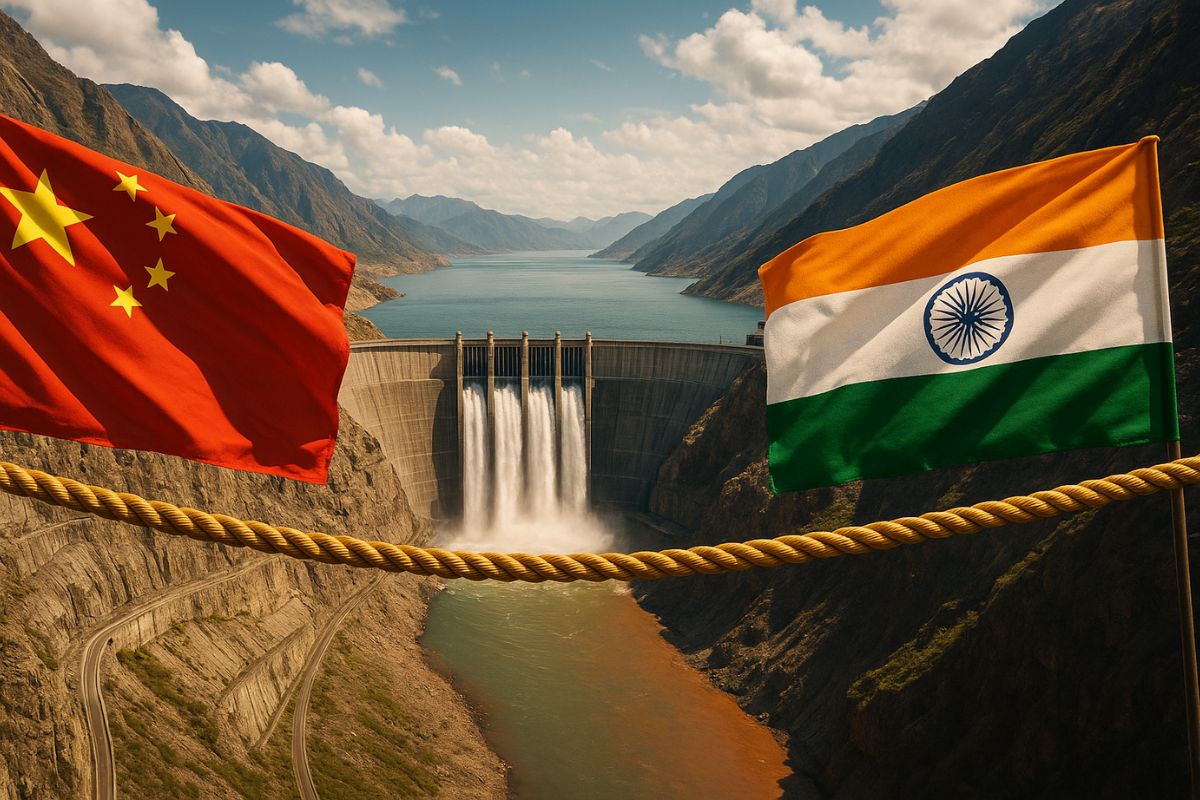

New Mega Dam In China Sparks Fear Of Water War In India. Billion-Dollar Project In Tibet Raises Alarm In New Delhi Over Water Security And Geopolitical Risks In The Region.
The new mega dam in China in Tibet worries India and raises fears that control of the Yarlung Zangbo river flow crossing the border and becoming the Brahmaputra in Indian territory could turn into a tool for strategic pressure. According to an analysis by the Indian government obtained by Reuters and cited by Valor Econômico, New Delhi fears that the project could reduce water flow by up to 85% during the dry season, affecting over 100 million people downstream.
To protect itself, India has accelerated plans to build its own dam, Upper Siang, which could be the largest in the country. The move indicates a scenario of water race that intensifies tensions between the two largest powers in Asia.
What Is At Stake With The New Mega Dam In China
Announced in December, the Chinese plant is set to be the largest hydroelectric plant in the world, with an estimated cost of US$ 170 billion. India assesses that Beijing could divert up to 40 billion m³ of water, just over a third of the annual volume received at strategic points along the border.
-
Dubai will invest US$ 22 billion in sewage tunnels up to 90 meters deep, replacing pumps with gravity and replacing more than 100 old stations, in an attempt to save a city of skyscrapers, artificial islands, and rapid growth from an underground problem that has already overflowed into the streets.

-
The history of the Hercílio Luz Bridge involves controversies, love, and renewal: From its iconic construction to its reopening, it is a symbol of Santa Catarina.
-
On the world’s highest navigable lake, the Uros people have hand-built around 100 floating straw islands, living on them for 3,000 years without concrete or foundations.

-
Newly Completed Brazilian Highway in the Serra da Rocinha Becomes a 16.5 km Cycling Challenge and Boost for Local Tourism


The reduction in flow would have devastating effects during the months without monsoons, when drought hits vast regions of India. Industries, agriculture, and even entire cities could face shortages. Additionally, there is fear that China could intentionally release water to cause downstream flooding, which would turn infrastructure into a geopolitical weapon.
India’s Response: Upper Siang Project
In light of the risk, the state-owned NHPC has begun moves to build the Upper Siang dam, designed to store 14 billion m³. The plan includes keeping up to 30% of its capacity empty to contain any unexpected water peaks, whether from accidents or deliberate decisions by China.
However, the initiative faces strong resistance in Arunachal Pradesh, where construction could submerge 16 villages and directly displace 10,000 people. Leaders of the Adi community claim that over 100,000 residents would be affected in total. Residents vow to fight against the project, fearing loss of agricultural land and livelihoods.
Regional Impacts And Conflict Risks
The clash is not limited to the environmental aspect. The new mega dam in China increases India’s strategic vulnerability, which already faces territorial disputes with Beijing in the region and historical tensions with Pakistan. Experts warn that dams in high seismic activity zones, such as Tibet and Arunachal, increase risks of natural disasters, such as landslides and flash floods.
Diplomatically, China claims that its projects undergo “rigorous safety studies” and will not have adverse impacts. India, however, has already brought the issue to high-level meetings, including in August, when Foreign Minister S. Jaishankar officially expressed concerns to the Chinese government.
The advancement of the new mega dam in China exposes a dispute that goes beyond water management: it is about sovereignty, food security, and geopolitical power in Asia. While Beijing accelerates its project, India races against time to mitigate the impacts and prevent water from becoming fuel for a new regional conflict.
And you, do you believe that water can become the spark for a war between China and India? How should countries act to prevent this crisis? Share your opinion in the comments.