Portuguese
  Spanish


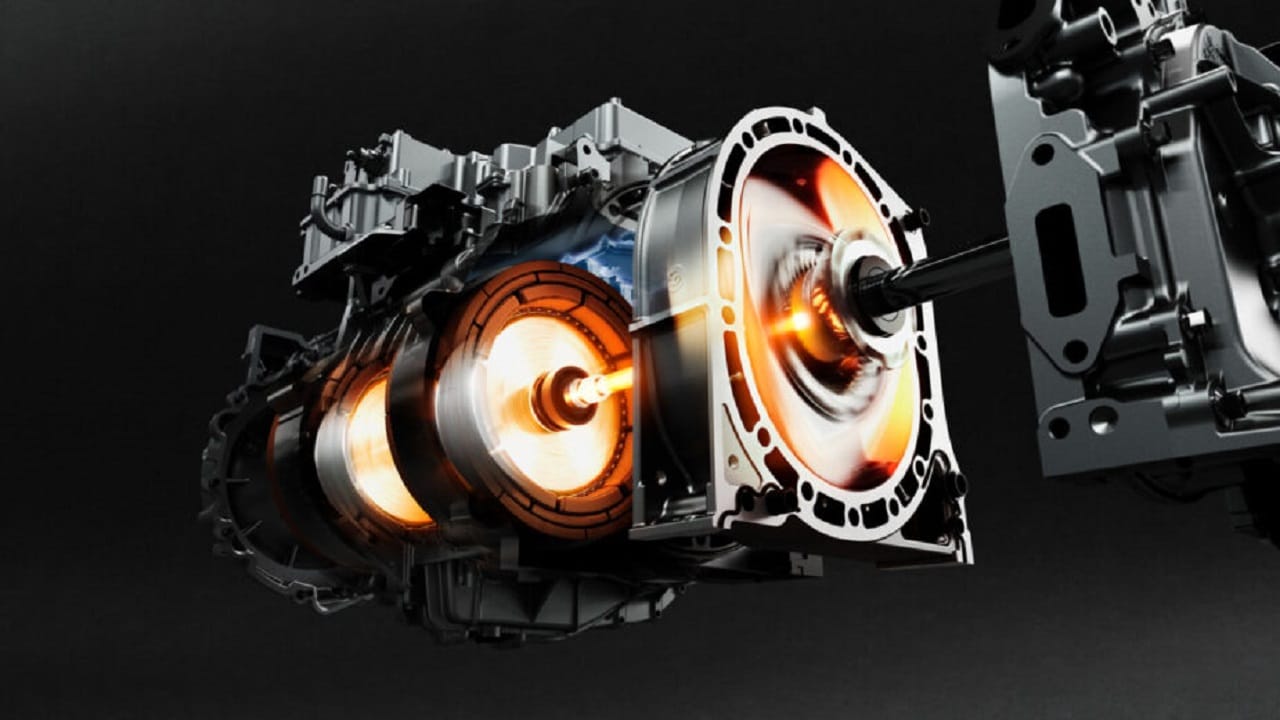

Company Reveals Innovative Diesel Rotary Engine, With Potential to Be Up to Five Times More Powerful and Efficient Than Conventional Piston Engines.
Developed by Felix Wankel in 1924, the rotary engine marked a milestone in vehicle history, but, like any innovation, faced significant challenges. Among them are high fuel consumption, pollutant emissions, lower torque, and complexities in lubrication. To overcome these obstacles, Liquid Piston is developing the X Engine, a new diesel rotary engine. This innovative approach promises to enhance rotary engine technology, addressing its historical limitations.
Advantages of the New Rotary Engine Developed by Liquid Piston
Among the advantages of this new rotary engine are its lightweight design, as it is 75% lighter and smaller than the currently used AMMPS. It is also easier to transport, as it can be portable rather than requiring a truck, trailer, or forklift.
The rotary engine is also efficient in terms of space, occupying only 9 cubic feet. Finally, it is more fuel-efficient, designed to use up to 8% less fuel. Due to its compact and lightweight nature, its power density is 5 times greater compared to a piston diesel engine.
-
Classic Volkswagen Beetles of Brazilian Presidents to Swap Museums in Historic Partnership

-
British Factory Transitions from Mechanical Parts to Producing 420,000 Electric Power Units Annually, Supplying 70% of Ford’s Electric Cars Sold in Europe
-
Toyota Shifts from Hybrid Cars to Electric Air Taxis with Joby’s 6-Rotor Aircraft, Capable of 322 km/h, Aiming for Mass Production to Electrify Urban Skies

-
Ferrari Unveils Limited Edition 12Cilindri Manuale: 6.5-Liter V12, 830 HP, 0-100 km/h in 2.9 Seconds, Top Speed Over 340 km/h, Only 1,499 Units Available




The new rotary engine is compatible with heavy fuels, such as diesel, Jet A, JP-8, aviation kerosene, among others, and features multi-fuel capability (gasoline, hydrogen, propane, and much more). It is also optimized for hybrid-electric applications.
The XTS-210 is a variant of the X Engine at 210 cc with 25 horsepower, two-stroke, supercharged, and liquid-cooled, currently under development, that reduces size and weight by nearly 80% compared to the diesel engine with comparable power, while focusing on an SFC below 350 g/kwh at maturity.
Engine Developed with Focus on Military and Commercial Applications
The supercharger XTS adds up to 1 bar of boost while operating in a two-stroke cycle, generating 6 combustion events per rotor rotation, to provide smooth power from a small package.
The new rotary engine is designed to meet the demanding commercial and military applications of heavy fuel, including mobile electric power generation, primary electric or hybrid propulsion for vehicles, including vertical takeoff and landing (VTOL) aircraft and small unmanned aircraft systems, as well as auxiliary power units.
Among the benefits to unmanned aircraft are:
- Silent operation mode (only electric “silent” cruise);
- Almost zero vibration;
- Operates with JP-8 and other aviation fuels;
- Flight duration up to 60% longer;
- Transition from electric cruise back to engine power with in-flight engine restart.
Possible Return of Diesel Engines
The CEO of Ford, Jim Farley, recently announced the launch of a revolutionary diesel engine, called the Powershift Titan, which has the potential to transform the competition with electric cars. This new diesel engine from Ford stands out for its extraordinary efficiency compared to traditional internal combustion engines, featuring incredibly low carbon emission levels, never before seen in the industry. The brand’s boldness is announced at a time when electric vehicles seem to be leading the automotive market.
The new Ford diesel engine is innovative, built with advanced materials and modern combustion technologies. The powertrain shines for its efficiency, with various fuels, including biofuel, thus expanding its market and reinforcing its ecological profile.
The impact of Ford’s announcement goes beyond passenger models. If the new diesel engine can be applied on a larger scale, including trucks, it could slow down or even reverse the use of electric vehicles in those segments.