Portuguese
  Spanish


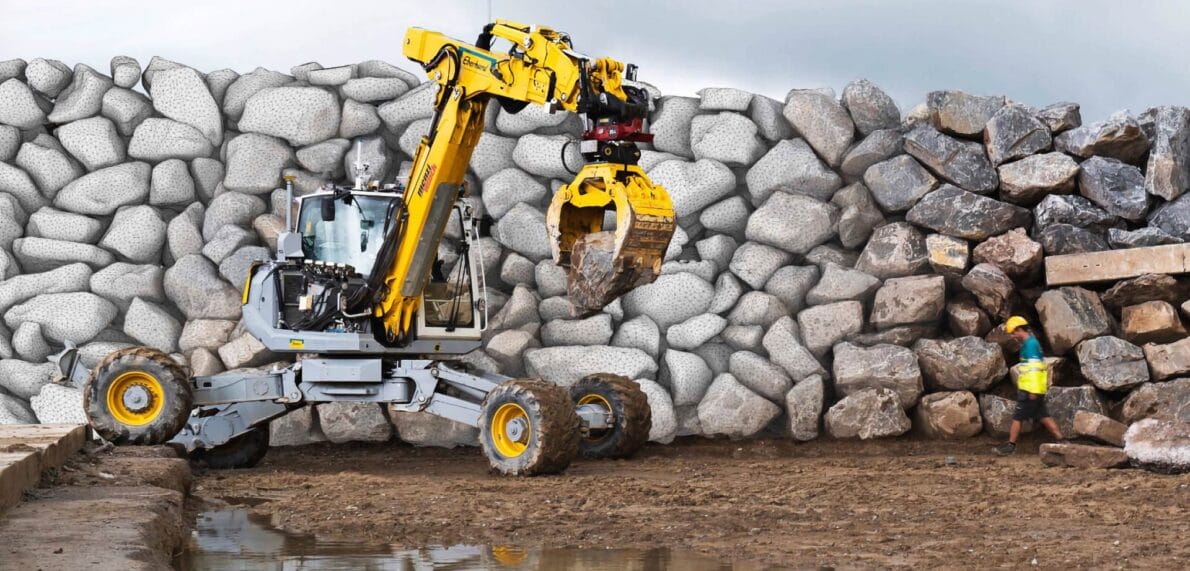

The Era Of Manual Construction Is Coming To An End! Switzerland Recently Introduced A New Robot For Construction That Promises To ‘Ease’ The Lives Of Workers. The Excavator Robot Is Capable Of Constructing Huge Walls Without Human Intervention. Will This Be The End Of Bricklayers?
Engineers at the Swiss Federal Institute of Technology (ETH) have unveiled a new excavator robot capable of building a six-meter-tall stone wall that is 65 meters long. Automated from an excavator, the construction robot, called HEAP, began from a digital design, dug the base of the wall, and then placed the stones until the wall reached specifications. Don’t Miss This Opportunity To Discover This Amazing Technology! Follow The Latest News About The Excavator Robot And Find Out How It’s Changing The World Of Construction.
New Robot In Construction Achieved 82% Accuracy
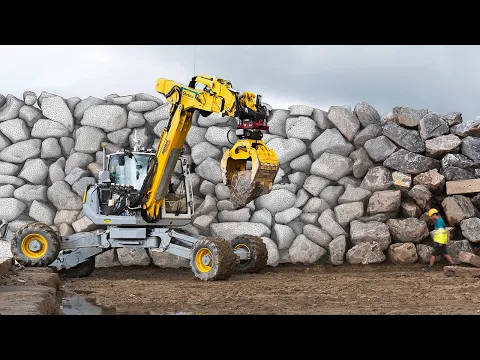

HEAP (Hydraulic Excavator for Autonomous Purpose), utilizing sensors, was able to autonomously square the construction site and locate the construction point and the building blocks, the stones available for wall construction.
Specifically developed tools and machine vision approaches enable the new excavator robot to scan the stones and grasp the one that best meets its wall-filling needs, which it does with 82% accuracy and an average positional error of only 10 cm.
-
Students Build Kansas’ First Hemp-Insulated Social House for a Needy Family: 85% Less Concrete, Solar Roof Returns Energy to Grid, Carbon Negative in Under 20 Years

-
China to Drill 90 Kilometers Under the Sea to Connect Two Cities Currently Linked Only by Ferry

-
18 m² Home Built in Two Days by Teto Volunteers Provides Shelter from Insects and Cold for Resident in Brazilian Community; 43 Delivered in 2026
-
$134.7 Million Project in São Paulo Installs Over 5 Kilometers of Pipes, Creates New Underwater Crossing to Boost Water Supply for Over 450,000 People


This eliminates the finishing phase of the stone wall, as in manual construction, workers have to use shovels or their hands to add support stones, gravel, soil, or even mortar.
The construction process has been adapted for the use of the autonomous excavator, a modified 12-ton Menzi Muck M545 mobile excavator. To select a stone, an algorithm determines the best position for each stone, developing a 3D digital map. The new robot in construction then carries out the task independently, placing the stones in the desired location.
New Excavator Robot Can Place A Stone Every 12 Minutes
The autonomous machine is capable of placing 20 to 30 stones in just a single batch, which means roughly one stone placed in the wall every 12 minutes. It may seem slow, but it is almost the same amount achieved by a trained human operator on a manual operation machine.
According to the project team, the main component of the research is a parallelized planning algorithm and a customized software interface that combines resource-based candidate seeding with heuristics adapted from traditional masonry methods, written record, rigid body simulation, and learned classifiers to select and position stones from a scanned object inventory, so that they align with a target surface specified by the designer.
It’s worth noting that the use of an excavator robot is also a project that other research centers have been developing. The American startup Built Robotics, for example, was founded in 2017 to commercialize this new construction robot. According to the startup’s CEO, Noah Ready-Campbell, fully autonomous equipment will be common on construction sites before self-driving cars become popular.
How Does The Excavator Robot Position Itself On The Construction Site?
The new Swiss construction robot uses GPS and LiDAR sensors mounted on the cabin and arm to provide models of the environment, available stones, and the wall under construction. This allows the system to adapt to the local terrain and account for any settling or unexpected deviations during the construction process.
However, the excavator robot does not have the navigability of an autonomous car, which means a human operator must guide it from one point on the construction site to another, especially when other workers or vehicles are involved in the project.
The high payload capacity, reach, and maneuverability of the excavator facilitated the production of several large demonstration structures composed of dozens or hundreds of elements.