Portuguese
  Spanish


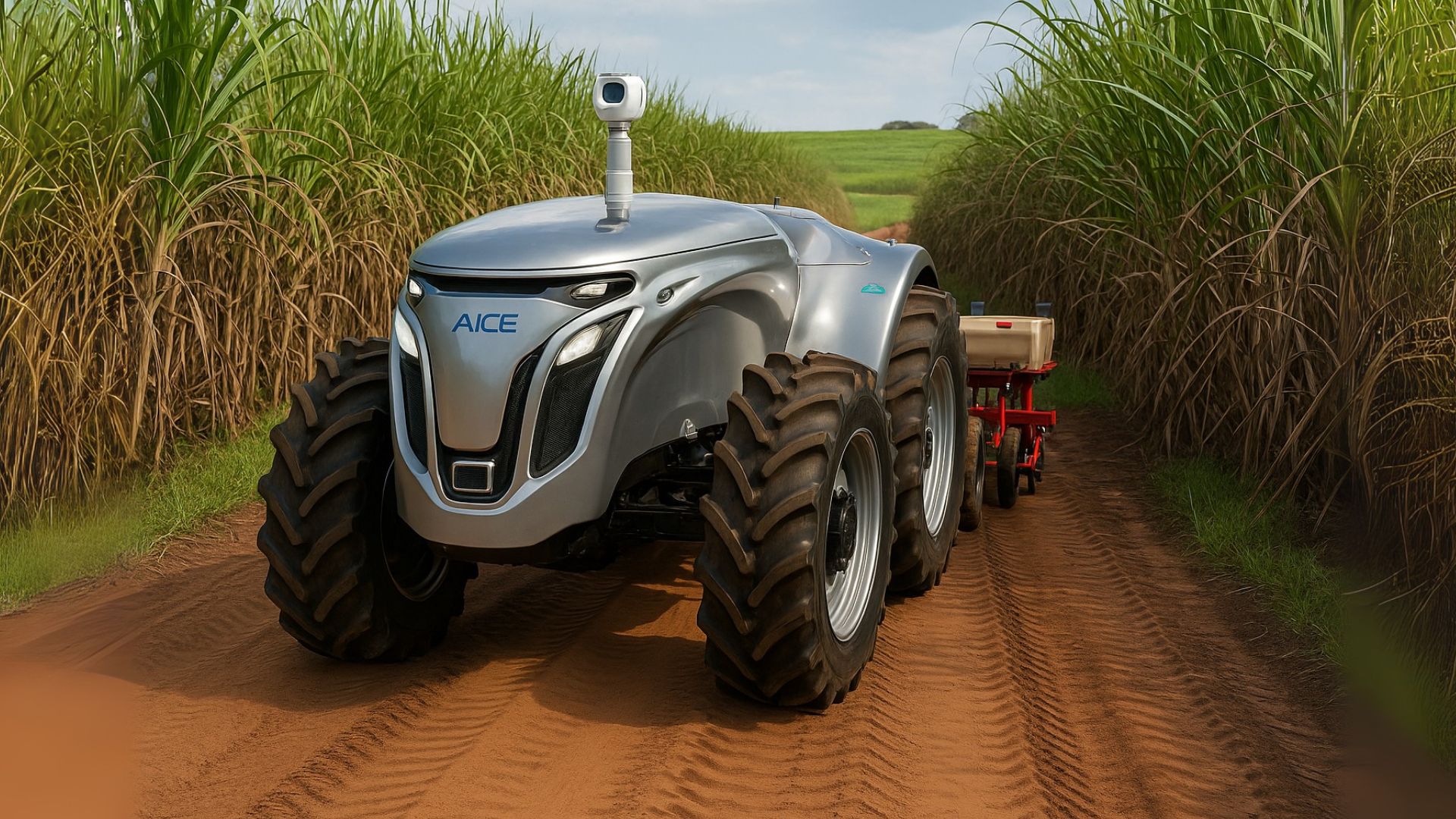


Chinese Hydrogen-Powered Tractor Combines Artificial Intelligence, 5G Connectivity, and Remote Control to Execute Agricultural Tasks with Autonomy, Speed, and Precision, Integrating Satellites, Sensors, and Clean Energy in a Single Equipment.
China has introduced fully autonomous smart tractors capable of operating without a driver, combining artificial intelligence, clean energy, and 5G connectivity.
This integration aims to boost productivity in the field, increase the accuracy of operations, and reduce costs, with a lower environmental impact.
The announcement includes the availability of a demonstration video of the operation. The information was originally published by the portal Compre Rural.
-
Brazilian Farmer Invents Low-Cost Tractor Using Motorcycle Parts, Efficiently Working 2 Acres on 1 Liter of Diesel

-
Regenerative Farmers Use Keyline Plow to Improve Pasture Hydration, Storing 1 Gallon of Water Every 30 Centimeters

-
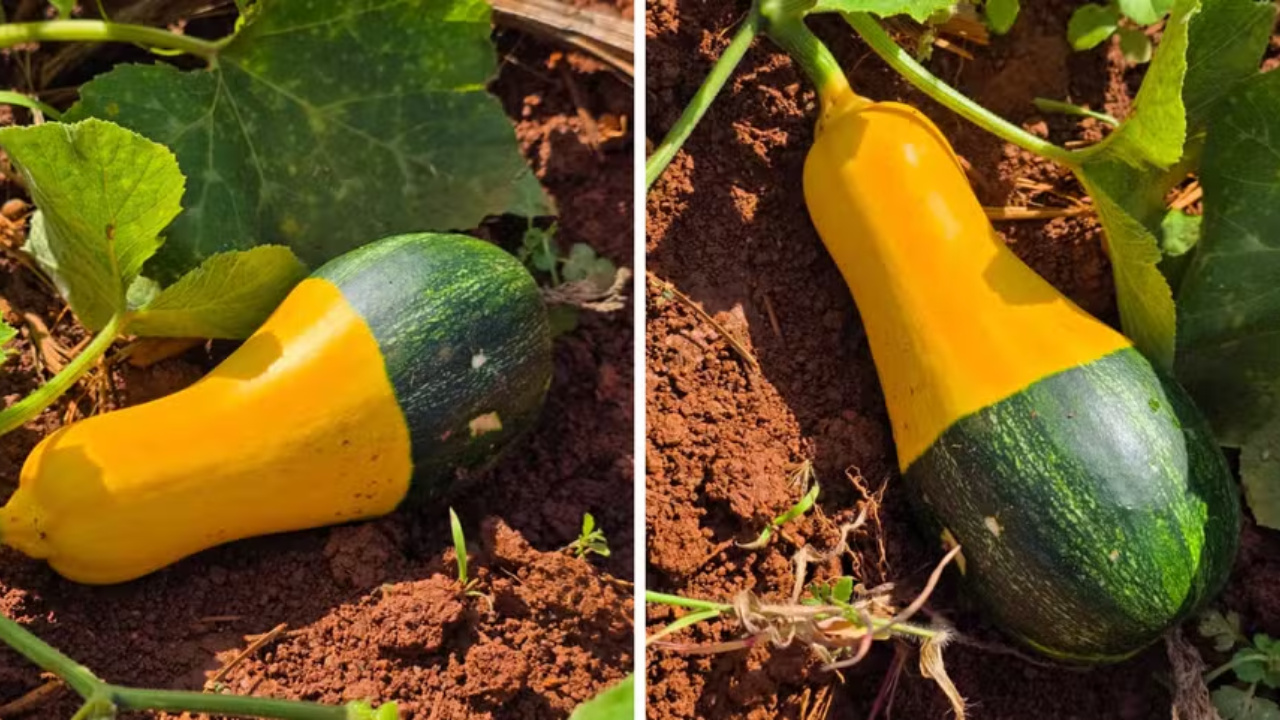
Bicolor Pumpkin Resembling Hand-Painted Art Discovered by Brazilian Researchers in the Capital Due to “Spontaneous Mutation”

-
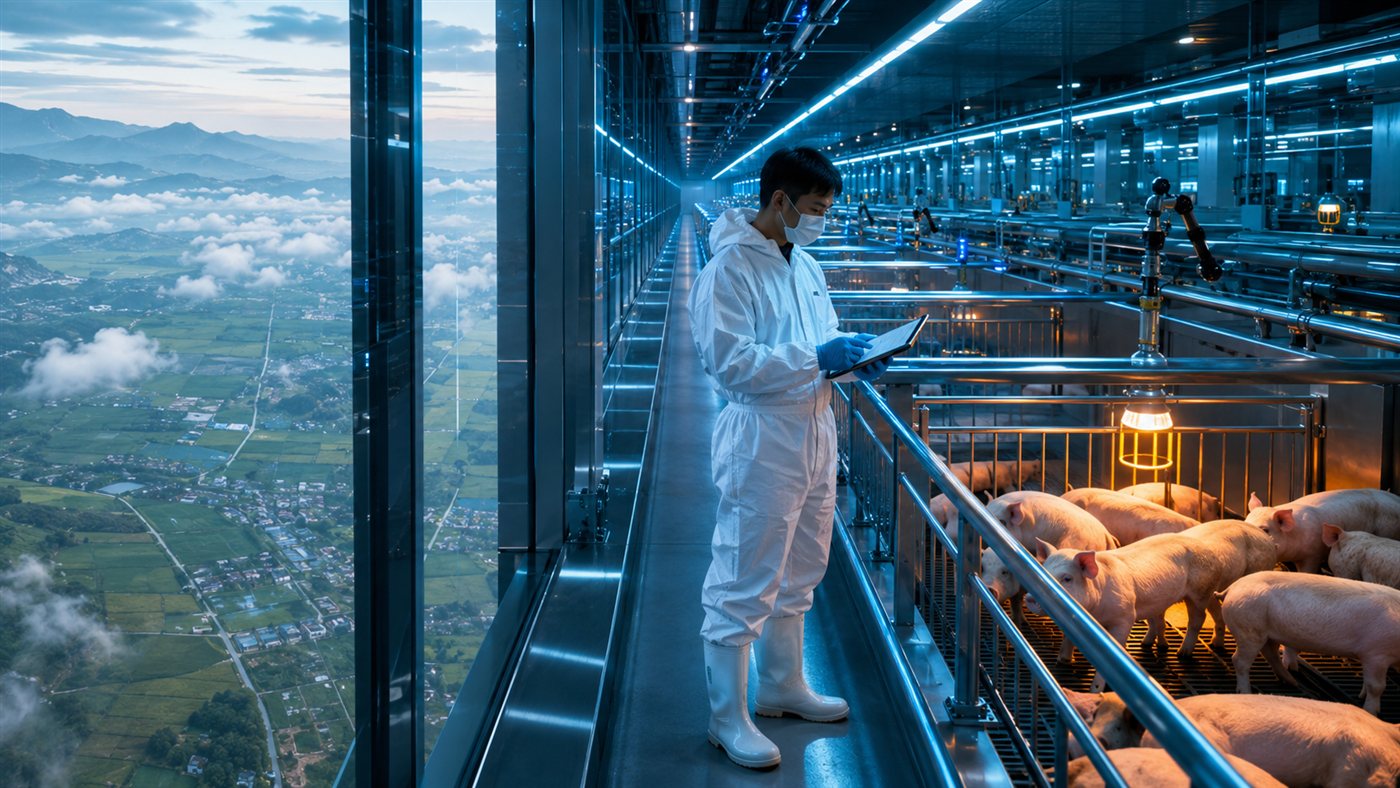
In China, a 26-story building produces 1.2 million pigs annually, revolutionizing livestock farming with tube feeding and AI surveillance.


Agriculture 4.0 with AI, 5G, and Satellite Navigation
The concept relies on machines guided by algorithms, real-time communication, and satellite navigation, promoting precise operations over large areas.
High-speed connectivity allows the tractor to receive commands and adjust routes with reduced latency, favoring extensive and continuous tasks.
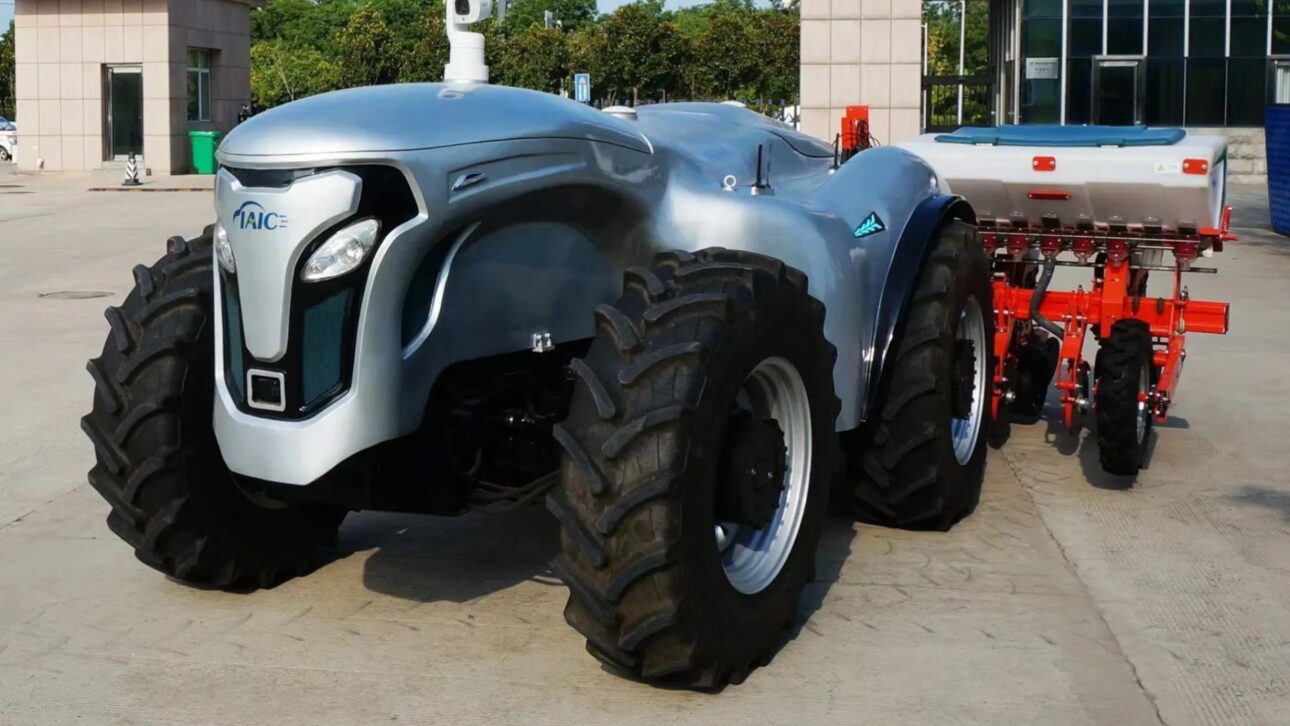
According to experts, 5G is crucial for remote monitoring and instant data exchange between the machine and the control center.
ET504-H: Autonomous Tractor with Hydrogen and Remote Control
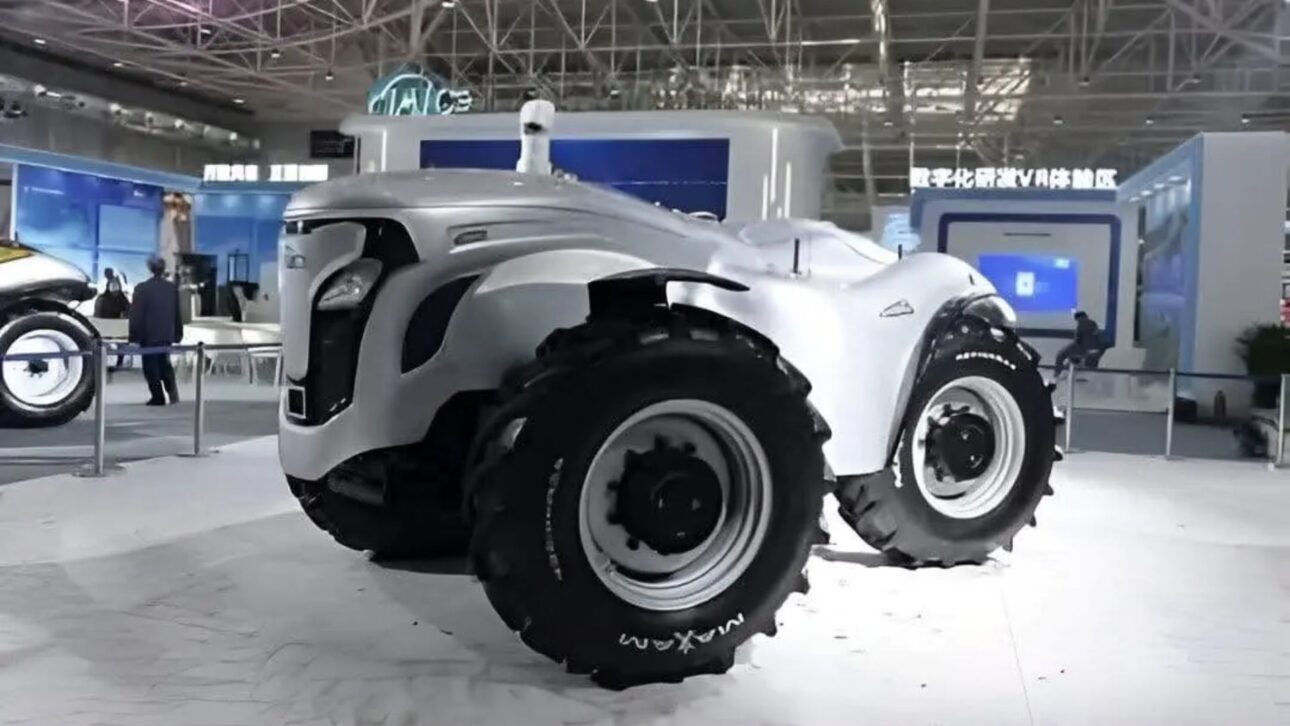
Among the highlighted models, the ET504-H was developed by the Agricultural Equipment Innovation Center of China (CHIAIC), by the Tianjin Research Institute of Tsinghua University, and by the YTO group.
Launched in 2020, the equipment already met the premises that are now advancing in the market: autonomous operation, traction with clean energy, and real-time remote control.
The project utilized a set of hydrogen fuel cells associated with a lithium battery, in a hybrid architecture aimed at energy efficiency.
Specifications and Performance of the ET504-H
The speed reaches up to 30 km/h, facilitating movement between fields and logistics support in agricultural routines.
The estimated autonomy is four hours of work, with refueling hydrogen in 3 to 5 minutes, reducing downtime and idleness.
The sensor package includes GPS, millimeter-wave radar, and processing modules with big data, which enhance assisted navigation and decision-making in the field.
Among the expected functions are plowing, sowing, and soil preparation, with minimal supervision when operational conditions are compatible with the onboard safety set.
Why “Water-Powered” Entered the Vocabulary
The expression “water-powered” appears by association, but the tractor does not consume water as direct fuel.
The relationship arises from the fact that hydrogen can be obtained from water through electrolysis, a process that separates hydrogen and oxygen using electricity.
This origin helps explain the perception of sustainability, although the source of electricity and the supply chain define the environmental balance.
Evolution of the Project and Expansion of the Ecosystem
More recent versions have incorporated the BeiDou positioning system, increasing accuracy in guidance and repeatability of passes.
The solution has begun to integrate edge computing and smart sensors, supporting stable operations even in challenging conditions and in large areas.
The technological ecosystem also includes own satellites, such as those from the Geespace platform, aimed at reinforcing connectivity and data coverage in rural areas.
Connectivity and Real-Time Monitoring
5G enables communication between the machine and the control center, allowing for instant adjustments of parameters and routes according to changes in terrain and humidity.
Performance reports, maintenance alerts, and telemetry arrive almost in real-time, supporting operational decisions based on data.
In addition to the autonomous pilot, the remote control interface creates an additional layer of safety and human intervention when necessary.
Direct Gains: Efficiency, Sustainability, and Safety
In the field, automation tends to optimize the use of inputs and reduce waste through precise application and repeatability of routes.
The lower dependence on labor for repetitive and heavy tasks frees teams for higher value-added activities.
With clean energy and more accurate routes, emissions and the environmental impact are likely to decrease, respecting the limits of the hydrogen generation context.
There are also impacts on safety, as operators are less exposed to heat, dust, vibration, and other risk factors in prolonged shifts.
Current Barriers to Large-Scale Adoption
Despite the potential, the popularization of autonomous tractors faces high initial costs, especially in projects that combine advanced hardware and hydrogen refueling infrastructure.
Rural connectivity remains a bottleneck in various regions, limiting the full use of telemetry and remote updates.
Another point is the need for specialized technical support involving sensor calibration, fuel cell maintenance, and data management.

Impact and Perspectives for Brazil
The Chinese advancement serves as a warning and inspiration for the modernization of Brazilian agriculture, focusing on productivity, predictability, and sustainability.
For similar solutions to thrive in the country, it will be necessary to invest in connectivity in the field, in workforce training, and in policies to encourage innovation.
If this path is confirmed, autonomous tractors connected via 5G and powered by clean energy could help increase Brazil’s competitiveness in the global scenario.
The Chinese experience marks a milestone in agricultural mechanization by bringing together AI, clean energy, and high-speed communication to transform food production.
At the current pace of development, autonomous machines like the ET504-H are likely to become part of the everyday routine in fields, including in countries with vast agricultural areas.