Portuguese
  Spanish


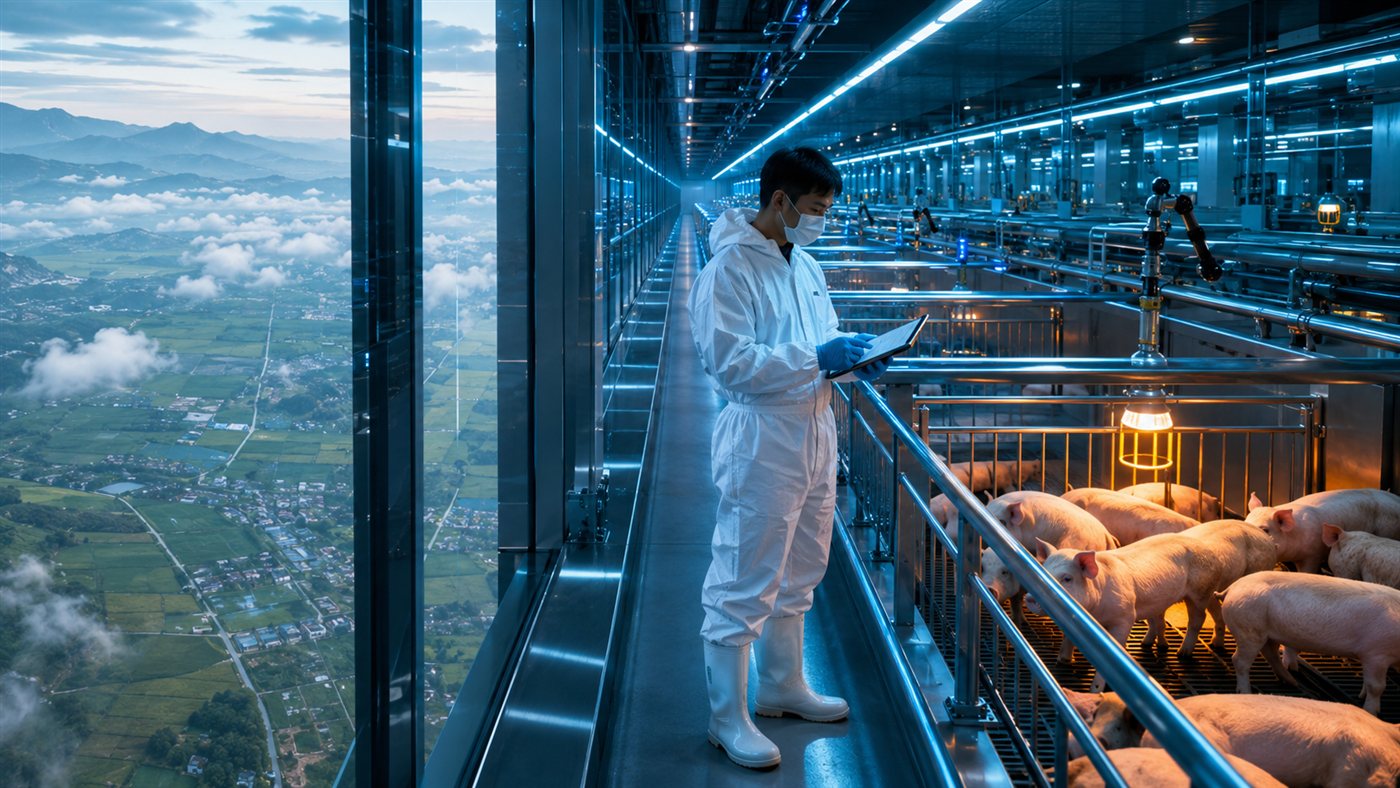

Video from the Terran Works channel about Chinese livestock details the $590 million breeding facility where feed travels through sealed pipes, AI monitors the animals 24 hours a day, and a single employee supervises thousands of pens from a control room
The world’s most impressive vertical pig farm operates inside two 26-story skyscrapers in China, and a video published on June 30, 2026, by the Terran Works channel on YouTube shows how the country took pig farming upwards when land was scarce below, in a model that provokes reflection even in Brazil, a global powerhouse in pork production. The complex, with an investment of about 590 million dollars, produces up to 1.2 million pigs per year.
The stacking has a logic of square meters. According to the Terran Works channel, the vertical design reduces land use by 50 to 70% compared to traditional farms, a decisive saving in a country where more than 70% of the territory is made up of mountains, plateaus, and deserts unsuitable for conventional agriculture.
The 2018 crisis that pushed pigs upwards
The verticalization did not arise from futurism, but from trauma. According to the Terran Works channel, after the African swine fever outbreak in 2018, Chinese pig farming plunged into crisis: hundreds of millions of pigs were culled, and meat prices soared in the country that consumes the most pork in the world.
-
With Nearly 60% Desert, Israel Desalinates Seawater and Recycles 90% of Wastewater to Build a Billion-Dollar Agricultural Powerhouse in Dates and Cotton

-
74-Hour Barbecue in Brazil Sets World Record: 3.4 Tons of Meat, 10,500 Meals Served

-
Man Takes on Swarms in Singapore, Saves 6 Million Bees and Encourages Locals to Choose Conservation Over Pesticides
-
In Brazil’s Arid Northeast, Vineyards Now Produce Wine Grapes Year-Round, Accounting for 98% of the Country’s Grape Exports
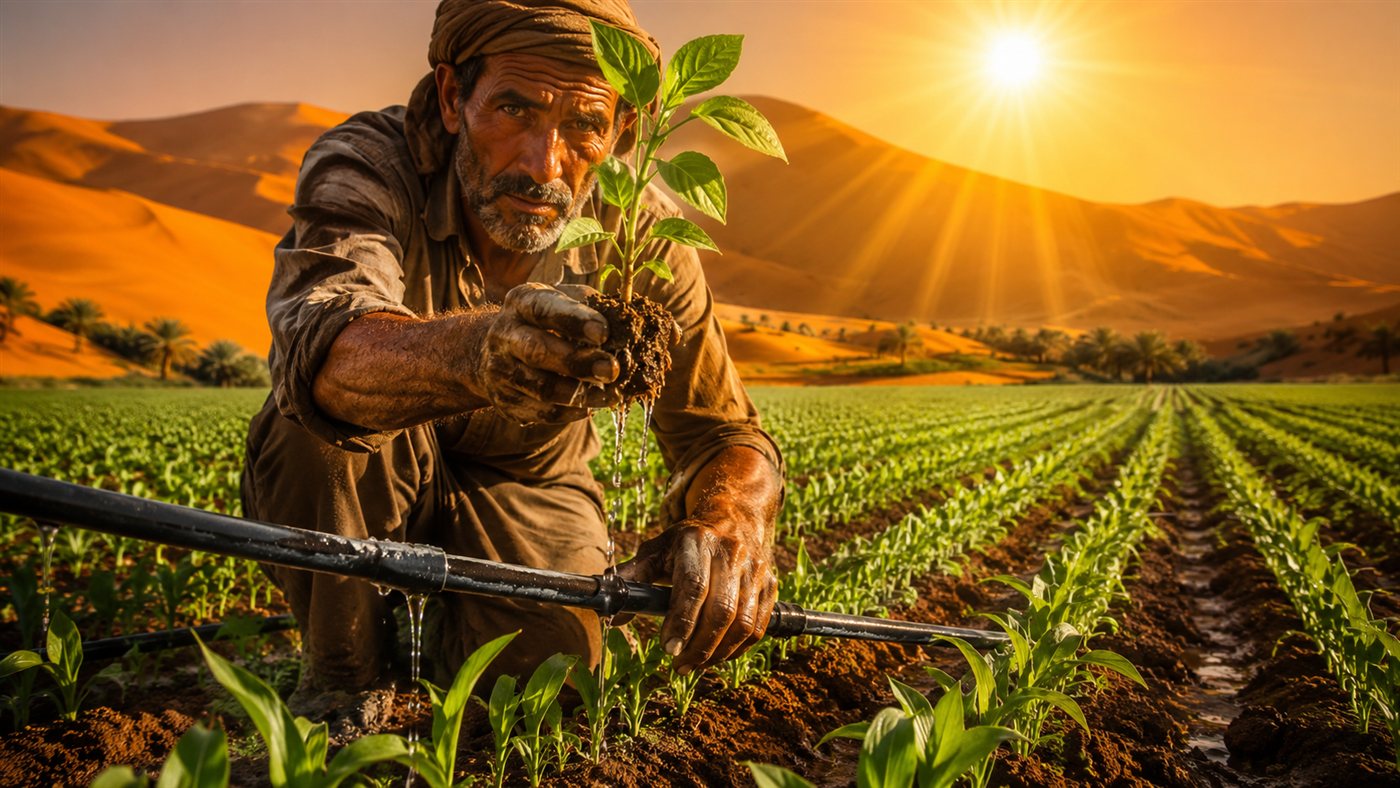


The industry’s response was to change architecture. Many companies migrated to large-scale vertical farming models, and the project of the two 26-story buildings became the most extreme symbol of this shift, one of the largest vertical breeding facilities on the planet, according to the Terran Works channel. A closed building also means a different category of sanitary control, precisely the lesson the plague left.
It is worth understanding the weight of the episode for the country: pork is the central protein on the Chinese table, and the price of pork directly affects the cost of living for more than a billion consumers. When the herd shrank and the price per kilo soared, ensuring a stable meat supply became a state issue, and it is in this context that half a billion dollar investments in a single breeding facility stopped sounding exaggerated.
Feed through sealed pipes: the logistics of a building-farm
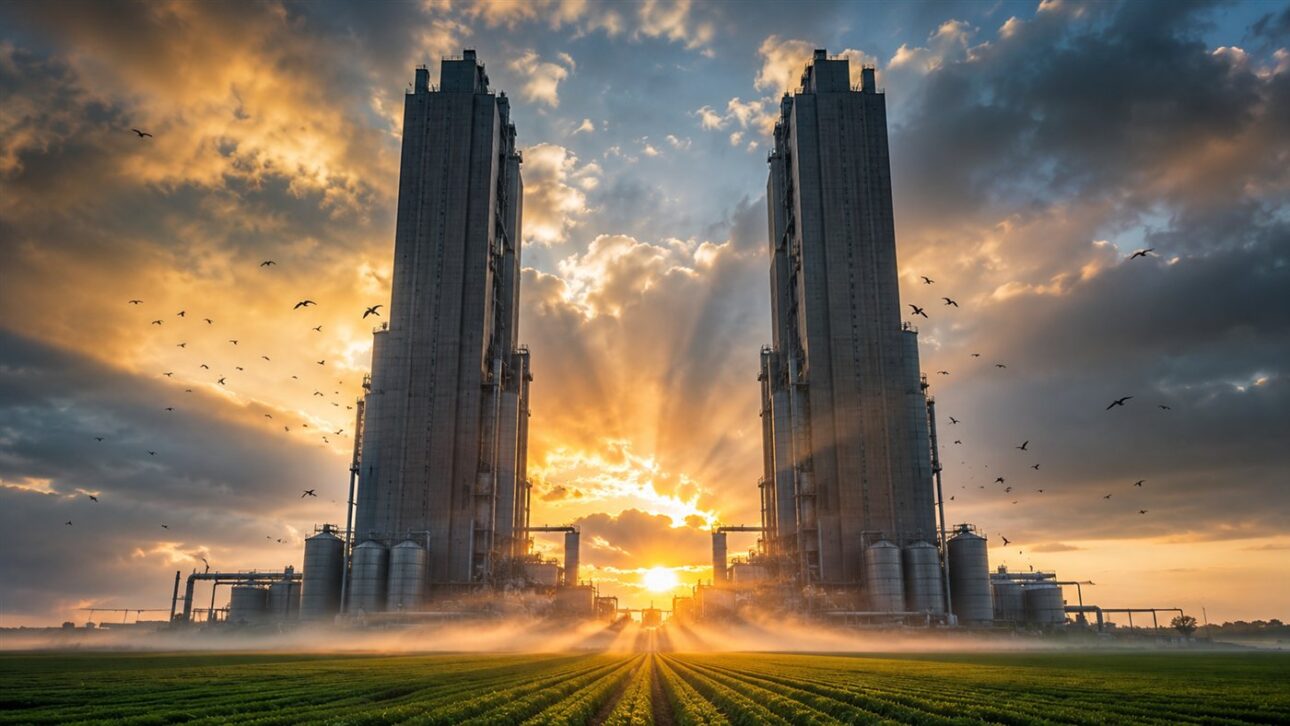
Feeding tens of thousands of animals spread over 26 floors required reinventing the most basic routine of the farm. According to the Terran Works channel, the feed is transported through sealed pipes directly to each pen, allowing precise control of each group of animals’ diet and minimizing waste.
The closed system solves three problems at once. No cart, no shovel, and no human contact with the food, the building cuts labor costs, eliminates dosing errors, and reduces the risk of contamination entering through the food, the kind of breach that brought down conventional farms in the past. It’s the production line of a factory applied to the trough.
The $600 billion livestock industry that needs to feed 1.4 billion mouths
The farm-building is the most visible tip of a gigantic system. According to the Terran Works channel, the Chinese livestock industry moves about 600 billion dollars a year, within an agriculture valued at more than 2.8 trillion dollars, larger than the combined GDP of many countries, all to feed more than 1.4 billion people.
Geography explains the pressure. With almost 9.6 million square kilometers, an area similar to that of the United States, China has most of its territory unusable for traditional farming, according to the Terran Works channel. It was the excess of people with a scarcity of land that forced the sector to evolve in extraordinary ways, and the same video shows other fronts of this engineering: from the fat-tailed sheep monitored by GPS and drones in Xinjiang to the ostriches of Inner Mongolia and the sturgeon caviar raised in mountain reservoirs.
In this scenario, the vertical farm is the piece that solves the country’s scarcest variable. Each stacked floor returns to agriculture a piece of land that would be consumed by horizontal sheds, and it is this square meter arithmetic that explains why the model was born in China before anywhere else.
The artificial intelligence that watches each pig 24 hours

The upper floor of technology is in cameras. According to the Terran Works channel, cameras with artificial intelligence and smart sensors operate 24 hours a day, 7 days a week, monitoring body temperature, movement, vocalizations, growth rate, and any abnormal behavior of the animals.
The goal is to anticipate disaster. AI allows for early disease detection, isolating the problem before it moves up or down a floor, a comprehensible obsession in a sector that has lost hundreds of millions of animals to a virus. And the productivity gain is brutal: with this level of automation, a single worker supervises thousands of pigs from a control room, according to the Terran Works channel.
The dilemmas raised by vertical farming
Not everything is praise for the model. Concentrating 1.2 million animals per year in a single location multiplies what’s at stake with each failure: a sanitary, electrical, or structural error in a closed building has an industrial scale, and animal welfare in fully confined systems is a permanent target of international debate.
The Chinese bet is that technology compensates for the risk. Sensors, AI, and fortress-like biosecurity replace open space as a guarantee of herd health, and production numbers suggest that, for now, the industry is balancing the equation. Time will tell if the model becomes a global standard or remains an extreme response to extreme land pressure.
The contrast with Brazilian pig farming
Brazil, one of the world’s largest producers and exporters of pork, solves the same equation with the opposite approach: space. Brazilian farms grow horizontally, supported by cheap grain, integration with slaughterhouses, and internationally recognized health standards.
This is precisely why the Chinese experiment is of interest here. If vertical farming proves to produce cheaper protein and superior biosecurity, the global pig farming standard may shift to the building model, and the cost of land, currently a Brazilian advantage, loses weight in the competition. For now, the pig skyscraper remains the most daring laboratory in global livestock.
There is also the consumer factor, which no spreadsheet fully captures. Part of the international market values farming systems with more space and pays a premium for it, while another part decides solely based on price on the shelf. The fate of the vertical model depends as much on engineering as on this balance between cost and perception, and it is in this balance that Brazilian pig farming, with plenty of space and export scale, intends to remain competitive.
Watch the 26-story vertical farm in video
The complete tour of Chinese livestock farming, from the 590 million dollar farm-building to sheep tracked by drone, is in the video on the Terran Works channel on YouTube.


After seeing a 26-story vertical farm operated by handfuls of employees and battalions of sensors, the question remains that agriculture worldwide will have to answer this decade: is the future of protein upwards, as proposed by the Chinese vertical farm, or sideways, as produced by Brazil? Tell us in the comments: would you buy meat raised in a skyscraper?