






 Portuguese
  Spanish


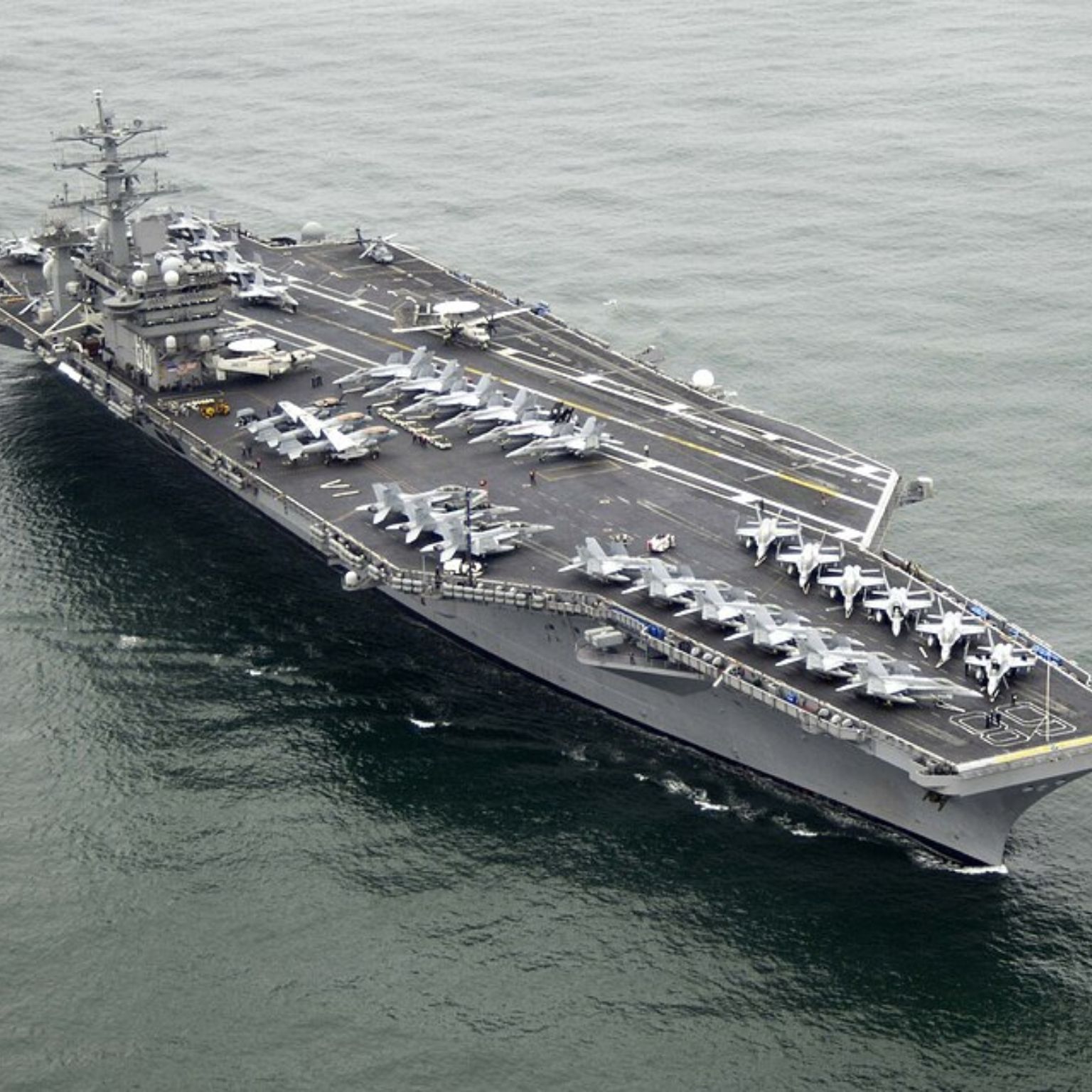


USS Nimitz Aircraft Carrier Leads Operation Southern Seas 2026 Towards Rio de Janeiro on a United States Defense Mission Mobilizing Ten Countries, Expanding Naval Cooperation in the Western Hemisphere and Repositioning Brazil on the Route of One of the Largest American Maritime Actions in the Region
The USS Nimitz aircraft carrier, from the United States Navy, has been announced as the main asset of Operation Southern Seas 2026, which will pass through Rio de Janeiro and includes a series of joint exercises along the South American coast. The nuclear-powered vessel will sail alongside the USS Gridley destroyer and is part of the largest American naval operation on the continent since 2007, with scheduled stops in countries such as Brazil, Chile, Panama, and Jamaica.
The arrival draws attention for the symbolic and military weight of the mission. Besides being the oldest aircraft carrier in the world among those still in operation, the USS Nimitz will be at the center of the 11th edition of an exercise created to strengthen maritime partnerships, promote technical exchanges, and gather invited authorities from partner nations aboard the vessel. In the case of Rio, the details of the stop will still be confirmed, but the presence of the ship already places the city on the radar of a large-scale strategic operation.
What is Southern Seas 2026 and Why the Aircraft Carrier Has Gained So Much Attention

Southern Seas 2026 is the 11th edition of the naval exercise promoted by the United States since its inception in 2007. According to the information provided, the operation has established itself as the main mechanism for U.S. naval cooperation in the Western Hemisphere, bringing together partner forces from the region in defense and maritime integration actions.
-
Tokyo Scientists Create First 18cm Biohybrid Hand Using Human Muscle, Capable of Scissor Gesture and Holding a Pipette

-
Brazil Faces Norway in World Cup at Stadium Linked to Jimmy Hoffa’s Mysterious Disappearance

-
Retired Woman Leaves French Public Housing Due to Fear, Lives in Van for Weeks, Prompting Response from Local Authorities and a Priest
-
9-Year-Old Fabio Isaac Wins Gold at Copernicus Math Olympiad in Singapore, Representing Peru Against Global Young Talents




The highlight of the 2026 edition is precisely the USS Nimitz aircraft carrier, a Nimitz-class vessel and the main asset of the mission. The ship will travel along the South American coast accompanied by the USS Gridley guided missile destroyer, combining military presence, joint training, and operational capability demonstration on a route that includes ten countries.
The Numbers That Explain the Size of the U.S. Naval Operation
Some data helps to gauge the significance of Southern Seas 2026. The operation is described as the largest naval exercise by the United States on the continent since 2007, a milestone that alone demonstrates the strategic relevance of the mission.
Another important figure is the regional reach of the initiative. The operation involves exercises with naval forces from ten partner countries, in addition to scheduled stops in Brazil, Chile, Panama, and Jamaica. It is also worth noting that this is the 11th edition of the exercise, reinforcing that it is not an isolated action, but a continuous agenda of military cooperation on the continent.
Why the USS Nimitz is such a symbolic aircraft carrier for this mission

The USS Nimitz carries a historical weight that amplifies the impact of the operation. According to the article’s basis, it is the oldest aircraft carrier in the world among those still in operation, which makes its presence one of the central points of Southern Seas 2026.
Moreover, it is a nuclear-powered ship, a characteristic that enhances its operational endurance and relevance within the American naval structure. In practice, this makes the Nimitz not only a large military asset but also a symbol of the United States’ presence in a mission that seeks to demonstrate coordination, reach, and readiness in the region.
How joint maneuvers and the expected exchange work in the operation
Southern Seas 2026 is not limited to the navigation of the aircraft carrier along the coast. The operation includes maneuvers at sea with partner countries and also technical exchanges among military specialists, broadening the mission’s scope beyond the purely operational aspect.
According to the basis, invited authorities from partner countries will also be able to board to closely observe the ship’s operations. This means that the mission will have an important diplomatic and institutional dimension, serving as a showcase of naval capability and also as a space for rapprochement between military commands in the region.
What changes in practice for Brazil with the arrival of the aircraft carrier in Rio
In the Brazilian case, the presence of the aircraft carrier USS Nimitz places Rio de Janeiro back into a large-scale international operation related to defense and maritime cooperation. Even with the details of the stopover still being confirmed, the mere announcement of the visit already projects the city as a support point in one of the largest American naval missions on the continent in recent years.
In practice, this also reinforces Brazil’s visibility within a regional agenda that involves exercises, dialogue between armed forces, and the presence of invited authorities on board. The stopover in Rio, therefore, goes beyond the image of the ship docked: it connects to a broader strategy of maritime coordination between the United States and partners in the region.
Which countries participate and why the regional route draws attention
The operation includes joint exercises with naval forces from countries such as Argentina, Chile, Colombia, and Peru, according to the information provided. At the same time, the itinerary includes port stops with expected destinations such as Brazil, Chile, Panama, and Jamaica, showing that Southern Seas 2026 was designed to have a strong presence in different points of the continent.
This regional scope helps explain why the mission has gained attention. It is not just about the passage of an aircraft carrier through Rio, but an action that connects training, military diplomacy, and naval presence in a network of partner countries. The broader the route, the greater the political and strategic reach of the operation.
Why this mission is treated as a priority by the United States
In a statement cited in the information, Rear Admiral Carlos Sardiello, commander of the U.S. Naval Forces Southern Command and the 4th Fleet, stated that Southern Seas 2026 represents an example of the United States’ commitment to strengthening maritime partnerships, building trust, and working together in the face of common threats.
This statement helps explain the role of the operation within the American strategy for the Western Hemisphere. The mission combines high-impact naval presence, cooperation with regional partners, and a demonstration of alignment among the continent’s navies, with the aircraft carrier USS Nimitz as the main showcase of this movement.
The next steps of the aircraft carrier’s stopover in Rio will still be confirmed
Although the arrival in Rio de Janeiro has already been announced, the details of the visit have not yet been officially finalized. This means that information about the agenda, duration of the stopover, and specific activities in the city are still in the confirmation phase.
Even so, the announcement is already enough to transform the passage of the aircraft carrier into one of the most striking themes of Southern Seas 2026. Due to the combination of military dimension, regional reach, and historical weight of the USS Nimitz, the operation already stands out as one of the main naval movements of the U.S. on the continent in many years.
Should the arrival of the USS Nimitz in Rio be seen more as a symbolic gesture of regional cooperation or as a practical demonstration of U.S. naval strength on the continent?





_with_California_(CGN-36)_and_South_Carolina_(CGN-37)_c1976.jpg)
