






 Portuguese
  Spanish


With Over 125,000 Electric Cars Sold, Brazil Accelerates to Enter the Global Game Dominated by China and Threatened by Cuts in the U.S.
By 2025, the electric car will no longer be an exception and will represent a quarter of global sales. This advancement marks not only a market shift, but an economic and technological transformation driven by more affordable batteries and competitive models. Let’s analyze the data and trends that explain this evolution.
Optimistic Projections for 2025
BNEF (BloombergNEF) predicts nearly 22 million electrified vehicles (BEVs and PHEVs) to be sold in 2025, 25% more than in 2024. The IEA (International Energy Agency) corroborates this projection, noting that first-quarter sales have already reached 4 million, a growth of 35% compared to the same period in 2024 — driven especially by China, which accounts for about 60% to 66% of global sales. The global share of electric vehicles is expected to exceed 25% by 2025.
China Dominates Global Sales
China will lead with over 14 million units in 2025, surpassing the total global figure for 2023. Approximately 60% of the cars sold in the country will be electric this year. It is the only market where an electric car is cheaper than a combustion vehicle, without the need for subsidies. This scenario benefits giants like BYD, which sell EVs for under US$ 25,000. Furthermore, incentives like trade-in bonuses for old models boost adoption.
-
Chevrolet’s Parent Company to Invest Billions in Brazil to Modernize Factories, Update Cars, and Accelerate Hybrid Launch by 2028

-
Practical Driving Tests in Brazil Surge by 23.5%, Exceeding 2.2 Million by 2026, as New Rules Make the Process Cheaper and Simpler
-
Brazil’s Lula Government Allocates $463 Million Quota for Electric Car Parts, Waives Import Tax Until December, Sparking Competition Among BYD, Automakers, and Unions as Consumers Question Impact on Prices and Local Industry

-
Thinking of Installing LED Headlights? Why Replacing Halogen Bulbs is Still Banned, the Glare Risks Authorities Worry About, and How a New Proposal Could Allow Certified, Safe Installations


Europe and the U.S.: Cautious Growth
In Europe, BEVs already account for about 25% of sales, driven by affordable models (below €25,000) and regulatory pressure. Despite the end of subsidies and more flexible CO₂ margins, the region maintained its market share at around 17%.
The U.S. recorded a 10% increase in electric vehicle sales in the first quarter compared to the previous year, but this still represents only 10% of total cars sold. Despite this progress, the market faces uncertainties: subsidy cuts and potential tariffs threaten to slow the pace. BNEF has revised its long-term projections downward, decreasing the estimated market share of the U.S. from 48% to 27% by 2030 due to these incentive cuts.
The drop in lithium-ion battery costs, already below US$100 per kWh in China, combined with a supply that exceeds demand, creates a scenario of excess capacity. Some Chinese factories operate at less than 50% of their production capacity, pushing prices down. This movement reduces the costs of electric cars and strengthens global competitiveness, especially through Chinese manufacturers expanding their presence in the international market. Global cell production capacity grew nearly 30% in 2024, reaching over 3 TWh, with 85% of that concentrated in China. The outlook is for continued dominance, even with movements toward the West.
Challenges and Uncertainties in the U.S.
BNEF revised its expectations for the U.S., indicating that the withdrawal of incentives like the Clean Vehicle Tax Credit and tariff threats could reduce the number of EVs by 14 million by 2030. Another indicator from J.D. Power suggests that 2025 will be a ‘reset year’ for the American market, with the share of electric vehicles stabilizing at 9.1%.
Challenge of Luxury EVs
While SUVs and affordable mid-range models continue to grow, luxury electric cars (such as Porsche Taycan, Audi e-tron, Mercedes G-Class EV, and Ferrari) face stable or declining sales. This is due to high prices and little differentiation compared to traditional models. The entry-level market is thriving, while traditional brands, according to analysts, “legacy automakers are losing out to China” — are beginning to lose ground to Chinese competitors.
Accelerated Growth in Emerging Markets
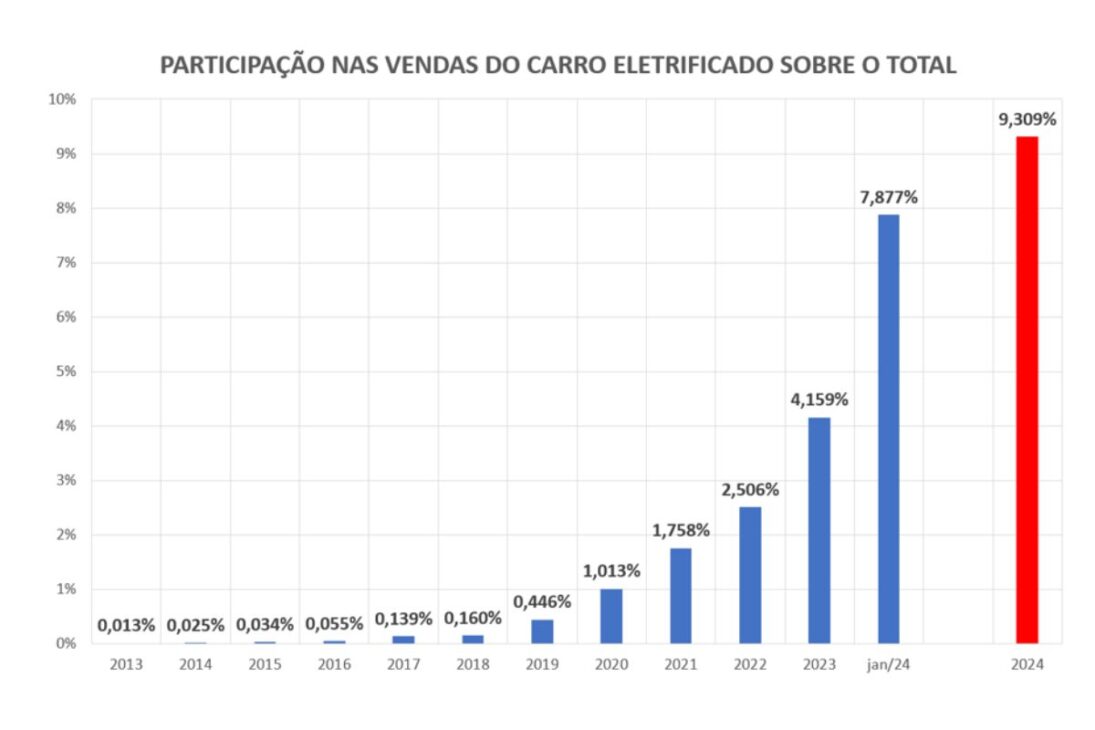
Brazil sold around 125,000 electric vehicles in 2024, a 100% increase compared to the previous year, and projections for 2025 indicate the continuation of this accelerated pace. Additionally, emerging markets such as India, Southeast Asia, and Africa are seeing growth exceeding 40%. In Africa, countries like Egypt and Morocco, along with other regional forces, are expanding production to meet European Union standards, increasing their share in the global electric vehicle landscape.
The outlook for 2030 is promising: the IEA projects that electric vehicles could reach 40% global market share if the current pace is maintained. China’s experience shows that the key to mass adoption lies in making models accessible, making EVs financially viable for more consumers. However, unstable policies could hinder this progress, as indicated by setbacks in incentives in the U.S. and Europe, which have the potential to slow market growth.
Electric mobility is no longer a passing trend. The electric car has ceased to be synonymous with luxury or exclusivity and has become part of everyday life. Today, the true competitive advantage lies in aligning affordable costs, smart policies, and robust infrastructure — those who master this tripod will lead the global transformation.
Did you enjoy the overview of electric cars in 2025? Share your thoughts in the comments or share this article with someone who wants to keep up with the trends that will transform transportation.
Keywords: electric car





Espere só quando esses carros de “modelos médios acessíveis” precisarem trocar a bateria… vai ter muita gente anunciando a venda dos rins na internet.