Portuguese
  Spanish


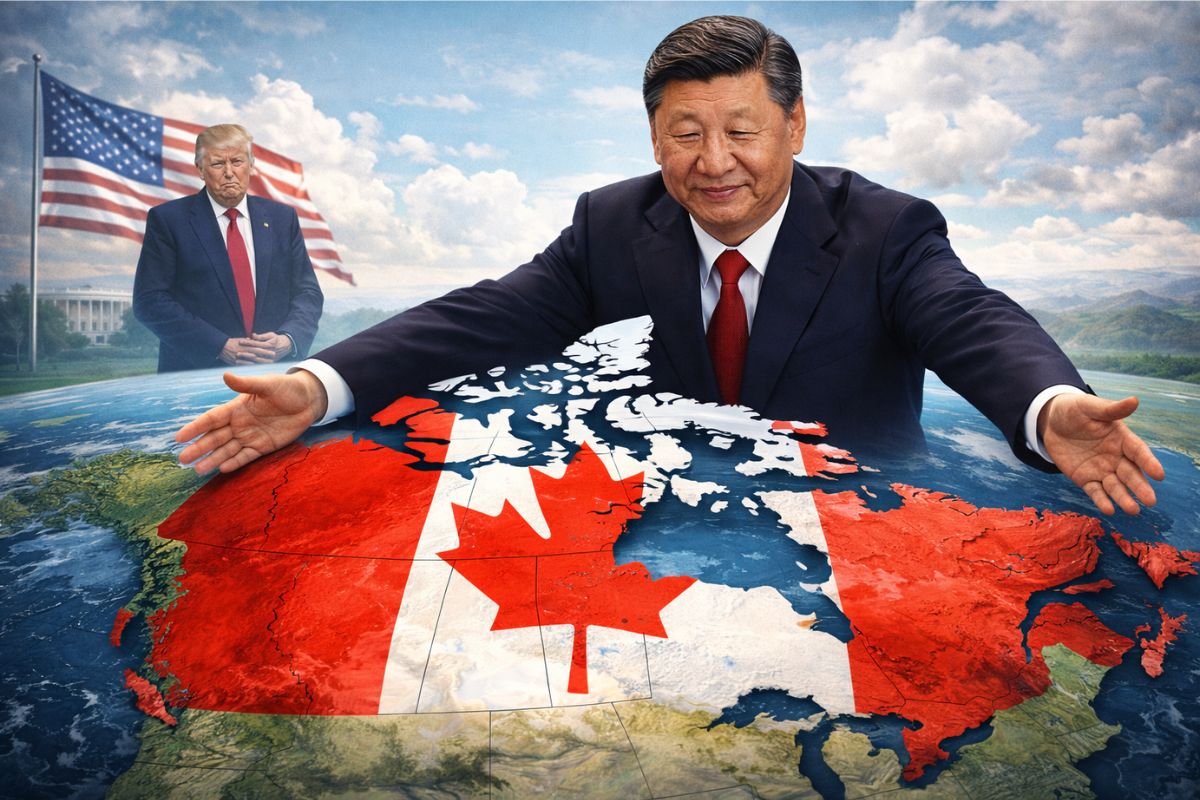


Canada Moves Closer to China After Carney’s Meeting with Xi in Beijing and Signs Agreements. The Strategy Seeks to Reduce Dependence, Given That the U.S. Accounts for 75% of Canada’s Foreign Trade
The visit of Prime Minister Mark Carney to China and the meeting with Xi Jinping in Beijing has placed Canada at the center of a diplomatic shift.
The gesture draws attention as it occurs amid tensions with Washington under the second Trump administration and reinforces the perception of an increasingly multipolar world.
In practice, this movement opens space for agreements affecting tariffs, supply chains, and exports, directly impacting clean energy and agribusiness.
-
Brazil to Issue “Panda Bonds” in China, Aiming to Raise Up to 5 Billion Yuan at Lower Interest Rates Than Dollar Debt
-
NATO Faces Internal Tensions as U.S. Pushes for Increased Defense Spending, Targeting 5% of GDP by 2035, with Warnings for Countries Near 2% Level

-
Brazil to Introduce B16 Diesel with Increased Soybean Oil Content for Trucks by 2026
-
Brazil’s July Bolsa Família Payments May Include Extra $150 and $50 for Families with Children, Pregnant Women, and Updated CadÚnico Registration


Meeting in Beijing Marks Political Resurgence and Signals Change in Direction
Carney met Xi on January 16, 2026, in Beijing, in a high-level contact that repositions dialogue between the two countries.
The statement about partnership with China as preparation for a new world order amplified the political weight of the visit.
Canada is taking a step to diversify alliances and reduce risks in an increasingly unstable international landscape.
Canada Seeks Less Dependence on the U.S., Which Accounts for 75% of Foreign Trade
The United States absorbs about 75% of Canada’s foreign trade, creating a vulnerability point for the economy.
When there are threats of tariffs or demands in agreements, the impact can be immediate on exports, prices, and supply chains.
With the shift towards Beijing, Ottawa seeks more options for negotiation and to maintain autonomy.
Entry of 49,000 Chinese Electric Vehicles With a Tariff of 6.1% Changes the Game
The package allows for the entry of up to 49,000 Chinese electric vehicles annually, with a reduced tariff of 6.1%.
This change contrasts with the previous barrier, which reached 100%, and repositions Canada in the debate on electrification and access to technologies.
This type of opening also impacts industrial planning and the supply chain linked to clean energy.
Canola Becomes a Strong Currency and Tariff Drops from 84% to 15% on Canadian Exports
Canola has taken center stage in the negotiation, with a tariff reduction from 84% to 15%.
The reduction opens space for renewed sales and relief for producers, as the sector relies on external markets to dispose of volume.
As a result, Canada expands alternatives outside the traditional axis with the United States.
Reapproachment with Beijing Increases Tension with Washington and Pressures Future Decisions
The Canadian movement tends to raise tension with Washington, especially as it involves industry, technology, and energy transition.
At the same time, China is now being treated as a more predictable partner in specific negotiations, while the U.S. adopts a tougher stance.
This scenario may influence new agreements, tariff revisions, and long-term strategies.
Canada Enters the Logic of Multipolarity and Tries to Balance Dependencies
Carney’s Movement reinforces that the post 1991 world loses strength as a unique power reference.
Multipolarity is growing and pushing countries to diversify partners to protect interests and reduce vulnerabilities.
In this chessboard, the search for autonomy becomes a priority even for traditional nations of the Global North.
Canada is drawing closer to China with a package that highlights 49,000 electric vehicles, a tariff of 6.1%, and canola with a cut from 84% to 15%.
The decision signals an attempt to reduce external dependency and adapt to a more competitive world, with a direct impact on trade, industry, and international politics.