





 Portuguese
  English
  Spanish
  5 min of reading
  0 comments


Meet The Environmental And Economic Impacts Of The Kuwait Oil Well Fires During The Gulf War. Learn How This Disaster In The Oil Industry Affected Public Health And Global Geopolitics For Nearly A Year
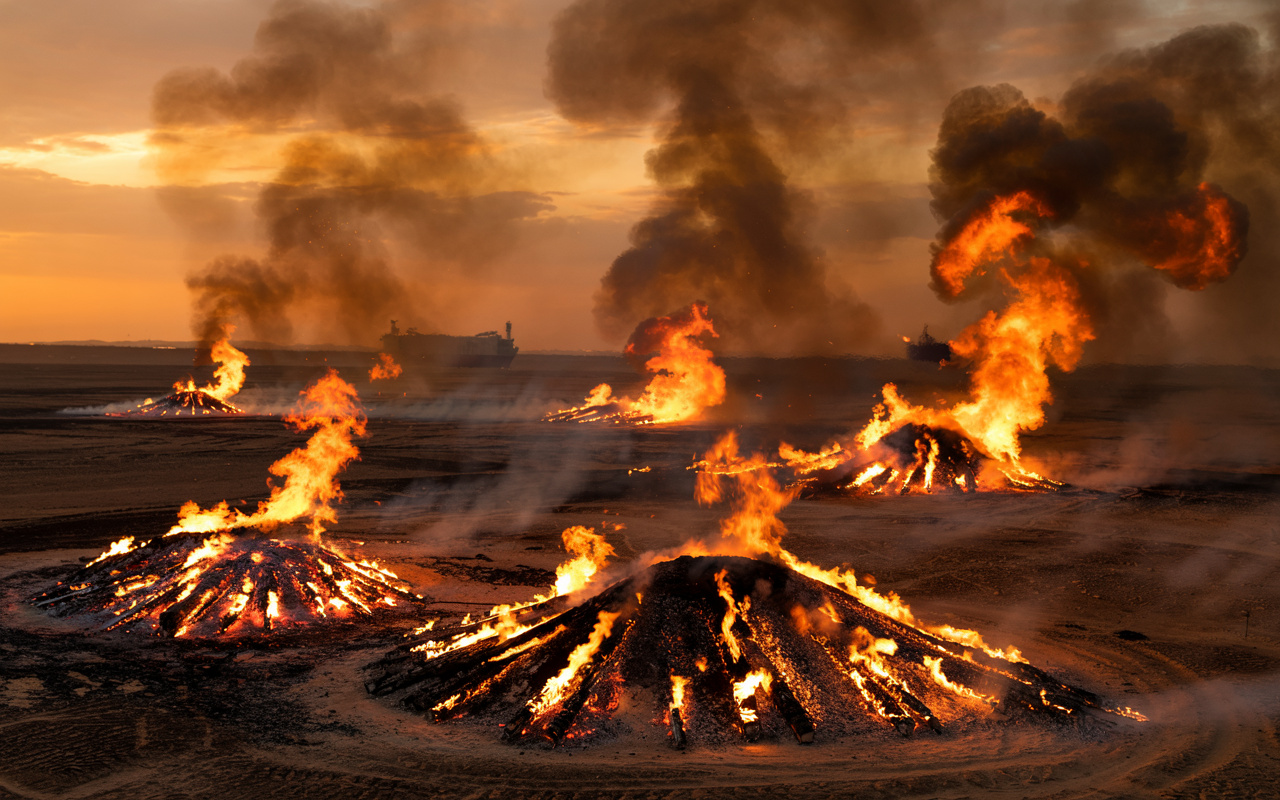
In 1991, the world witnessed one of the largest environmental disasters of the modern era. During the withdrawal of Iraqi troops from Kuwait, at the end of the Gulf War, 732 oil wells were intentionally set on fire. This devastating act had a profound impact on the environment, public health, and the global oil industry, becoming one of the largest episodes of oil well fires in Kuwait and disasters in the oil industry ever recorded.
The Greatest Intentional Destruction In The Gulf War With Oil
The scene was apocalyptic. Huge columns of black smoke rose into the sky, covering the Persian Gulf and turning day into night, while the sound of explosions echoed incessantly. The Iraqi army, upon retreating, initiated a sabotage strategy that resulted in the massive destruction of Kuwait’s oil fields.
According to a report from the British newspaper The Guardian, the flames from the wells burned for about nine months, until November 1991, consuming an enormous amount of oil daily.
-
More than 40 Petrobras platforms enter the decommissioning queue and open up a billion-dollar industry in Brazil for cranes, special ships, underwater cutting, and offshore recycling.

-
ANP schedules oil auctions in October and reinforces regulatory predictability for concessions, sharing, and investments in the oil and gas sector

-
There is oil below the oil that Brazil already extracts: Petrobras confirmed a new accumulation in the Búzios field, at a depth of 5,600 meters, in a zone below the reservoir already operating in the Santos Basin.

-
404 km off the coast of Rio de Janeiro, an oil company drilled 5,855 meters into the ocean and discovered the largest oil and gas reserve found in a quarter of a century.




Data from the National Oceanic and Atmospheric Administration (NOAA) indicates that, at the peak of the fires, approximately 3 million barrels of oil were burned per day, releasing tons of toxic gases and particles into the atmosphere. This deliberate burning caused unprecedented environmental and economic impacts, turning the episode into a negative milestone of the Gulf War.
Environmental Impacts Of The Kuwait Oil Well Fires
The environmental effects of the disaster were devastating and long-lasting. The dense smoke, loaded with soot and sulfur dioxide, drastically altered air quality in the region and affected the local climate.
A study published in the Environmental Pollution Journal pointed out that temperatures in the region decreased by 4 to 6°C due to the blockage of solar radiation caused by the thick smoke.

Additionally, the soil became severely contaminated. Crude oil leaked from the burned wells, forming artificial lakes that infiltrated toxic substances into the groundwater.
Reports from the United Nations (UN) indicate that about 40 million tons of sand were directly contaminated, rendering entire areas of the desert uninhabitable and causing irreversible damage to local fauna and flora.
The environmental impact was not confined to the Kuwait region. The particles released into the atmosphere were carried by winds and affected other areas of the Persian Gulf, even causing public health changes in neighboring countries.
Disasters In The Oil Industry: Impacts On Public Health
The atmospheric pollution resulting from the Kuwait oil well fires had severe effects on the health of the local population. Vulnerable groups such as children, the elderly, and people with pre-existing conditions suffered more from exposure to toxic smoke, presenting cases of asthma, chronic bronchitis, and cardiovascular issues.
Hospitals in the region reported an overload of treatments related to these diseases, highlighting the direct impact of the environmental disaster on the well-being of Kuwaitis. Furthermore, studies indicate that the generated pollution contributed to increased premature mortality and chronic health problems that persisted for years after the fires ended.
How The World Reacted To The Kuwait Oil Well Fires
After the liberation of Kuwait in February 1991, the international community mobilized to combat the oil well fires, which continued to consume thousands of barrels of oil daily. Specialized companies in oil fire fighting were called to control the situation.
Among the most renowned, the Red Adair Company stood out for its crucial role in the operation. About 10,000 professionals, including firefighters and engineers, worked to extinguish the 732 fires, using advanced flame-fighting techniques. The operation extended until November of that year, costing over US$ 1.5 billion, according to the Kuwaiti government.
The experience helped refine methods and technologies for combating oil fires, positively impacting the industry and future disaster prevention.
Economic Consequences After The Disaster In The Oil Industry
The economic impact of the disaster was immense. The interruption of Kuwait’s oil production affected the global energy market, creating volatility in crude oil prices. During the first half of 1991, the price of oil per barrel reached historical levels due to uncertainty over regional supply.
According to data from the U.S. Energy Information Administration (EIA), the normalization of Kuwait’s oil exports was only possible from 1994. In the meantime, the country suffered billion-dollar revenue losses, negatively impacting its economy and post-war reconstruction policies.
For the global market, the situation highlighted the fragility of oil supply chains in conflict areas, emphasizing the importance of diversification and international energy security.
The Environmental Legacy Of The Kuwait Oil Well Fires
More than 30 years after the flames died, Kuwait still grapples with the environmental consequences of the disaster. Although extensive cleanup and recovery programs have been undertaken, the impacts on soil and vegetation are still felt.
A report from the Kuwait Oil Company released in 2021 revealed that some areas near the burned oil fields show slow recovery of native vegetation, indicating a natural regeneration process that may take decades to complete.
The episode also contributed to strengthening environmental policies in the country, stimulating investments in safer and more sustainable extraction technologies.
The Kuwait Oil Well Fires And Their Reflections On The Global Oil Industry
The disaster caused by the Kuwait oil well fires marked a turning point for the global oil industry. The UN implemented stricter environmental policies for conflict zones, seeking to minimize future impacts on oil-producing areas.
Moreover, the episode accelerated the development of technologies for preventing and combating fires in oil facilities. Automated suppression equipment and leak containment techniques began to be adopted globally, reducing the risks of similar disasters.
The event is still remembered as a warning about the vulnerability of the oil industry in the face of armed conflicts, reinforcing the importance of peace and energy security.
The Disaster That Forever Marked The History Of Kuwait And The Oil Industry
The fires in 732 oil wells in Kuwait, which lasted nine months, symbolize the devastating effects that wars and conflicts can have on the environment and public health. More than just an isolated catastrophe, the event highlighted the risks of disasters in the oil industry and the need for preventive policies and coordinated international actions to protect strategic regions.
The flames that covered the sky of the Persian Gulf marked a turning point for the industry, environmental awareness, and the geopolitics of oil. To this day, its memory serves as a warning to prevent similar tragedies in the future, promoting balance between energy development and environmental preservation.








-

1 person reacted to this.