





 Portuguese
  English
  Spanish
  3 min of reading
  13 comments


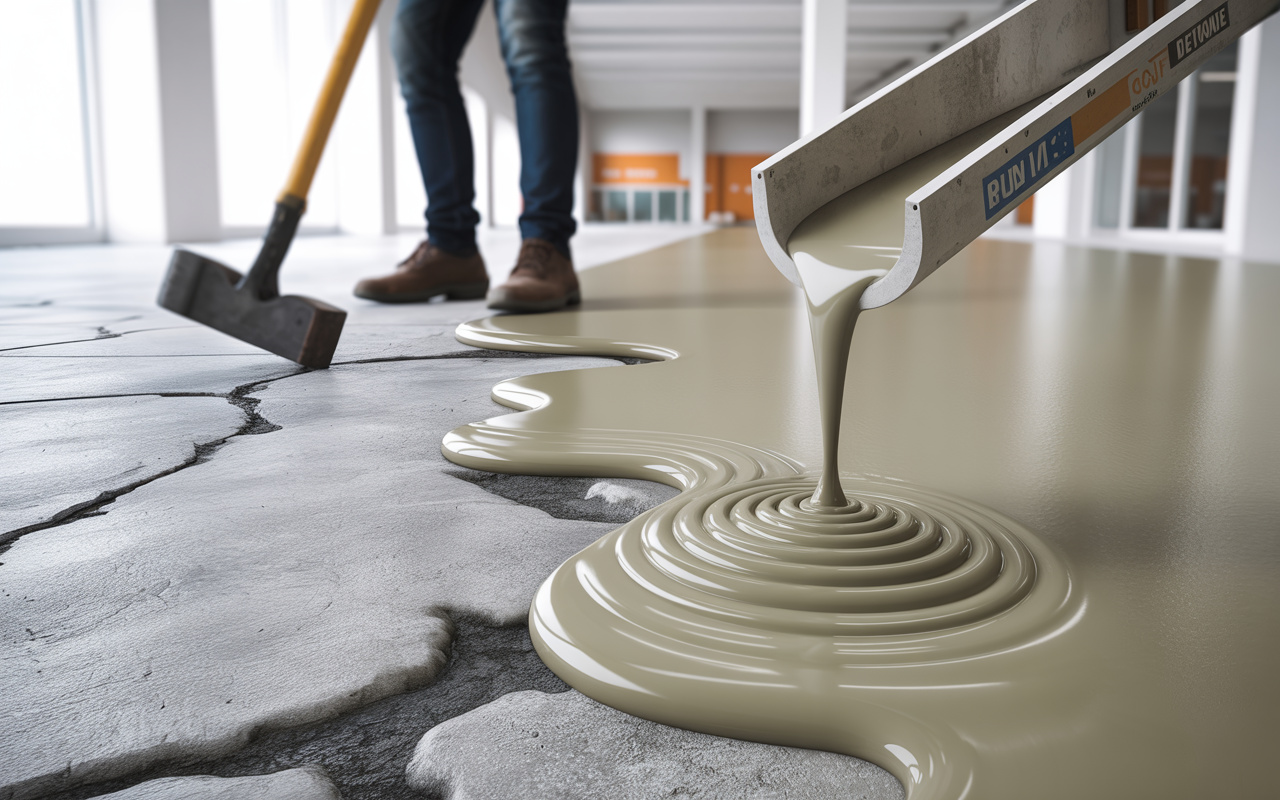


Self-Leveling Compound Levels Irregular Floors Without Demolition, Reduces Construction Time, and Is Already Used in Quick Renovations and Commercial Projects.
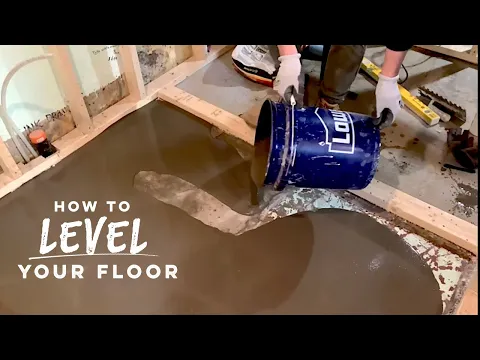
For decades, correcting a crooked floor meant breaking the subfloor, generating debris, delaying the work, and increasing costs. The self-leveling compound, technically known as self-leveling compound, completely changes this logic. Instead of demolition, the material is applied over the existing surface, and thanks to its controlled fluidity, it spreads on its own, creating a perfectly flat base to receive the final covering.
This solution has transformed the renovation process, especially in environments where time is money.
How Does the Cement “Self-Correct”?
The principle of self-leveling compound lies in its composition. It combines cementitious or polymeric binders, plasticizing additives, and rheological agents that reduce viscosity without compromising final strength.
-
Slums in India painted roofs white to cope with 46°C heat, cool down stuffy homes, improve sleep, reduce energy consumption, and even ease the burden on refrigerators.

-
Couple builds a 62 m² house with two containers and draws attention for the creative and sustainable proposal; the property was built on a 3,123 m² plot in Belgium, combining solar energy, reused materials, and a lifestyle more connected to nature.

-
Instead of carrying everything uphill, China deployed two heavy-duty drones that together lift up to 650 kilograms to supply a power line on a mountain in Hebei, delivering hundreds of tons of material in a single day.

-
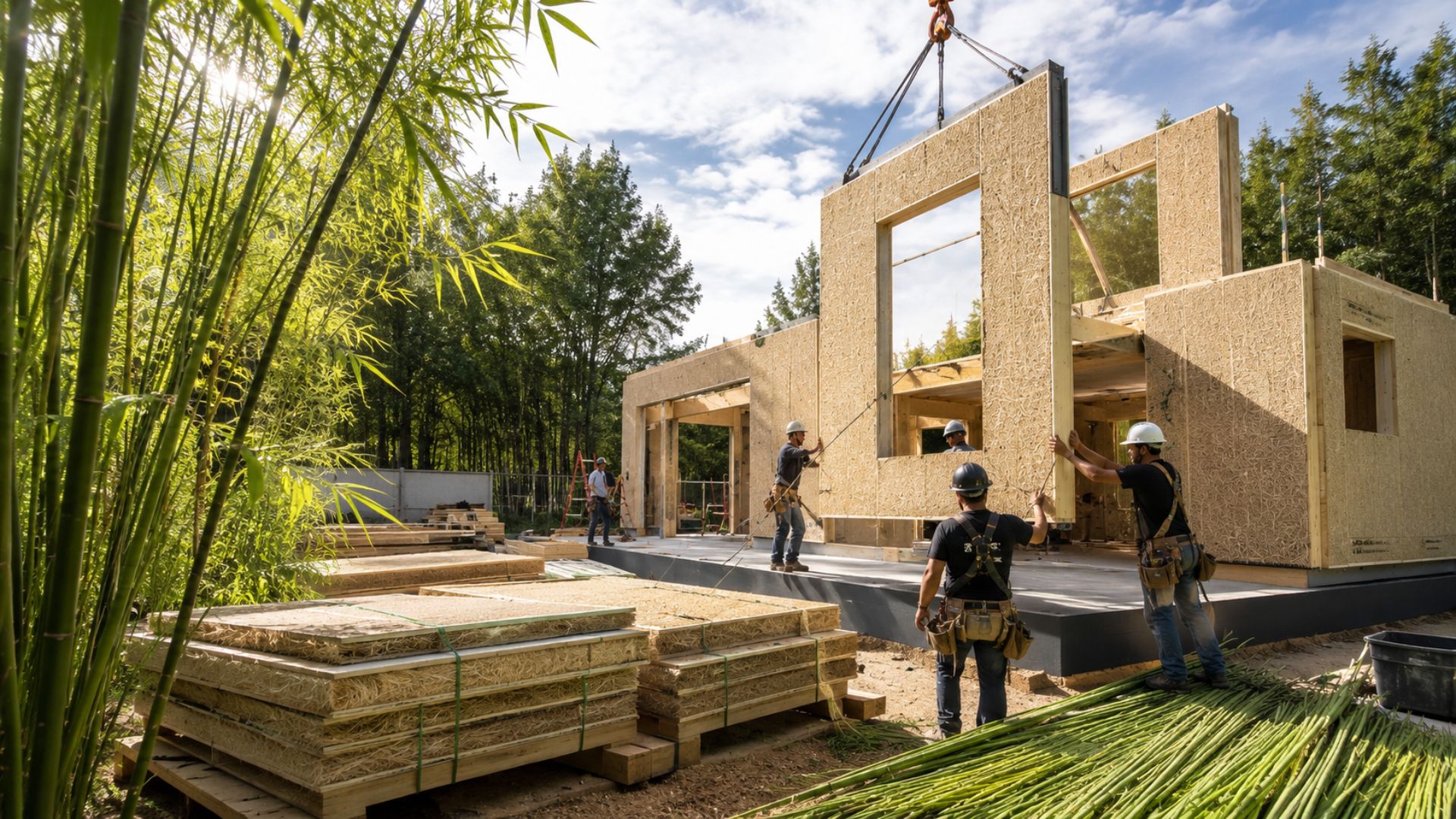
A former SpaceX engineer left rockets to reinvent home construction and founded a startup that manufactures wall panels from a grass that grows about 15 centimeters per day.



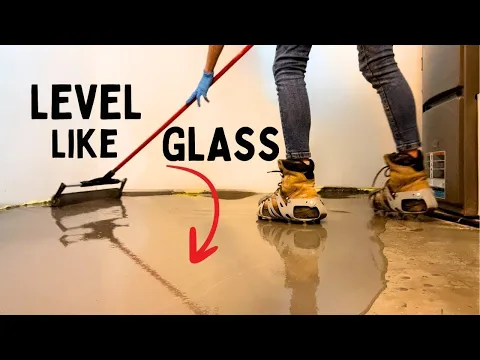

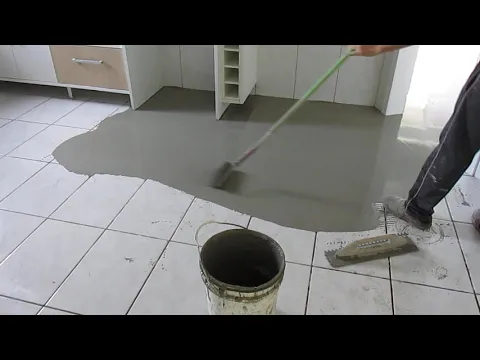
When applied, the mixture flows by gravity, filling unevenness, ridges, and small imperfections in the floor.
The result is automatic leveling, eliminating the need for extensive troweling or lengthy manual adjustments.
Correction Without Breaking the Subfloor
One of the greatest advantages of self-leveling compound is the direct application over the existing subfloor, provided it is structurally intact.
This eliminates the most expensive and noisy step of the renovation: demolition. Less debris, less waste transportation, and less interference with space usage.
In occupied buildings, such as shopping malls, hospitals, and offices, this feature makes all the difference.
Speed That Changes the Project Schedule
In addition to avoiding breaking, self-leveling compound drastically reduces execution time. Many systems allow for light traffic just a few hours after application, while the final covering can be installed in much shorter time frames than those required by traditional subfloors.
This speed is why the material has become almost standard in commercial projects, where long stoppages represent direct losses.
Controlled Thickness and Precise Finishing
Another technical differential is thickness control. Self-leveling compound can be applied in thin layers, correcting millimeters of unevenness with high precision.
This prevents excessive elevation of the finished floor, which is critical in renovations where doors, baseboards, and existing levels cannot be altered.
The final finish is smooth and even, ready to receive ceramics, porcelain, vinyl, carpet, or special coverings.
Real Applications on a Large Scale
The use of self-leveling compound is not limited to minor repairs. Large retail chains, logistics centers, and corporate buildings have adopted the technology as the standard for floor leveling.
The predictability of the result and the repeatability of the process allow standardization of projects in different locations, something essential in large-scale commercial projects.
Technical manufacturers follow international standards, such as guidelines from ASTM, ensuring performance and compatibility with various flooring systems.
Fewer Errors, Less Rework
By self-leveling, the material reduces the dependence on extreme manual skill. This decreases execution errors, reduces rework, and increases the average quality of the finish. In large teams, this predictability is an important operational gain.
Even so, base preparation — cleaning, appropriate primer, and moisture control — remains essential for system performance.
Despite the advantages, self-leveling compound is not a solution for all cases. It does not correct serious structural issues nor does it replace damaged subfloors. In areas subject to high loads, it is necessary to verify the specific resistance of the chosen product.
Another important consideration is to follow the manufacturer’s instructions regarding water dosage, as excess can compromise strength and durability.
A Simple Solution to an Old Problem
The self-leveling compound has become established because it solves a chronic problem in the construction industry with a straightforward approach: leveling without destruction.
By eliminating the breaking of the subfloor, speeding up schedules, and delivering precise finishes, it redefines how floors are corrected in modern renovations.
It is not about magic, but about smartly applied materials engineering that can transform a heavy and time-consuming process into a quick, clean, and predictable stage.









Onde comprar ? Estou em construção e em vez de colocar piso vou investir nesse material
Tem de ter uma mão de obra muito boa mesmo e muito experiente. Pois acredito que pode virar uma **** dependendo de quem for executar.
Preciso de um material assim para regularizar a laje para eliminar poças de água parada … se tiver me avise!!!