Portuguese
  Spanish


It was the first time that two heavy-duty drones worked together in the construction of a 220 kV line in Chengde, Hebei province. The line is 72.8 kilometers long, and each drone carries about 325 kilos. However, the efficiency numbers come from the project’s engineers.
Instead of carrying everything uphill, China used two heavy-duty drones that together lift up to 650 kilos to supply a power line in the difficult terrain of Hebei, delivering hundreds of tons of material in a single day. According to the report by bastillepost conducted in June 2026, it was the first time that two of these large aircraft operated together on the project. The setting is the city of Chengde, in the north of the country.
According to the material, the work is part of the construction of a 220 kV transmission line, which extends for 72.8 kilometers, with many points in ecologically fragile areas. To gain efficiency and reduce environmental impact, the engineers used the drones to deliver transmission tower components and auxiliary materials. It is worth mentioning that the productivity gains described come from the project’s own engineers.
How the heavy-duty drones supply the line in Hebei
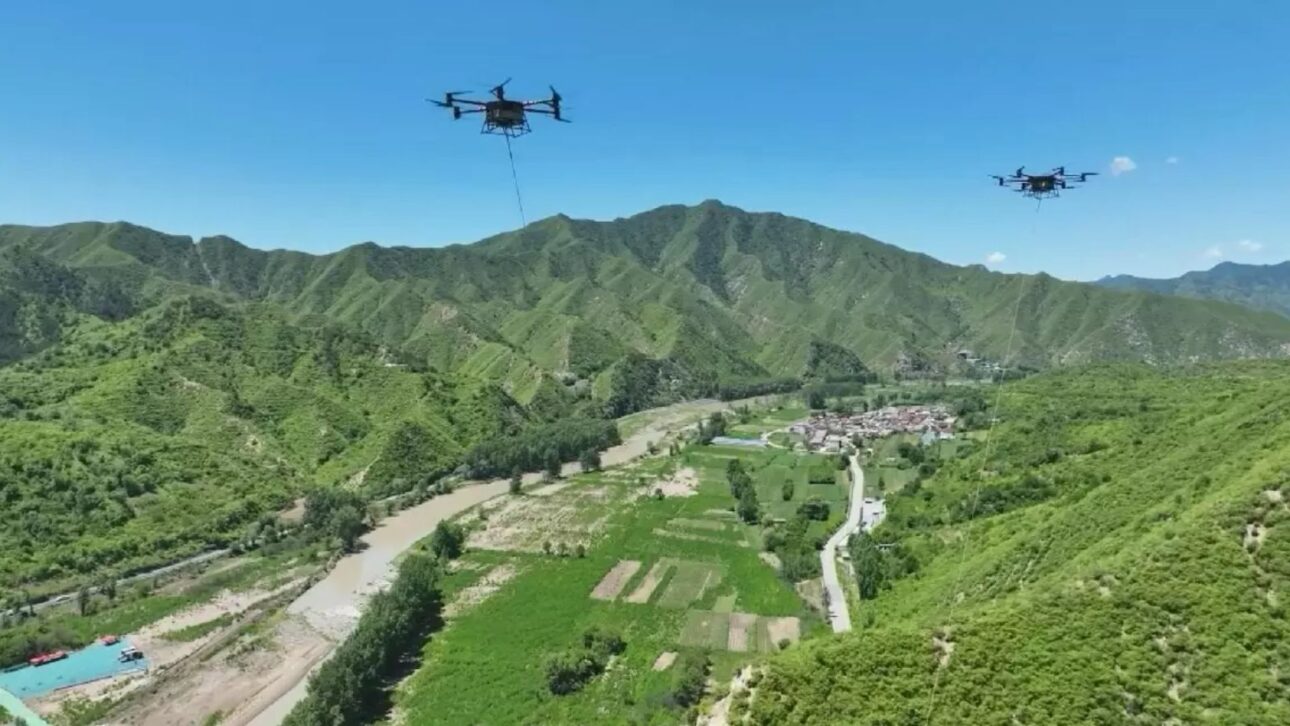
The novelty lies in the use of two aircraft at the same time. It was the first time that two heavy-duty drones were used together to transport heavy materials to the work fronts during the construction of a 220 kV line in Chengde, Hebei province, in northern China. The two drones have a combined maximum load capacity of 650 kilos, which equates to about 325 kilos per device.
-
Giant 3,600-ton Crane Breaks Two World Records by Installing World’s Largest Single-Piece Forged and Welded Hydrogenation Reactor, Weighing 3,037 Tons, in Chinese Petrochemical Plant in Just Six Days

-
$80 Million Bridge in Brazil Cuts Travel Time from 30 Minutes to 1 Minute, but Audit Reveals Major Flaws
-
Man Builds Stone Bed with Granite Rocks and Hand-Sawn Cedar Beams, Home Extension Garners Over 437,000 Views on Bonus Bolts Channel

-
Brazilian Researcher Develops Color-Changing Roof Tile to Reduce Air Conditioning Use by Up to 15%



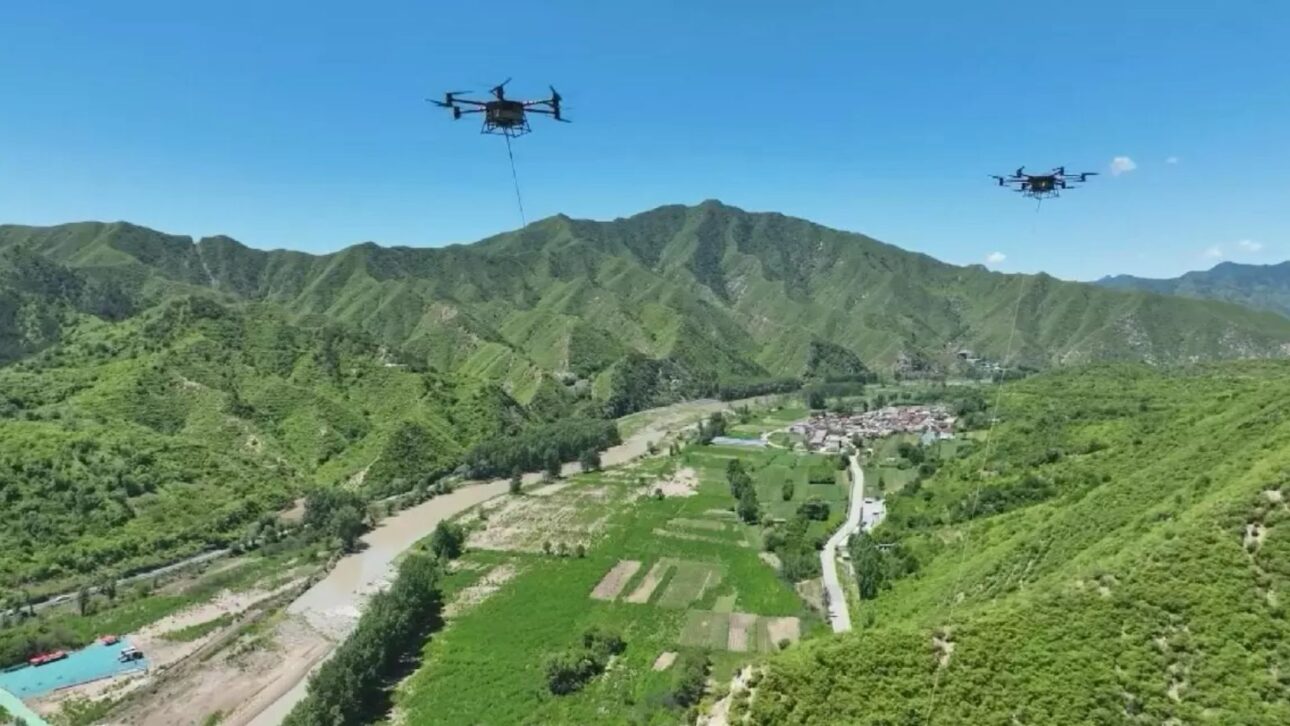
The terrain is what makes the task difficult. According to the material, the line is 72.8 kilometers long, and many of the construction sites are in ecologically fragile areas, which led engineers to use drones to transport tower components and support materials. According to engineer Wang Shuai, with the drones “hundreds of tons of materials can be delivered in a single day,” which, according to him, greatly improves construction efficiency.
Individual or dual flights, depending on the material
The transport was planned case by case. During the construction, engineers developed customized transport plans according to the weight, shape, and protection requirements of each material, using flights with a single drone or coordinated operations with two drones, as needed. This flexibility is what allowed the transportation of tower parts up the mountain without carrying everything by hand.
For those responsible, the technique has potential beyond Hebei. According to the material, engineer Chang Zheng stated that the reliable use of heavy-duty drone transport offers “replicable and scalable smart and ecological solutions” for building power grids in similar complex terrains. This is his assessment of the technology’s potential, based on this experience.
Why aerial delivery matters in difficult terrain
Logistics is often the biggest bottleneck in this type of construction. According to the material, in mountainous and environmentally sensitive regions, the traditional way is to carry materials uphill or open access roads, which is slow and impacts the environment. Heavy-duty drones replace much of this effort, delivering components directly to the tower foundation sites.
Still, it’s worth maintaining the right measure. Engineers treat the solution as something that can be repeated in other power grid projects in complex terrain. As these claims of efficiency and scalability come from the team involved in this specific Hebei project, large-scale repetition appears as a potential pointed out by them, rather than a result already proven elsewhere.
What the Hebei case shows about the construction of power grids
The episode provides a concrete example of technology use. According to the material, the Chengde case shows that heavy-duty drones can play a real role in the logistics of power line construction, moving tower components and auxiliary materials to hard-to-reach points and reducing the need to carry everything up the mountain. For the electric sector, the appeal is to build faster and with less disruption in sensitive areas.
The scope of the idea, however, still depends on unspecified factors. How much this applies to longer lines and heavier loads depends on limits like capacity, weather, and autonomy, which were not specified in this case. Thus, the Hebei project serves as a practical demonstration, presented by engineers as replicable, but the full extent of this potential still needs to be shown.
In the city of Chengde, China used for the first time two heavy-duty drones together to supply the construction of a 220 kV line in the difficult terrain of Hebei, with a combined capacity of 650 kilograms, about 325 kilograms per device.
According to the engineers, the solution delivered hundreds of tons in a single day, cut the need to carry everything up the mountain, and reduced environmental impact, and the team presents it as a replicable model. Even so, the numbers and scale come from the project’s own leaders, and the broader potential is yet to be proven.
And you, do you believe that heavy-duty drones can change the way power lines and other works are built in difficult terrain, or are there still important limits? Share your opinion and exchange ideas with other readers, respecting different views.