Portuguese
  Spanish




The Ministry of Agrarian Development Announced that It Extended the Validity Period of Declarations of Aptitude for the National Program for Strengthening Family Agriculture (Pronaf) by One Year. The Ordinance Was Published in the Official Gazette, and the Extension Applies to Declarations Expiring Between February 8, 2023, and January 31, 2024.
In response to the need to adapt the system of declarations of aptitude that have already expired, the Brazilian government set up a task force to enable the issuance of the Family Agriculture Register (CAF). The document provides access to programs aimed at family farmers and is part of the regularization process with the authorities.
Declarations of aptitude expiring from February 1, 2024, will have their deadlines maintained. For questions about this matter, it is possible to contact the Ministry of Agriculture via email atendimento.cocaf@agro.gov.br or by phone (61) 9965-6115 (call or WhatsApp).
The ordinance signed by Minister Paulo Teixeira will ensure access to public policies aimed at the countryside, as well as improve the system of the Family Agriculture Register (CAF) to meet the needs of family farmers. This measure aims to benefit small farmers in the country, ensuring them adequate conditions to develop their work.
-
A city with 8,000 inhabitants will receive R$ 25 billion to host the largest single-stage pulp mill in the world, with a production of 3.5 million tons per year and a cost of R$ 45 million.

-
He left India for Oman in 1976, entered through the door of luxury finishes, and took Sobha to the premium real estate market in the Middle East.

-
China wants to impress the world once again with a mega canal featuring giant locks, deep waters, and space for the largest ships, in a project aimed at shortening journeys, reducing queues, and rivaling the Panama Canal in global trade.

-
Brazil saved US$ 32.4 billion in 2025 by switching from fossil to renewable energy and only ranked behind China and the United States on the IRENA global podium.




Agroforestry and Family Agriculture

Family Agriculture
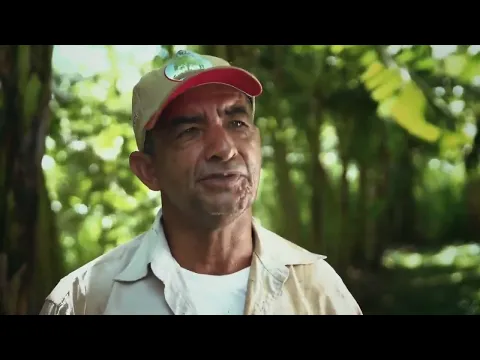
Family agriculture is a form of agriculture practiced on small rural properties by families and some employees. The objective of family agriculture is to produce food for the consumption of these families, as well as for the general population.
It is a form of agriculture that stands out for its sustainability, as it uses natural techniques and preserves natural resources. Family agriculture is an important source of livelihood for families living in rural areas. It is estimated that about 70% of the food consumed in Brazil is produced by family agriculture, whose process involves traditional techniques and folk knowledge.
This practice contributes to the preservation of biodiversity and environmental balance. Furthermore, it is an important source of income for many families, as it generates employment in the field and improves product quality. In this way, it contributes to the sustainability of activities in the agricultural sector, as families work together to plant the products that are later sold.
Family Agriculture in Brazil
The family agriculture in Brazil accounts for nearly 85% of rural properties, and the Northeast region concentrates half of this percentage. However, mechanization, agribusiness, and the use of pesticides have caused numerous problems for these small farmers, including rural exodus and the marginalization of families.
Law 11.326 of 2006 brought advances in public policy for this sector, establishing guidelines for creating a consistent policy. The resistance of family farmers has been fundamental in reducing the environmental impact caused by modern systems.