Portuguese
  Spanish




With Over 1.25 Million Acres Cultivated and US$ 4.9 Billion in Exports, Almond Production in California Boosts Agriculture but Generates Serious Environmental Impacts and Challenges Local Agricultural Sustainability
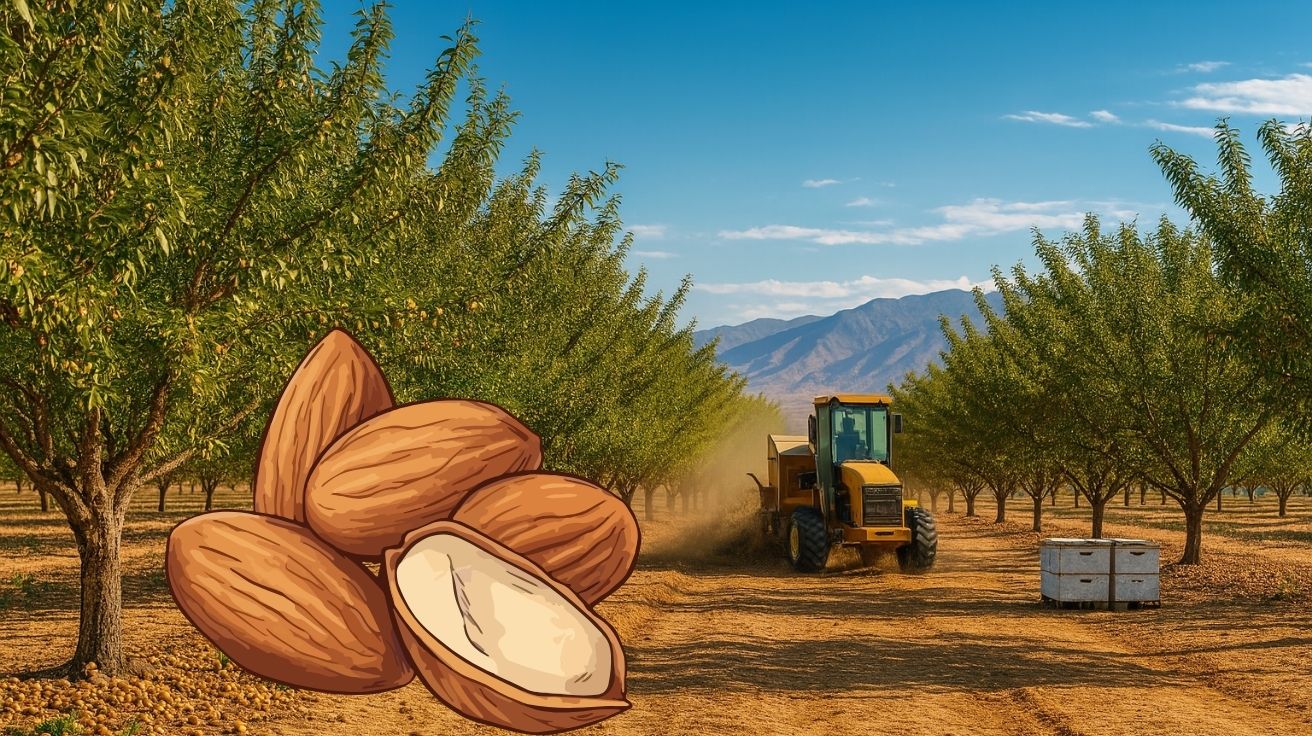
California accounts for 80% of the world’s almond production, being the leading exporter in the United States. With over 1.25 million acres dedicated to the crop, the state generates billions in agriculture but faces growing challenges such as water scarcity, pressure on pollinating bees, and excess agricultural waste.
The San Joaquin Valley region in the center of the state hosts the largest almond farms in the world. In 2020, California’s production reached 2.8 billion pounds (1.2 million tons). The dry and hot Mediterranean climate combined with a developed water infrastructure favors the commercial cultivation of this oilseed, which is not native to the region.
Despite high productivity, the rural production of almonds requires large-scale resources. Intense irrigation and reliance on commercial hives during flowering make the system vulnerable to environmental and logistical crises. In recent years, climatic and economic issues have slowed the pace of expansion.
-
Brazilian Farmers with Basic Education Create Backyard Machines That Win National Invention Contest, Beating 242 Projects

-
Brazilian Farm Innovates with Cage-Free Chickens, Producing 3,300 Odorless Eggs Daily

-
From Selling Unsold Saplings to Creating Brazil’s Most Awarded Olive Oil Brand with 330 Accolades and a $12 Million Goal by 2026
-
China Builds 400-Hectare Irrigation System in Tanzania to Aid 1,000 Families Dependent on Rainfall


Economic Impact and Global Exports Drive the Almond Market
According to the California Department of Agriculture, almonds were the third most valuable agricultural product in the state in 2019, generating US$ 4.9 billion and representing about 11% of the total value of state agricultural production. Europe, China, and India lead the ranking of importers.
The growth of the crop was driven by agricultural mechanization, which reduced the need for labor. During harvest, machines called tree shakers violently shake the trees to drop the almonds, increasing efficiency compared to other crops in the agricultural sector.
With the global rise in demand for healthy foods, the California almond industry has doubled its production since the early 2000s. This increase led many producers to replace traditional crops, such as cotton, with almond trees, resulting in a transformation of the region’s agricultural profile.
Water Crisis, Rented Hives, and Environmental Impact Challenge the Production Model
The dependence on water is one of the main bottlenecks in almond production. During the historic drought between 2011 and 2017, the crop consumed about 10% of the state’s water, leading producers to increase the extraction of groundwater in an unsustainable manner.
Furthermore, the sector heavily relies on pollinating bees. Since almonds require cross-pollination, farmers import hives from various parts of the U.S. This intensive movement has increased costs and exposed apiaries to colony collapse disorder, reducing productivity across multiple crops simultaneously.
Another challenge is the excess waste. In 2015/2016, production generated over 2 million tons of shells and organic waste. With the decline in demand for byproducts in livestock, the sector is seeking alternatives such as using biochar in tires, biodegradable plastics, and composting entire orchards.
Future Prospects Demand Innovation and Sustainable Almond Management
With increasing competition from countries like Australia and South Africa, the Californian sector has invested in agricultural technology, waste reuse, and genetic improvement of drought-resistant cultivars. Additionally, initiatives such as total recycling of orchards have helped retain nutrients in the soil and improve water efficiency.
The recent global logistical crisis has also impacted exports. In July 2021, more than 75% of the containers leaving Los Angeles were empty due to the rush for Asian inputs. As a result, tons of almonds were stranded in ports, directly affecting the profitability of farmers and cooperatives.