






 Portuguese
  Spanish
  3 min of reading
  2 comments


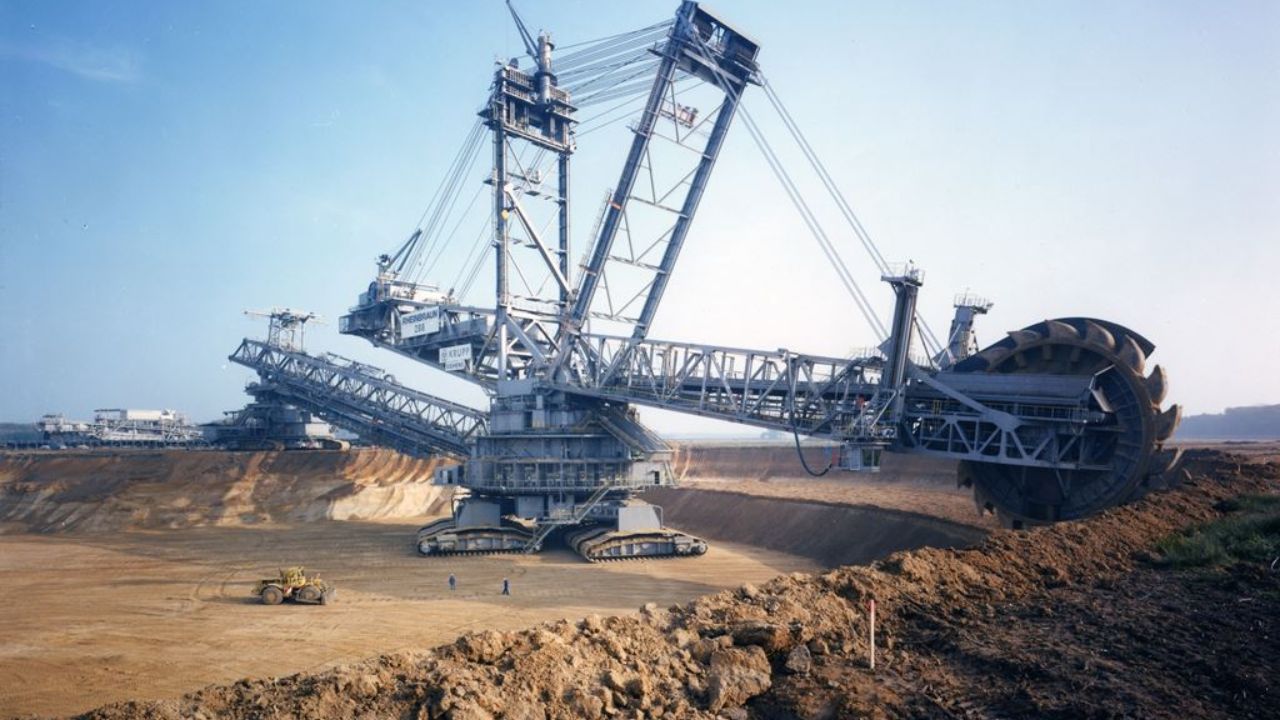


With 13,500 Tons, 220 Meters Long, and a Bucket Wheel the Size of a Seven-Story Building, the Largest Land Vehicle in the World Can Excavate the Equivalent of a Football Field Per Day and Fill 2,400 Coal Cars.
A vehicle so large that it makes the Statue of Liberty look tiny? That’s exactly what the Bagger 288 represents. Designed to revolutionize the mining industry, it is more than just a machine; it is a true monument to modern engineering. Standing at 300 feet tall and weighing more than the Eiffel Tower, it holds the title of the largest land vehicle in the world.
But what makes the Bagger 288 so special? From its ability to excavate the equivalent of a football field in one day to the impressive details of its construction, everything about it is superlative. Let’s dive into the details of this colossus.
Construction and Design of the Largest Land Vehicle in the World: Bagger 288

The story of the Bagger 288 begins in the 1970s when the German company Krupp was tasked with creating a machine that would meet the needs of surface mining. It took five years of planning and another five years to assemble, culminating in 1978 at a cost of £80 million. It is no exaggeration to say that every detail was designed for efficiency and durability.
-
China could reduce iron ore imports from 80% to 50% of consumption by 2030, while its share in global steel production falls from 52% to 46%, in a shift that could reshape the global market, says CMRG.

-
Brazil is sitting on one of the largest lithium reserves in the world, in the Jequitinhonha Valley, but national mining has almost become an appendage of China: 97% of the metal’s export goes to a single country, which also dominates refining.
-
Iron ore falls to 762 yuan in China as real estate sales decline and steel production hits lowest level since 2018
-
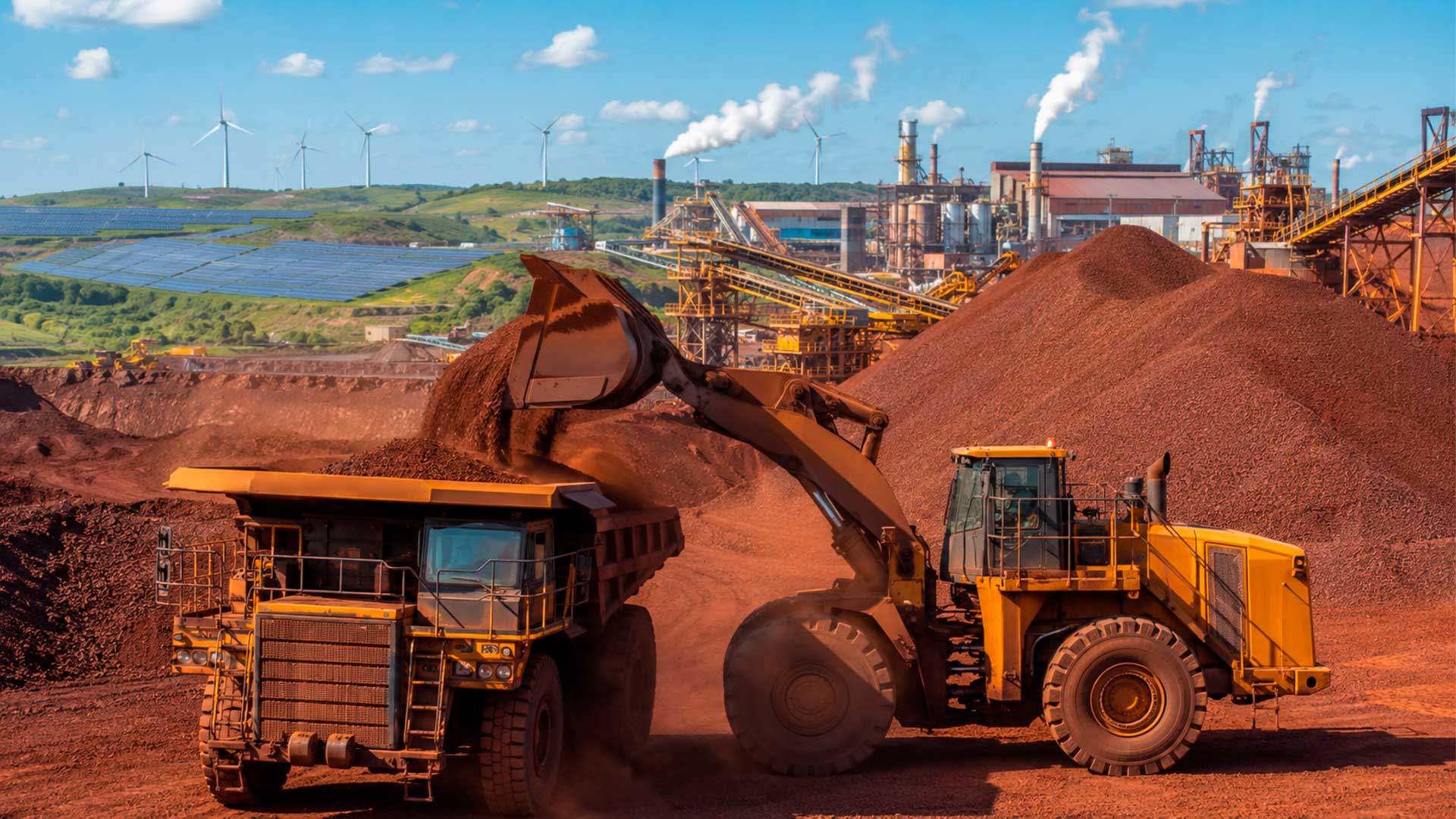
Brazil has minerals, clean energy, and a waiting market, but it could miss a billion-dollar opportunity if it doesn’t speed up the race for green minerals, while the steel industry seeks to reduce emissions.


The largest land vehicle in the world measures 220 meters long and almost 96 meters high, figures that place it in a unique category. Weighing 13,500 tons, it moves at a speed of only 643.74 meters per hour — in other words, it is not in a hurry, but it does not need to be. Its bucket wheel, the size of a seven-story building, is the heart of its operation.
How the Bagger 288 Works
The largest land vehicle in the world was designed to remove overburden, the surface layer of soil covering coal. With a daily excavation capacity of 240,000 tons, the Bagger 288 is the definition of efficiency. Just to give you an idea, the amount of coal extracted in one day is enough to fill 2,400 cars.
Despite its colossal size, the machine requires only five operators to function. Its design incorporates cutting-edge technologies, such as suspension cables made of steel that are over 7,200 feet long and a transport system that moves 8.5 million cubic feet of soil per day.
Impact and Curiosities of the Bagger 288
In addition to being the largest land vehicle in the world, the Bagger 288 impresses with details such as the 90,000 pounds of paint that cover its structure. It is so large that it has bathrooms and kitchens on board, something you would expect more from a ship than from a land machine.
The Bagger 288 is not alone. It is part of a family of giant machines, like the Bagger 281 and the Bagger 293. However, no other vehicle combines size, efficiency, and impact like it does.







Excavator Opretar vecancy available for your company
Uma droga isso,,, publicação no Brasil e usando medidas de outros países,,, deveria usar termos e medidas usados no Brasil,,, eu não vou estar fazendo contas e convertendo medidas ****bicas distâncias tipo Campo de futebol, andares de prédio para entender a publicação,,, que se dane, o preferível é nem ler quando aparecem essas medidas, não dá mesmo pra ler toda a publicação,,, qual o **** ou os **** que publica essas bostas aqui no Brasil????