






 Portuguese
  Spanish
  3 min of reading
  3 comments


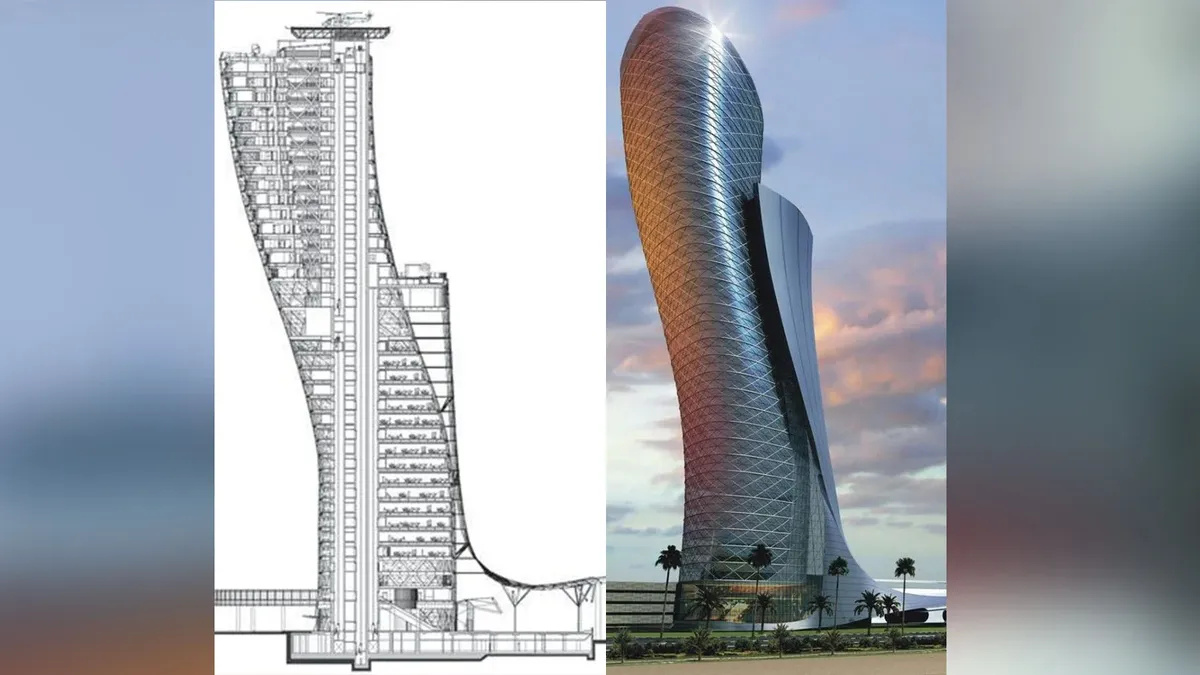


Capital Gate Building, in Abu Dhabi, United Arab Emirates with an inclination of 18° supercedes the Leaning Tower of Pisa and entered the Guinness as the most leaning building in the world ever built.
Throughout history, leaning constructions have always been seen as design errors or structural failures. The Leaning Tower of Pisa became a global symbol precisely because of that. But, in the case of this building, the extreme inclination is not a defect, it is the very concept of the work. Here, nothing has sunk, nothing has given way, and nothing has gone out of control. The Capital Gate building, in Abu Dhabi, United Arab Emirates was calculated from the first sketch to be born leaning, maintaining structural stability even with an angle that far exceeds any famous construction of the past.
18 Degrees of Inclination: A Number That Changes Everything
The building’s inclination reaches 18 degrees, while the Leaning Tower of Pisa has about 3.97 degrees. In practice, this means that the modern building is almost five times more inclined than the Italian tower, without presenting a risk of collapse.
This data is so extreme that it guaranteed the construction the official recognition from Guinness World Records as the most artificially inclined building in the world.
-
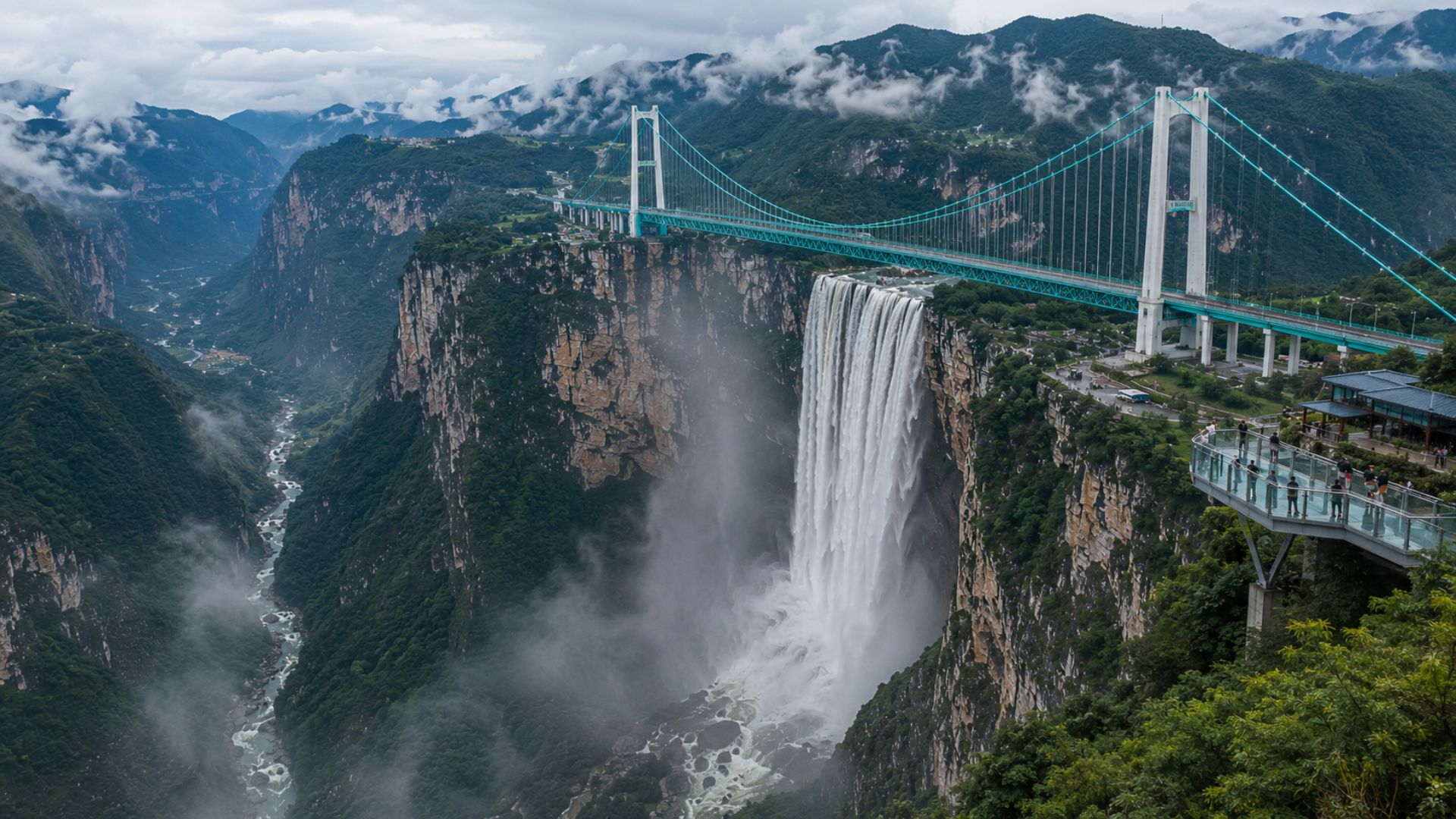
During the construction of the world’s highest bridge, the Huajiang Bridge in China, engineers discovered a giant aquifer and turned what would have been a serious problem into a 625-meter artificial waterfall, an engineering feat that no one had planned.

-
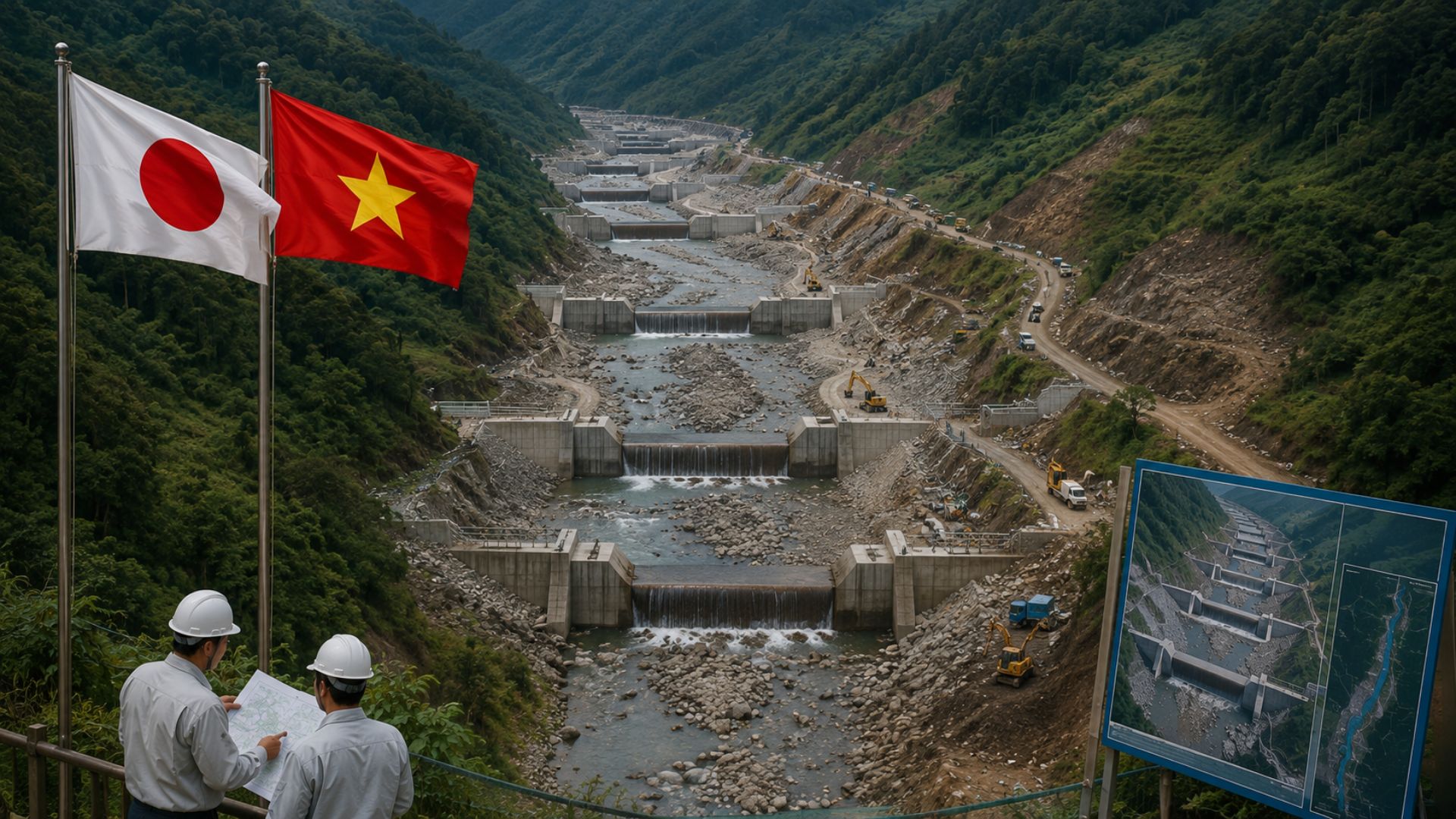
The river rose 15 meters overnight and devastated a village in Vietnam in 2025, and Japan responded with dams that hold back mud and stones, training 15,000 people for evacuation, and a sewage station for 1 million residents.
-
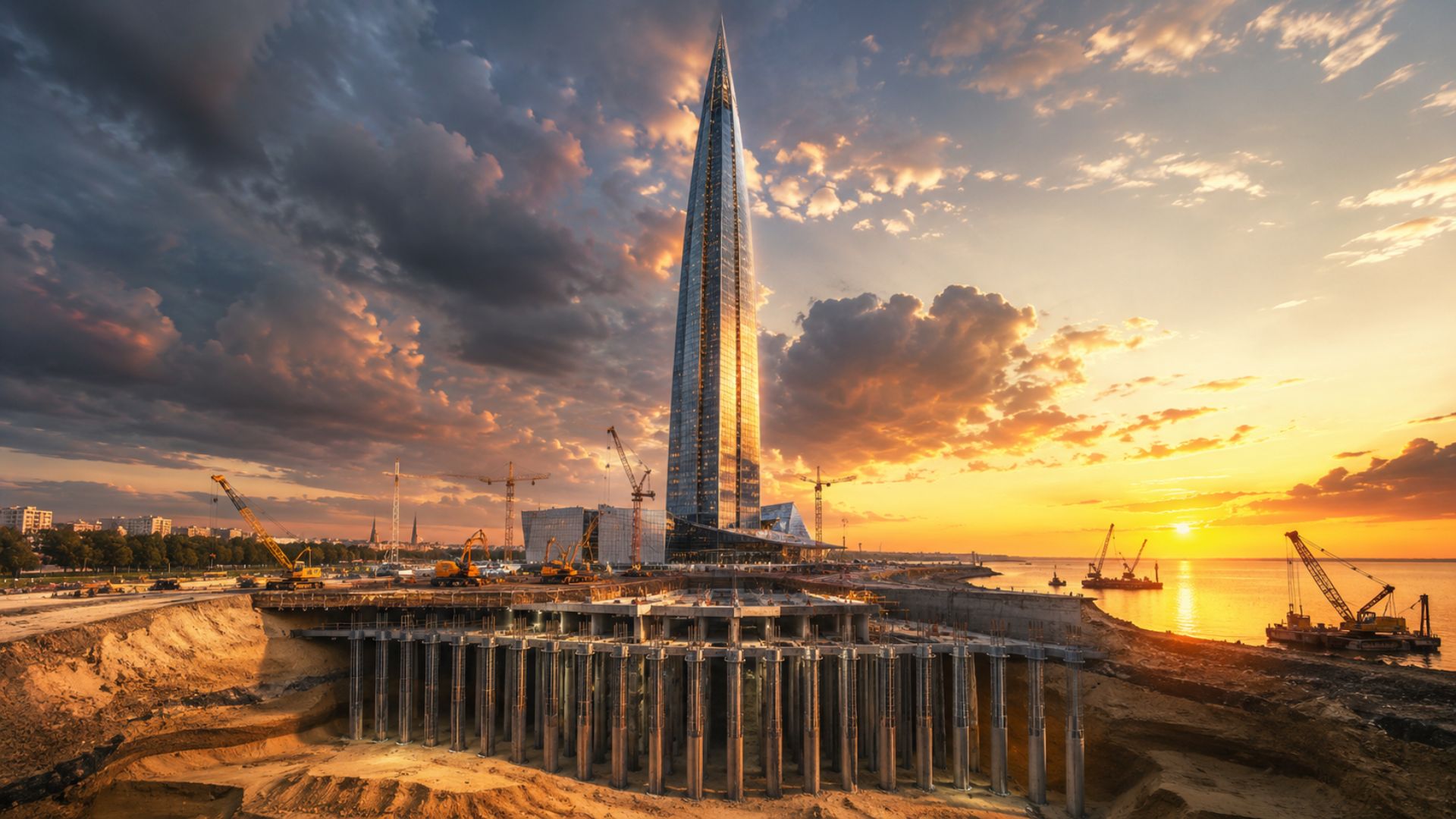
Russia erected the tallest building in Europe on ground as soft as quicksand, on the edge of the Gulf of Finland, with 264 piles of 25 meters, 30 thousand tons of steel, and 16,500 glass panels curved one by one in Saint Petersburg.
-
A mother of four sought a safer family environment, watched tutorials on the internet, built a 325 m² house with her family, and learned foundation, walls, plumbing, and electrical work without any professional experience.


The Secret Lies in the Asymmetrical Foundation
The key to supporting such a level of inclination lies in the foundation. Unlike conventional buildings, which distribute loads symmetrically, this structure uses a deeply asymmetrical foundation, combining piles of different depths and resistances.
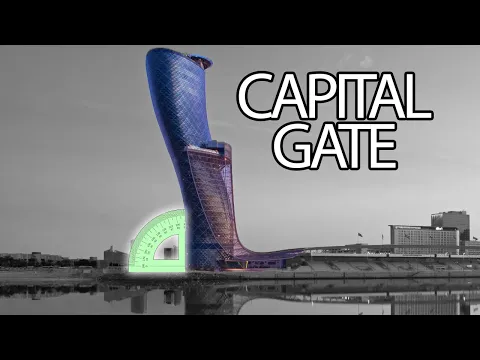

Part of the base consists of piles of up to 30 meters, while others are intentionally shallower. This creates an internal balance capable of counteracting the displacement of the center of gravity.
In addition, the structural core is not centralized: it has been strategically shifted to compensate for the weight of the leaning building.
Concrete, Steel, and an Invisible Exoskeleton
The main structure uses high-strength reinforced concrete and a diagonal steel mesh, known as diagrid. This type of structure functions as an exoskeleton, redistributing forces and preventing excessive deformations.
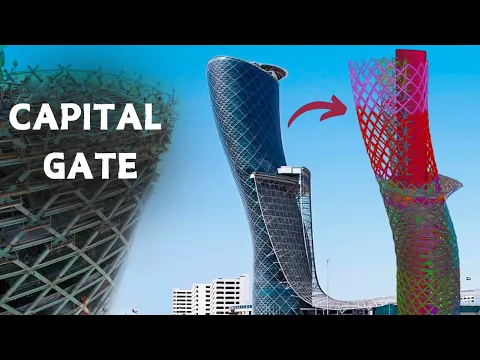
During construction, the building was temporarily raised with a temporary opposite inclination, so that, after the concrete cured and the structural settling occurred, it would reach exactly the planned final angle.
Nothing was left to chance: every millimeter of displacement was calculated in advance.
The Building Revealed: Capital Gate, in Abu Dhabi
The building is the Capital Gate, located in Abu Dhabi, in the United Arab Emirates. With 160 meters in height and 35 floors, it houses offices and a high-end hotel, functioning normally despite the extreme inclination.
The project was developed by RMJM Architects, with advanced structural engineering aimed precisely at making something that, until recently, seemed unfeasible.
More Leaning Than Pisa, But Without Historical Risks
While the Leaning Tower of Pisa has spent centuries being monitored, reinforced, and stabilized to avoid collapsing, the Capital Gate was born stable. The inclination is not the result of soil failure, but of deliberate engineering, executed with modern materials and advanced computational simulations.
This marks a fundamental difference between historical constructions that were inadvertently inclined and modern buildings that challenge limits by technical choice.
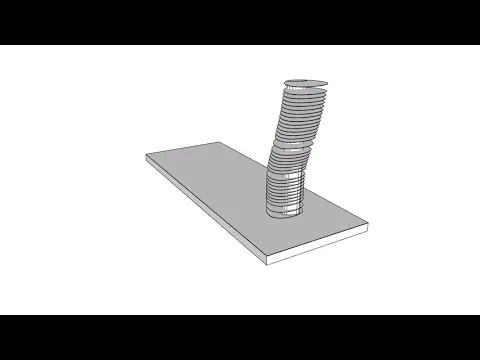
The Capital Gate is not just a visual icon. It represents how far structural engineering can go when architecture, mathematical calculation, and advanced materials work together.
Designing a building to be tilted requires more than aesthetic boldness. It requires absolute control over loads, foundations, concrete behavior over time, and structural response to winds, temperature, and continuous use.
When Engineering Decides to Challenge Logic
The most leaning building in the world proves that, in modern engineering, the impossible has become just a well-solved mathematical problem. What was once a sign of error can now be a project, as long as it is supported by precise calculation and rigorous execution.
Staying upright has never been so challenging and so intentional.





Como funciona o elevador
Ousadia pura
O prédio mostrado não é inclinado!