Portuguese
  Spanish





The Trajectory of Itapemirim: From Largest Bus Company in Latin America to Bankruptcy, Through Crises, Family Disputes, and the Controversial Management of Sidney Piva.
Itapemirim was once one of the largest road transport companies in the world. It came to dominate 70% of Brazilian territory with 1,700 buses and 20,000 employees. It even operated in 10 countries.
But this giant had a tragic end. In 2022, the court declared its bankruptcy after years of crisis and billion-dollar debts. How did Itapemirim reach this situation?
Camilo Cola and the Birth of Itapemirim in Espírito Santo
The story of Itapemirim begins with its founder, Camilo Cola. The son of Italian immigrants, he worked from an early age. He fought in World War II for the Brazilian Expeditionary Force (FEB). With savings and a government loan for ex-combatants, he bought a truck in 1946.
-
Brazilian Startup Turns Coffee Grounds into Plant-Based Leather, Cutting Water Use by Over 50 Times for High-Impact Sustainable Fashion

-
Eco Invest Auction Aims to Unlock $10 Billion in Investments, Focusing on Green Fertilizers, Critical Minerals, Batteries, and AI for Clean Industry in Brazil

-
Half of Brazilians Prefer Lower Taxes with Private Health and Education, While 44% Opt for Higher Taxes for State-Provided Services, Datafolha Survey Reveals

-
Brazil’s Most Expensive Toll Rises to R$ 40.60 on Route from São Paulo to the Coast, Nearly Matching Bus Fare to Santos




In 1948, he started a small bus company in Espírito Santo. After a merger in 1953, Viação Itapemirim was born. The company grew by operating routes that other companies avoided due to being precarious or dangerous.
The Golden Years: The Expansion and Leadership of Itapemirim in Brazil
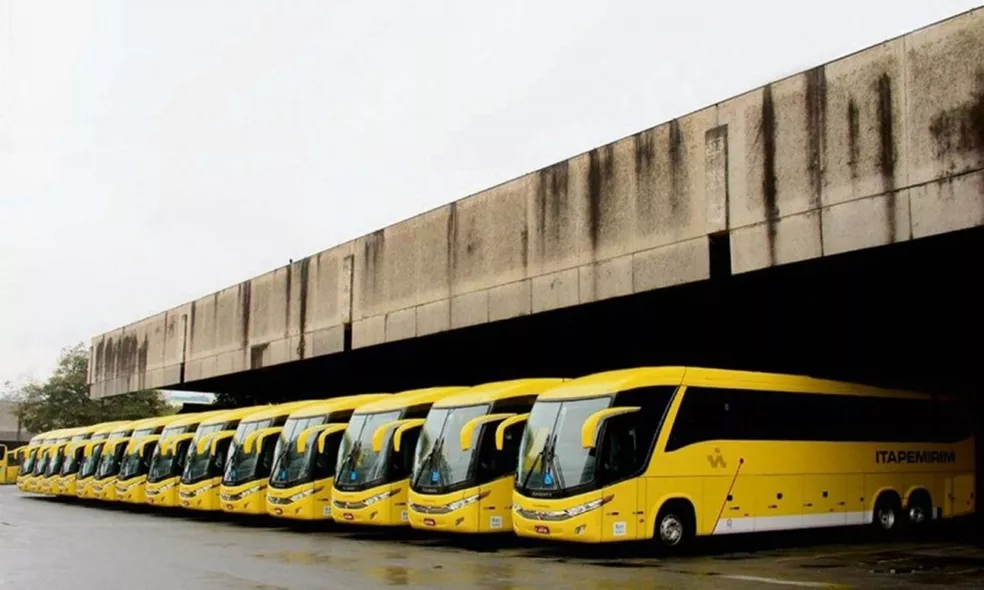
Itapemirim rapidly expanded to interstate lines. Camilo Cola innovated in the late 1960s. He brought the three-axle bus, the “Tribus,” to Brazil, which became popular. In the 1970s, the company focused solely on interstate lines. In 1973, it purchased Viação Penha, one of the largest in the country. It gained the important Rio-São Paulo line.
It became the largest road transport company in Latin America. In the 1980s, it also became a leader in freight transport. It even built its own buses, larger with more luggage space. By the 1990s, the fleet reached 1,700 vehicles. Itapemirim was a national pride.
The Factors That Led to the Decline
After its peak in the 1990s, Itapemirim began to face difficulties. Hyperinflation in Brazil affected its finances. The rise in private car purchases decreased the demand for buses. The government’s incentive for aviation made air travel more competitive. Bus companies lost millions of passengers to airlines between 2005 and 2013.
Itapemirim attempted to diversify by entering air cargo transport (Itapemirim Cargo) in the 1990s, but this investment did not succeed and worsened finances. Attempts to buy Varig or create a “Brazilian FedEx” also failed. The company began selling off assets.
Family Dispute Aggravates the Crisis and Leads to Judicial Recovery
Family problems also arose. In 2006, Camilo Cola became a federal deputy. To avoid a conflict of interest, he transferred part of the company to his wife, Ignes Cola. Ignes passed away in 2008. The division of inheritance among the children led to a legal dispute. Daughter Ana Maria sued the family and Itapemirim. She managed to block company assets, hindering fleet renewal.
The company sold more assets, such as the Penha and Caiowa bus lines. Despite still having high revenue, debts continued to grow. In 2016, Itapemirim filed for Judicial Recovery. It owed more than R$ 330 million to unsecured creditors and R$ 2 billion in taxes.
Sidney Piva Takes Over Itapemirim
During the Judicial Recovery, businessman Sidney Piva bought the Itapemirim Group. The amount was symbolic: R$ 1. Piva took on the billion-dollar debts (R$ 2.2 billion). He promised to recover the company. He announced the purchase of 400 new buses, but they never arrived. His management was controversial, resulting in his removal and later return to leadership.
In 2021, Camilo Cola passed away. In the same year, Piva launched ITA Linhas Aéreas (passengers). This initiative raised suspicions among creditors. The airline operated for less than six months. In December 2021, it canceled hundreds of flights, leaving passengers stranded. This led to Piva’s permanent removal. ITA caused an additional loss of R$ 42 million.
The End of the Line: Bankruptcy and the Dispute Over Itapemirim’s Legacy


After the collapse of ITA Linhas Aéreas, the situation became unsustainable. Sidney Piva had assets blocked and was prohibited from leaving Brazil. He was accused of scamming other companies. In September 2022, the São Paulo court declared the bankruptcy of the Itapemirim Group. The final debts exceeded R$ 2 billion in taxes and R$ 150 million in labor obligations.
The road transport company Suzantur leased part of the bankrupt estate. After a dispute with the regulatory agency ANTT, Suzantur was authorized to operate some lines that belonged to Itapemirim. Today, it operates yellow buses under the name “Nova Itapemirim.” The original Itapemirim, however, no longer exists.