






 Portuguese
  Spanish


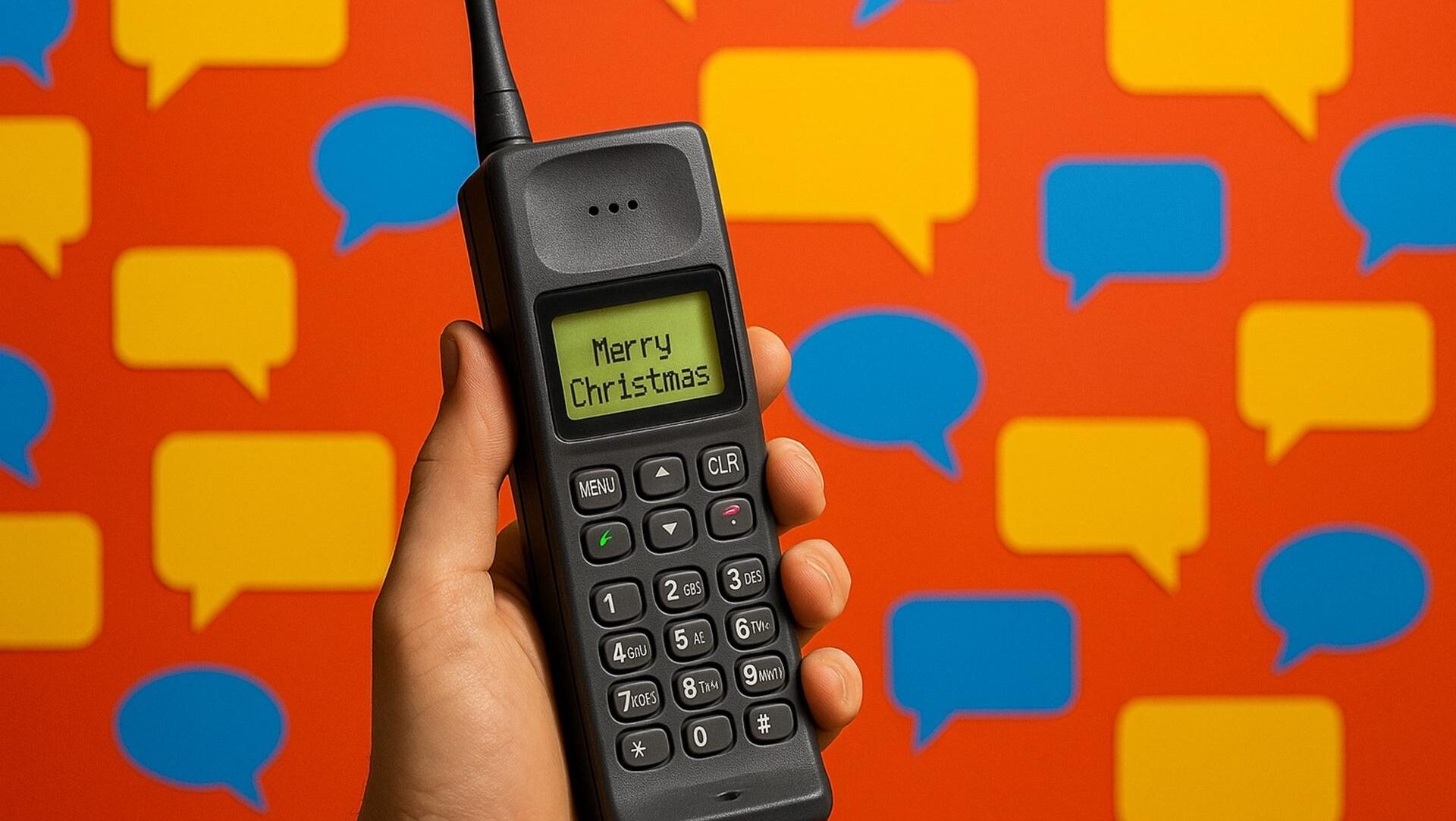
The Sending of the Text Merry Christmas by Neil Papworth on December 3, 1992 to the Orbitel 901 of Richard Jarvis Marked the Practical Adoption of SMS, Whose Concept Emerged in 1984 and Evolved Until It Reached Billions of Monthly Sends
The first SMS was sent on December 3, 1992 when Neil Papworth transmitted Merry Christmas to the Orbitel 901 of Richard Jarvis, consolidating the result of a year of software development at the Vodafone UK messaging center.
Papworth was 22 years old and worked at Sema Group Telecoms, seeing the process as a routine task. He reported in 2017 that he did not realize the historic nature of the test and merely confirmed the expected operation of the system.
Origin of the Idea and Definition of Standards
The concept of SMS emerged in 1984 during a presentation by Matti Makkonen in Copenhagen. In 1985, Friedhelm Hillebrand suggested the limit of 160 characters after analyzing everyday texts and standardizing quick writing forms.
-
Argentina to Use 2026 World Cup to Pressure Over 13,000 Child Support Debtors, Warns They May Be Banned from Stadiums

-
Man Who Lost Vision Due to Lack of Roads Invests Fortune in Building 59 km Route, Ending 1,300 Years of Isolation in Brazilian Village and Boosting Tourism and Jobs

-
São Paulo Invests Millions in Massive Reservoirs to End Decades of Water Shortages, Providing Relief to Residents

-
Luxury Mansion in Rio with Views of Christ the Redeemer Listed for $25 Million




The European Telecommunications Standards Institute began defining standards in 1991. The message sent in the UK in 1992 resulted from this process, leveraging the transition from analog networks to GSM digital infrastructure.
Devices at the time lacked keyboards, forcing Papworth to transmit the text via computer. Jarvis received the SMS while attending a Christmas party and later confirmed by phone that the test had worked.
The initial system relied on 7-bit encoding and storage in message centers, which forwarded content when the devices came back within range. This flow ensured reliability in sending even with technical limitations.
Gradual Adoption and Commercial Expansion
Nokia boosted SMS usage in 1994 by launching a device capable of sending and receiving messages. Growth was slow because phones were expensive, and operators prioritized voice services over data traffic.
In the late 1990s, the volume of messages began to increase among young people. T9 made typing easier, and prepaid plans reduced costs, allowing for continuous expansion. There was also the enabling of communication between different networks.
By February 2001, users in the UK were sending approximately one billion messages per month. Each SMS cost 10 pence, forming an important revenue source and increasing the service’s market share.
The following decade marked a global explosion. In 2010, the International Telecommunication Union recorded trillions of messages annually, consolidating abbreviations like LOL and BRB. Some records indicate excessive use and saturation problems.
From Popularity to Decline and the Auction of the First SMS
Apps like WhatsApp, Telegram, and Viber displaced SMS by offering free messages, photos, and unlimited character emojis. The spread of smartphones caused a rapid decline after 2012.
In 2021, Vodafone auctioned the first Merry Christmas as an NFT. The sale reached €107,000, providing the buyer with a digital frame for display. The proceeds were donated to the UN agency for refugees, closing a symbolic cycle of the pioneering message.








-

-

2 people reacted to this.