






 Portuguese
  Spanish


Common Behavior May Indicate Need for Emotional Protection and Energy Management, According to Experts, and Not Lack of Affection. Understand How Home Can Become a Space for Self-Care and Mental Preservation.
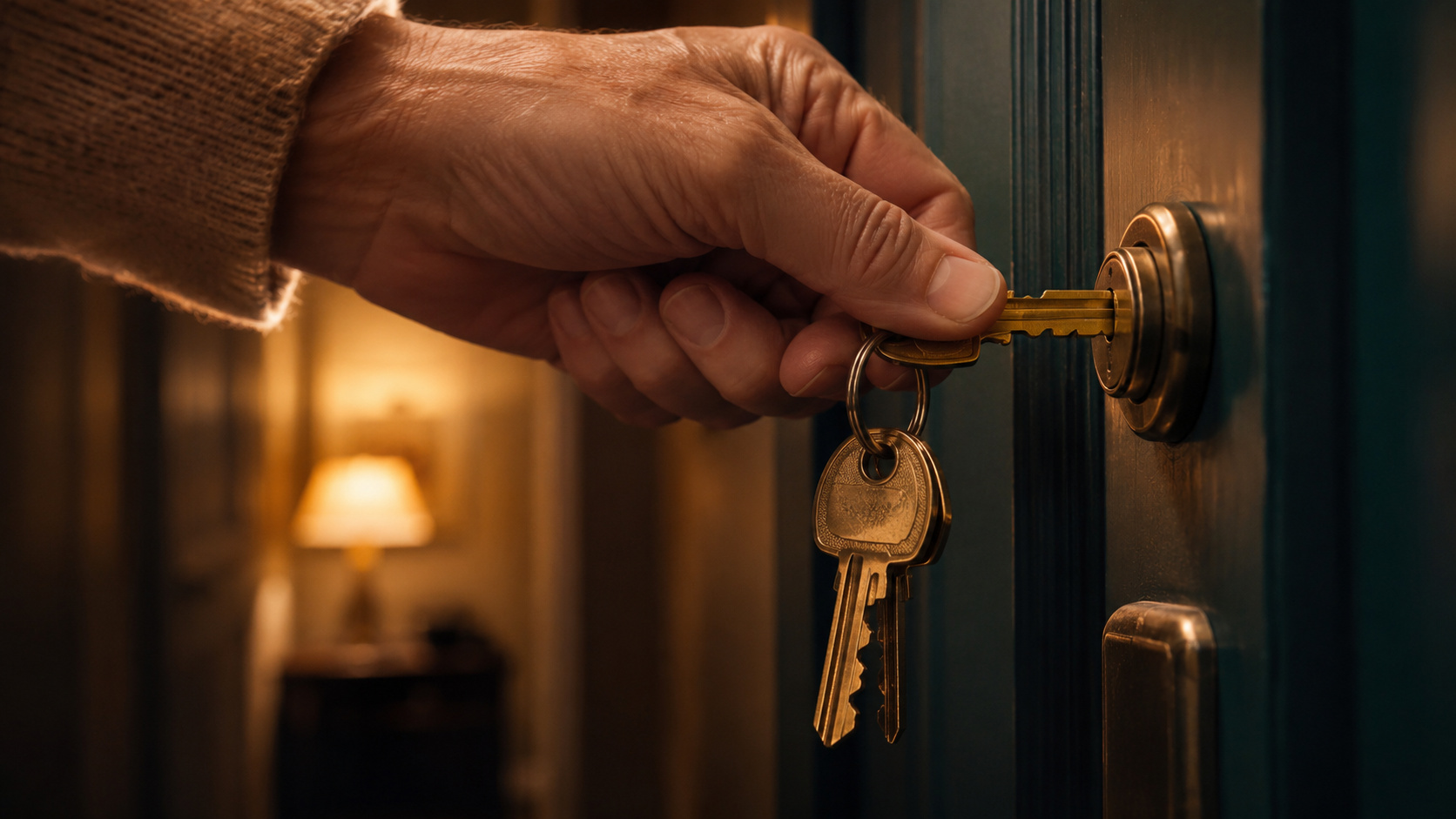
Preferring not to open the house to frequent visits, even when it involves family and friends, often points less to isolation and more to emotional self-defense.
In practice, it is a choice to manage one’s energy and safeguard a space perceived as refuge.
In a culture that values constant availability, this stance can generate guilt and strangeness, but psychology indicates that it is a legitimate boundary — especially when there is accumulated fatigue, need for silence, or phases of psychological recovery.
-
Tokyo Scientists Create First 18cm Biohybrid Hand Using Human Muscle, Capable of Scissor Gesture and Holding a Pipette

-
Brazil Faces Norway in World Cup at Stadium Linked to Jimmy Hoffa’s Mysterious Disappearance

-
Retired Woman Leaves French Public Housing Due to Fear, Lives in Van for Weeks, Prompting Response from Local Authorities and a Priest
-
9-Year-Old Fabio Isaac Wins Gold at Copernicus Math Olympiad in Singapore, Representing Peru Against Global Young Talents



The Origin of Discomfort in Receiving Visits
The idea gained traction on social media with the phrase attributed to psychologist Marian Rojas: “Stop apologizing for needing silence.”
The statement summarizes the perception of those who assume hospitality even without internal conditions to do so.
By bringing the topic into public debate, the author provides language for what many describe as a diffuse discomfort in the face of unexpected visits.
Not every refusal of visits reveals emotional distancing.
In many cases, the decision protects bonds: avoiding receiving when one is exhausted reduces friction, prevents impatient responses, and preserves the quality of future encounters.
The home, in this context, operates as a private space for regulation, where it is possible to suspend social performance — long conversations, automatic smiles, hosting routines — and prioritize rest.
Personality and Need for Withdrawal
Individual differences help to interpret this behavior.
Personality theories associated with Carl Jung describe that some profiles energize with high social interaction, while others recharge in quiet and predictable environments.
For those in this second group, the home functions as a secure base: it is where exposure decreases and the sense of control increases.
The entry of third parties alters sound temperature, circulation, and organization of the space, which can be perceived as additional wear when energy is already low.
Opening the door of the house also means opening layers of one’s own intimacy.
This symbolic association becomes more evident during periods of mourning, chronic stress, emotional convalescence, or changes in routine.
In these moments, the presence of visitors demands reorganization of schedules, continuous attention, and effort to maintain a socially comfortable environment.
Meanwhile, the body calls for a pause.
Thus, the clinical reading that “no” often relates to self-care and not to rejection of the other.
Communication and Healthy Boundaries
Direct communication reduces conflicts.
Saying, for example, “I need to rest today” establishes an objective limit and dispels interpretations of rejection.
When this type of message becomes consistent, family and friends tend to understand that the refusal is not personal.
Clarity also helps to better distribute encounters, with invitations scheduled for days and times when there is real availability of energy and attention.
The Symbolic Meaning of Home
Another relevant dimension is the management of the domestic environment.
People who organize their home with care attribute value to predictability: the positioning of objects, noise levels, cleaning routines, sleep schedules.
Unannounced visits disrupt this balance and can be experienced as invasion.
In states of heightened sensitivity — such as post-stress — perception intensifies.
Protecting the residence, then, involves maintaining visible boundaries without preventing coexistence in other contexts.
That doesn’t mean that coexistence has to disappear.
One solution is to move encounters to external environments when home is not an option.
Cafés, parks, and shared spaces allow proximity with less impact on the feeling of withdrawal.
Another approach is to combine expectations in advance: conversation time, ending time, number of people.
Predictability reduces overload and protects mental health for those who need periods of silence.
The Impact on Family and Social Relationships
In family units, open dialogue often prevents misunderstandings.
Explaining that the preference for not receiving relates to one’s own energy management fosters collective understanding.
It is also important to observe signs that require technical attention: persistent withdrawal that compromises basic activities, prolonged isolation with worsening mood, functional difficulties that exceed the desire for privacy.
In these cases, the guidance is to seek professional evaluation to differentiate legitimate protection from psychological suffering.
Social media adds pressure to the topic.
Exposed routines, full houses, and constant gatherings function as symbolic markers of belonging.
In contrast, those who prioritize quiet may feel outside a socially celebrated standard.
Normalizing that there are many ways to coexist — and that voluntary solitude is one of them — reduces stigma and expands the range of possible choices without the person needing to justify themselves.
Hospitality From a New Perspective
Hospitality, in turn, deserves practical revision.
In various homes, the role of host always falls on the same person, who sets menus, organizes schedules, and animates conversations.
When this task becomes continuous and poorly shared, the pleasure of the gathering gives way to a list of obligations.
Recognizing exhaustion and renegotiating frequency, format, and locations of gatherings helps restore lightness to social life.
Other people’s opinions often weigh heavily when saying “no”.
Despite this, simple language tends to produce the best results.
Informing that the week is demanding, that sleep needs to be prioritized, or that the house remains in rest mode dispels lengthy justifications and opens space for rescheduling.
Small routines reinforce boundaries without hostility: agreeing to visits only with prior notice, reserving days free of traffic in the home, and protecting quiet hours.
Silence as a Form of Care
More than drawing a definitive line, it is about modulating exposure according to context, energy, and need for recovery.
There are periods of openness and others of withdrawal; the alternation is expected and healthy.
The point is to recognize internal signals, communicate in advance, and choose meeting formats that respect boundaries.
Thus, the preference for not receiving visitors ceases to be a source of embarrassment and becomes a fact of coexistence, alongside many other agreements that structure lasting relationships.
The phrase by Marian Rojas — “Stop apologizing for needing silence” — crystallizes a principle that guides this fine adjustment: silence has instrumental value in mental health.
Those who advocate for it do not necessarily reject the bond; they simply practice a form of care that begins with their own boundaries.
That said, the question that remains for the reader and their close relationships is: how do you intend to communicate your boundaries so that they are understood without noise and respected in daily life?





Quando era mais nova e não trabalhava gostava de visitas, depois que comecei a trabalhar passei a não gostar, toda essa atenção demanda esforços que eu já faço diariamente no trabalho.
Esse texto é excelente,eu não gosto de receber visitas sem marcar o dia e horário meu lar é meu tesouro , me sinto em paz só eu e minha família.
Quando estou sozinha sinto paz,gosto muito da minha privacidade e acho que o lar é um lugar sagrado não tem que ficar levando pessoas, primeiro que nunca sabemos que tipos de energia acompanham uma visita.
Boa!