Portuguese
  Spanish


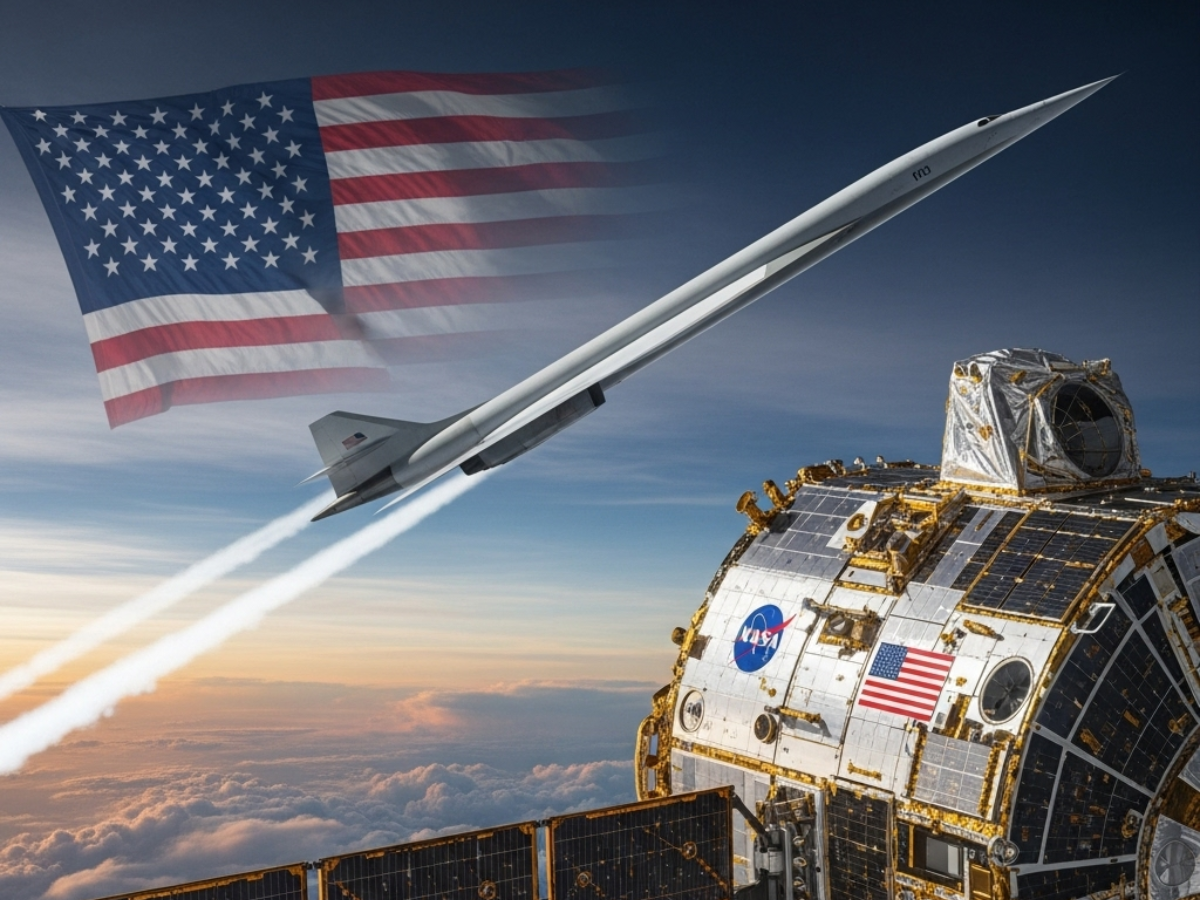

With NASA Leading Sonic Boom Mitigation with the X-59, Commercial Supersonic Transport Aims to Surpass the Concorde’s Legacy and Revolutionize Global Air Travel
Aviation is on the brink of a new era with the resurgence of interest in commercial supersonic transport. Decades after the last flight of the Concorde, technological advances and new designs aim to overcome the challenges that limited its predecessor, promising to drastically reduce air travel times.
Nasa, with its Commercial Supersonic Technology (CST) project and the experimental X-59 QueSST aircraft, leads research to mitigate sonic boom, a crucial obstacle. Private companies are also in the race, developing aircraft that could make commercial supersonic transport a reality again.
Lessons Learned from the Pioneer for the New Commercial Supersonic Transport
The Concorde (1976-2003) was the only supersonic passenger aircraft to operate commercially for an extended period. However, it faced chronic economic challenges, such as astronomical development and operating costs, along with high fuel consumption, resulting in prohibitively expensive tickets for most travelers.
-
Woman Claims to Have Spotted a Technical Pattern in Recent FIFA Tournaments, Predicts Possible World Cup Winner

-
Chevrolet Offers Chance to Win a 2026 Sonic RS for Free via WhatsApp
-
Earthquake vs. Tsunami: Which Causes More Destruction and Why One Can Be Even More Dangerous
-
Hospital Cook Discovers 1,700-Year-Old Pot of 52,503 Roman Coins Using Metal Detector in Field


Environmentally, intense sonic boom led to the banning of supersonic flights over land in many countries, severely restricting its routes. Noise at airports and pollution were also concerns. The tragic accident in 2000, coupled with these factors, hastened its retirement.
NASA’s Initiative and the X-59 QueSST in Search of a Commercial Supersonic Transport Silent Over Land
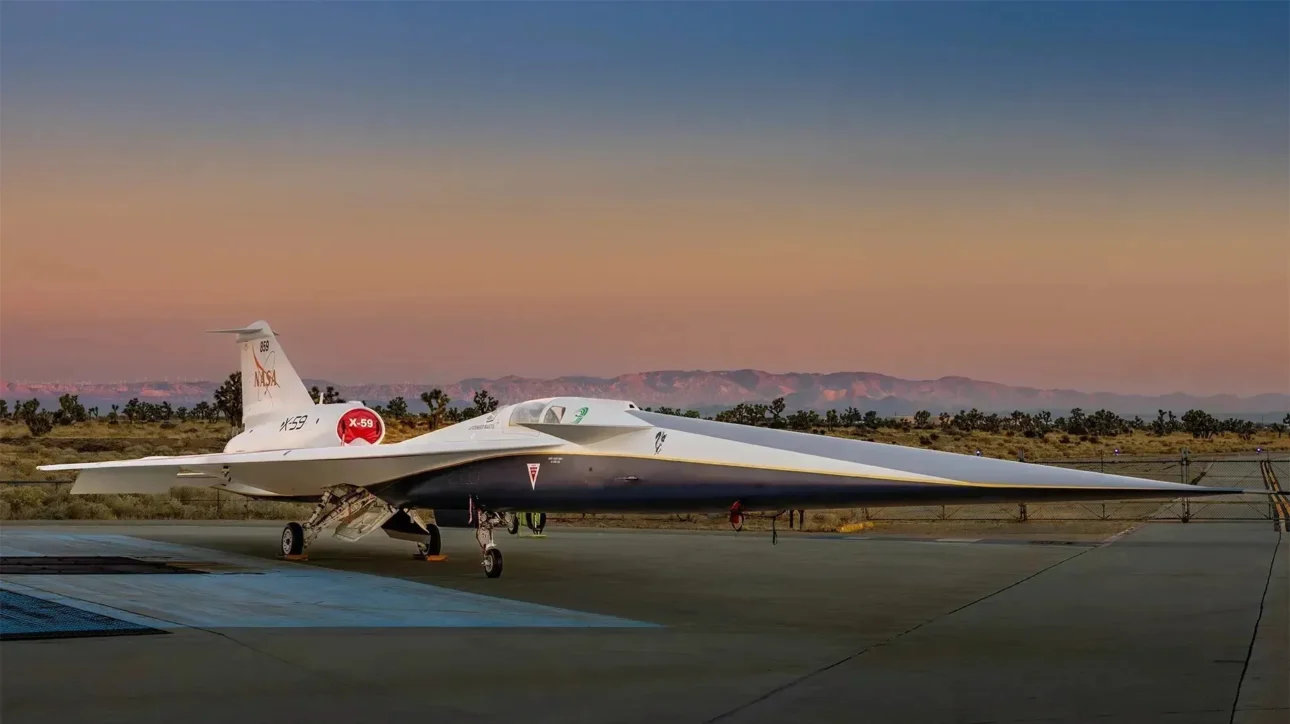
Nasa aims to overcome the sonic boom barrier. Its Commercial Supersonic Technology (CST) project focuses on transforming the “boom” into a “sonic thump.” The centerpiece is the experimental aircraft X-59 QueSST (Quiet Supersonic Technology).
With a unique design (9m nose, high-mounted engine), the X-59 aims to produce a sound of less than 75 PLdB (noise level comparable to shutting a car door) flying at Mach 1.4. After its first flight scheduled for 2025, the X-59 will fly over communities in the U.S. to collect data on public acceptance, which will be used to try to change current regulations that prohibit supersonic flights over land.
Who Is Developing the Future of Commercial Supersonic Transport?
Several private companies are seeking to develop the next generation of supersonic aircraft:
Boom Supersonic: Its Overture project aims to transport 64-80 passengers at Mach 1.7, using 100% Sustainable Aviation Fuel (SAF) with the Symphony engine (no afterburners). The demonstrator XB-1 has already performed supersonic flights, and Boom claims to have achieved “Boomless Cruise” (cruise without audible boom on the ground). The company has orders from airlines like American and United Airlines.
Spike Aerospace: Focuses on the executive jet S-512 Diplomat (18 passengers, Mach 1.6), with “Quiet Supersonic Flight” (QSF) technology for a boom below 75 PLdB and a windowless interior using screens.
Others: Hermeus Corporation and Destinus aim for hypersonic flight (Mach 5+), with potential future civil applications. Exosonic is also developing a low-boom supersonic jet concept.
The Technological, Environmental, and Regulatory Challenges of Commercial Supersonic Transport
Besides sonic boom, commercial supersonic transport faces other challenges. Aerodynamics requires sleek shapes to minimize wave drag and the use of advanced materials (composites, titanium alloys) to withstand friction heating. Engines need to be efficient at different flight regimes, without the use of noisy, fuel-consuming afterburners.
Altitude emissions (NOx, water vapor, particles) are a major environmental concern as they can impact the ozone layer and climate. The use of SAF is crucial, but it doesn’t solve all problems. Globally, ICAO, FAA (U.S.), and EASA (Europe) are working on new standards for landing and take-off noise (LTO), sonic boom, and emissions.
Will Commercial Supersonic Transport Take Off This Time Successfully?

Economic viability is central. Development costs are high (Overture estimated at US$6 billion). Fuel consumption, though lower than that of the Concorde, will still be higher than that of subsonic jets. Ticket prices, such as the estimated $4,000-$5,000 for the Overture, will target the premium market.
Market projections are optimistic but depend on the permission for flights over land. The cumulative environmental impact of a future fleet and public perception of the sustainability of commercial supersonic transport are crucial. Experts predict an initial return in premium niches, with a more realistic timeline for widespread adoption around 2040. Success will depend on a balance of innovation, economics, environmental responsibility, and public acceptance.