Portuguese
  Spanish



Know The Colossal Machines That Move The World, Their Record Capacities, And Their Vital Role In Modern Engineering And Global Industry.
The world of engineering showcases machines that push boundaries. Colossal cranes are titans of steel. Their lifting capacities break records. They are crucial in major construction and infrastructure projects. The Taisun and the Thialf crane ship are notable examples. The significance of these largest cranes goes beyond strength. They are facilitators in shipbuilding and offshore energy. This article explores these giants of steel.
Taisun: The Record-Breaking Force Of China And Its Offshore Impact
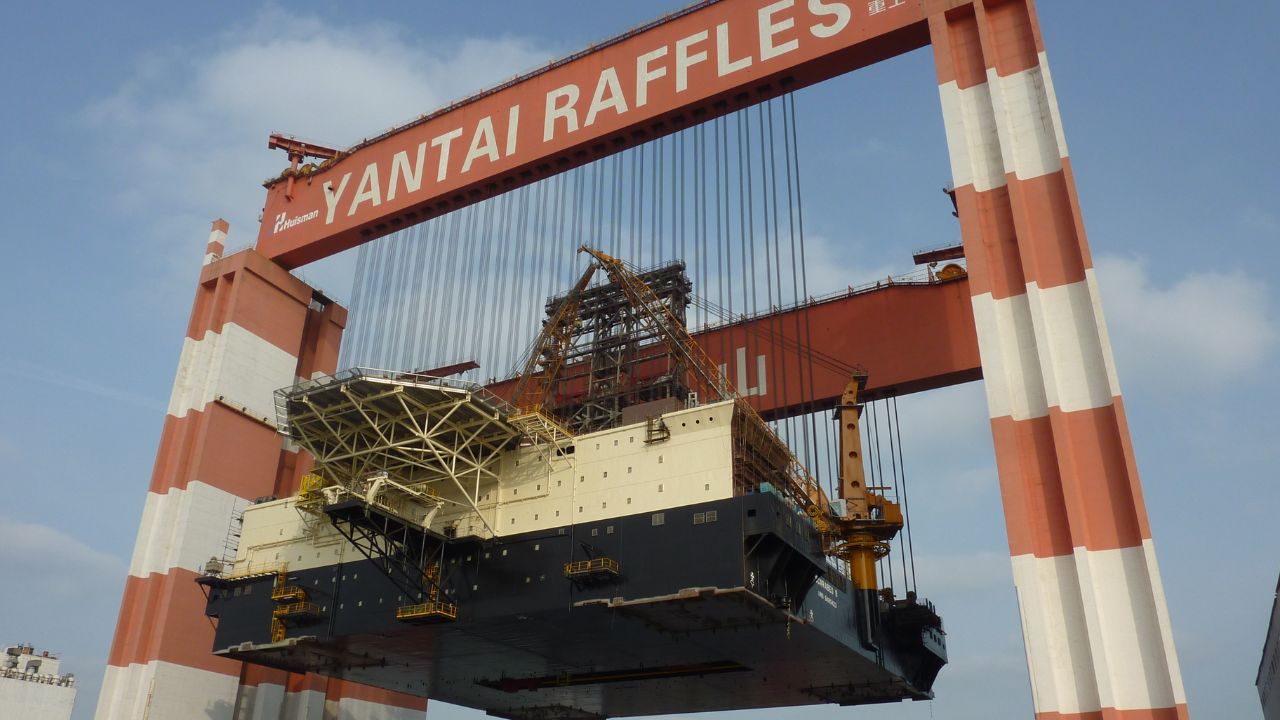
The Taisun is a gantry crane. It is located in Yantai, Shandong province, China. Its main function is to install large modules. These modules are for semi-submersible structures and FPSOs. Such components are crucial for the offshore oil and gas industry. Built by DHHI, the Taisun is one of the largest and most powerful of its kind.
The strength of the Taisun ensured a Guinness World Records title. It lifted the heaviest weight ever recorded: 20,133 tons. This is equivalent to the weight of 8,000 Ford F-150 trucks. It also corresponds to about 10,000 medium-sized cars. The Taisun also holds the three largest lifts in history. The loads were 20,133, 17,100, and 14,000 tons. Its technical specifications are impressive. It stands 133 meters tall and has a span of 120 meters. Its lifting capacity is 20,000 metric tons. About 50,000 meters of cable are needed for its operation. The maximum lifting height reaches 80 meters. The Taisun reduces project time and offshore labor. It is essential in the modular construction of platforms and ships.
-
How to Prevent Brown Recluse Spider Bites: Common Hiding Spots and Free Tips to Reduce Risks

-
Natto: The Unusual Japanese Superfood Gaining Popularity on Social Media and Driving Record Exports
-
Brazilian Mayor Goes Undercover as Homeless for 24 Hours to Assess Public Services

-
15-Year-Old Entrepreneur Malu Lira Publishes 20 Children’s Books on Financial Education, Earns $500,000, and Expands Her Project to the Amazon Rainforest




Thialf: The Semi-Submersible Giant Of The Seas
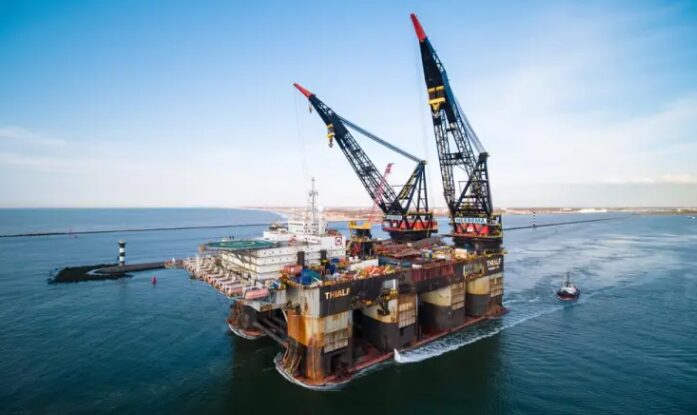
The Thialf is an imposing semi-submersible crane ship (SSCV). It belongs to Heerema Marine Contractors (HMC). Recognized as one of the largest naval cranes, it was built in Japan in 1985. Its semi-submersible nature provides exceptional stability. This is crucial for offshore operations.
The lifting capacity of the Thialf is 14,200 metric tons. This capacity is combined from its two cranes. Each crane can lift 7,100 metric tons. This capacity has been surpassed by the SSCV Sleipnir. The dimensions of the Thialf are grand. It measures 201.6 meters in length and 88.4 meters in width. The height at the crane is 144.0 meters. Its semi-submersible design features a large platform. Eight columns and two pontoons support it. The Thialf operates in shallow and deep waters. It has participated in projects such as the Erasmus Bridge and the decommissioning of Brent Spar. It also worked on the Shearwater, Holstein, Alpha Ventus, and Johan Sverdrup projects. Recently, it was involved in the Tyra East project. Its versatility is key to offshore infrastructure.
Discover Other Largest Cranes That Break Records
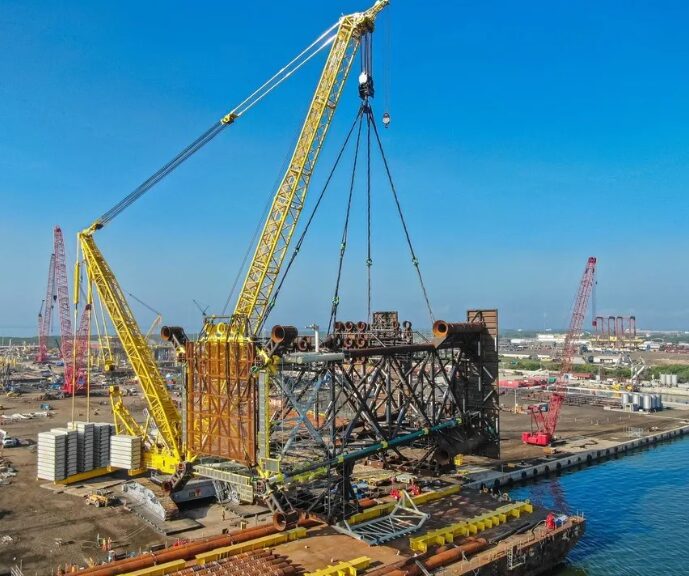
The Taisun and the Thialf are just examples. Other notable machines exist. The Liebherr LR 13000 is the most powerful conventional crawler crane. It lifts up to 3,000 tons. It is used in power plants and refineries. The Sarens SGC-250 “Big Carl” is a super heavy ring crane. Its capacity is 5,000 tons. It is used at the Hinkley Point C nuclear power plant.
The Kockums “Tears of Malmö” is the largest dockside crane. It lifts 1,500 tons and stands 138 meters tall. The Honghai Crane is the largest mobile gantry crane by capacity. It lifts 22,000 tons and is used on drilling rigs. The SSCV Sleipnir has the highest lifting capacity among crane ships: 20,000 tons in tandem. It uses bi-fuel engines. The Mammoet SK6000 is the strongest land crane. Its capacity is 6,000 tons. The variety of these largest cranes meets specialized needs and demonstrates constant innovation.
The Historical Evolution Of The Largest Cranes
The history of cranes parallels human development. It began with the shadouf in Mesopotamia and Egypt (3000-2000 B.C.). This was a lever system for irrigation. In Ancient Greece, cranes were powered by human or animal force. The Romans introduced treadwheel cranes for heavy lifting.
During the medieval period, treadwheel cranes reemerged. They were used in cathedrals and castles. Wooden jib cranes appeared for lateral movement. The Industrial Revolution was a milestone. William Armstrong invented the hydraulic crane in 1838. Steam cranes emerged in the 19th century. The first cast iron crane appeared in 1834. The earliest port cranes in Utrecht date back to 1244. The modern era brought mobile cranes (1918). Hans Liebherr invented the tower crane (1949). Spider cranes emerged in Japan (1970). Modern cranes use hydraulic and electric power. The evolution reflects the quest for greater capacity and efficiency.
Challenges In The Design And Operation Of The Largest Cranes
Designing and operating colossal cranes presents challenges. Structural integrity uses high-strength steel and alloys. Triangular structures and box beams distribute force. Rigorous testing and safety protocols are essential. Material fatigue requires inspections with non-destructive testing (NDT).
Stability is another primary challenge. The stability triangle and center of gravity are crucial. Counterweights and outriggers increase stability. Soil conditions, terrain, and wind impact stability. Load tables prevent overloading. Complex operations require meticulous planning. Qualified operators and clear communication are vital. Dismantling and relocation pose logistical challenges. Environmental factors also affect operation. Overcoming these challenges requires advanced materials and qualified personnel for the largest cranes.
The Impact Of The Largest Cranes On Key Sectors
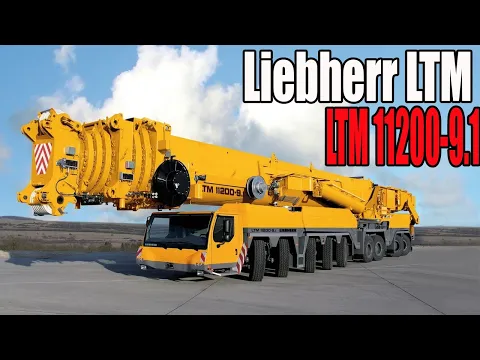

The largest heavy-lift cranes are economic engines. In construction, they increase efficiency and reduce timelines. They enable skyscrapers and major infrastructures. They reduce labor costs and waste. The market for lattice boom cranes is growing.
In the offshore energy sector, they are essential. They install and decommission platforms and wind turbines. They improve safety and efficiency. The offshore crane market is expanding. There is demand for lifting at greater depths. In the shipbuilding industry, they assemble large ships. Port operations depend on them for loading and unloading cargo. They facilitate global trade. They increase efficiency and enable complex projects.