






 Portuguese
  Spanish


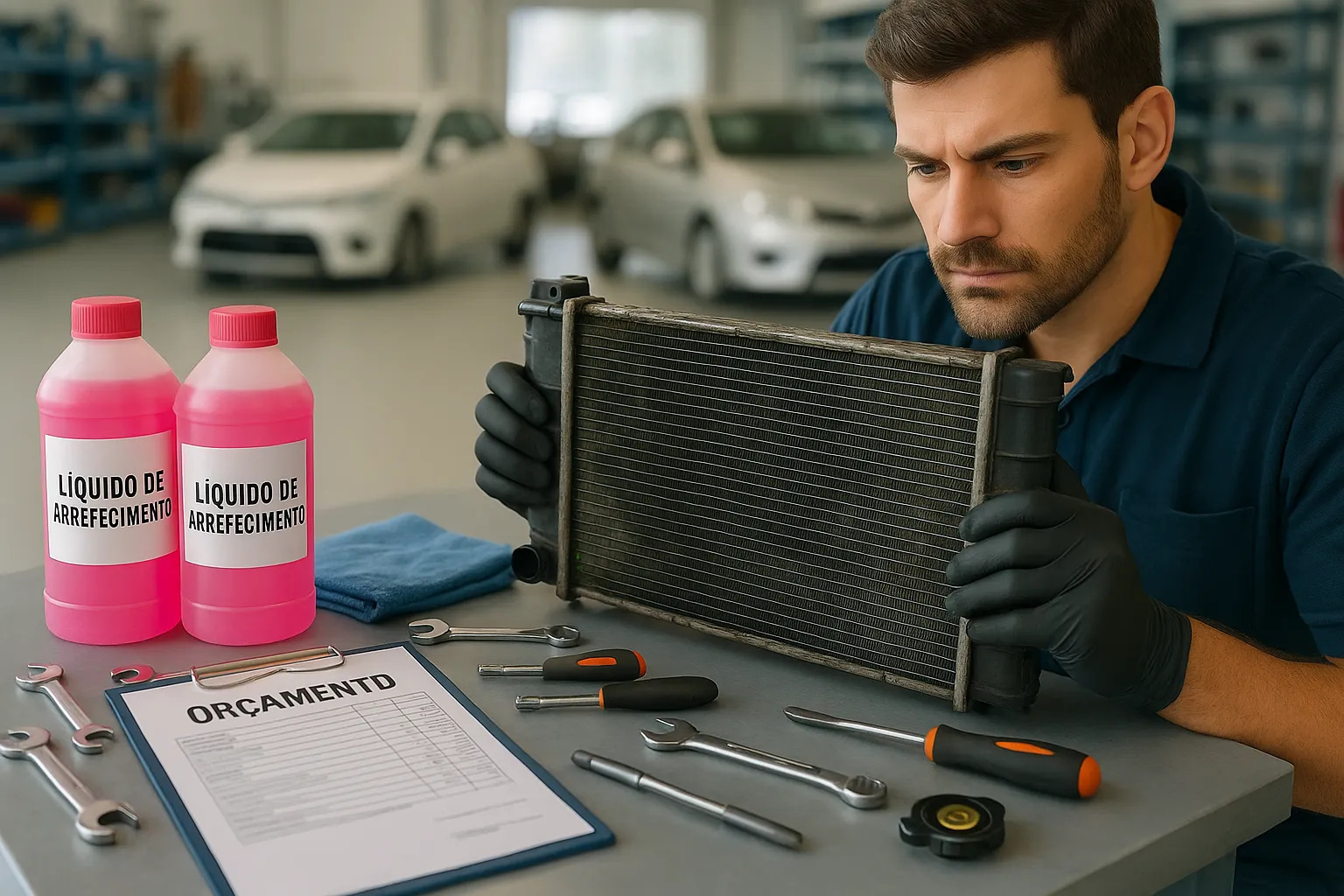
Those who have seen the temperature rise on the dashboard in the middle of traffic know the cold feeling in their stomach. A leak in the radiator often starts with discreet signs: a puddle of water under the car, a sweet smell coming from the engine, or even that unexpected steam coming out of the hood. What seems like a small detail can turn into a serious and costly breakdown, capable of leaving the driver stranded on the shoulder. Therefore, identifying the symptoms early and acting quickly is what separates a simple repair from a complete overhaul.
Radiator Leak: Why Not Ignore The First Signs
The cooling system is the heart of the engine’s health. Without it, the temperature rises to critical levels, jeopardizing parts like the head gasket, water pump, and even the engine block itself. According to data from the National Road Safety Observatory, overheating is one of the main causes of breakdowns on Brazilian roads. The research shows that many drivers ignore clear signs of a radiator leak, believing it to be just “accumulated rainwater.”
In practice, each drop that escapes is a part of the lost coolant, and with it, the efficiency to cool the engine. The National Confederation of Transport (CNT) also points out that failures in the cooling system are responsible for a large portion of mechanical assistance on highways. The American Automobile Association (AAA), in a study on preventive maintenance, highlights that more than 40% of mechanical failures could be avoided if drivers monitored the cooling system.
-
Volkswagen to Cut Production by 1 Million Cars by 2030, Reducing Jobs and Platforms, Focusing on More Profitable Models

-
Toyota Launches First 100% Electric Car in Brazil: bZ4X with 343 HP, All-Wheel Drive, 361 km Range, Priced at $419,990 BRL, Limited to 99 Units

-
Chinese SUV Achieves 24.4 km/l, Outperforms Toyota Yaris Cross in Real-World Tests with 224 hp Hybrid System, Offers 51-Liter Tank for Greater Range, and Costs Up to R$ 5,000 Less.
-
Uber Black Revamps Fleet, Drops Ten Car Models and Sets Deadline for Electric BYD Dolphin


Clear Signs That Indicate A Possible Problem
The first step to avoid damage is to recognize the symptoms that the car presents before it stops completely. Among the most common are:
- Puddles of colored liquid on the ground: unlike air conditioning water, radiator fluid typically has a green, blue, or red color.
- Sweet smell when starting the car: a classic sign of coolant coming into contact with hot parts.
- Steam coming out of the hood: indicates that the pressure in the system is not being controlled.
- Heating on the dashboard: a temperature gauge above normal is a maximum alert.
- Reservoir dropping quickly: if you frequently need to top it off, there may be a leak in the radiator or nearby connections.
These signs should not be confused with normal situations. For example, water that drips from the air conditioning is colorless and odorless, while radiator fluid has characteristic color and smell.
What To Do When The Problem Appears
Upon identifying any of these symptoms, the first action is not to ignore them. On short trips, it may seem possible to “push through,” but it is this negligence that leads to overheating.
- Check the reservoir: open it only when the engine is cold to avoid the risk of burns.
- Look for cracks in the radiator: small cracks may be visible.
- Check the hoses: drying and cracks also cause fluid loss.
- Observe the fan operation: if it doesn’t turn on, heat accumulates faster.
Many drivers can temporarily top off the reservoir with water until they reach a shop. However, experts recommend always using the correct mixture of demineralized water and additive, as regular water promotes oxidation and internal damage.
When The Repair Can Be Simple And When It’s Time For The Shop
There are cases where the repair is affordable. Replacing a hose or tightening a clamp costs little and resolves immediately. However, if the problem lies in larger cracks in the radiator, the solution involves replacing the part or specialized repair in radiator shops.
According to data from the Repair Industry Union (Sindirepa), the average costs of a new radiator for popular cars range from R$ 400 to R$ 900. On the other hand, repairing simple cracks can cost less than half of that. Conversely, if the driver ignores the leak and the engine overheats, the bill can easily exceed R$ 5,000.
A study from the International Car Maintenance Association shows that globally, more than 30% of expensive engine repairs originate from simple failures in the cooling system that were not fixed in time.

Prevention Is Always Cheaper Than Repair
The big secret is in prevention. Periodic inspections, use of the correct fluid, and attention to the dashboard prevent a simple radiator leak from turning into a huge headache. After all, the car always “speaks” to the driver – you just need to pay attention to the signs.
When noticing something out of the ordinary, acting quickly is smarter than waiting for the problem to grow. After all, your car is more than just a means of transportation: it’s safety, autonomy, and even part of your family’s routine. A detail ignored today can become the biggest expense of the month tomorrow.




Be the first to react!