Portuguese
  Spanish



Danfoss Reveals Potential for Energy Savings and Emission Reductions
A new study conducted by Danfoss indicates that the implementation of demand-side flexibility technologies in the European Union (EU) and the United Kingdom could result in a significant annual savings of 40 million tons of CO2 emissions by 2030. This action not only contributes to combating climate change, but also promises substantial reductions in social costs and residential electricity bills.
The study highlights that with this technology, it is possible to achieve annual social cost savings of €10.5 billion by 2030 and €15.5 billion by 2050. These savings represent the majority of the costs related to implementing demand-side flexibility infrastructure.
Response to the Energy Crisis and Economic Benefits
During the recent energy crisis, the EU and the UK invested significantly in subsidies to address the situation. Adopting demand-side flexibility technologies can strengthen the resilience of the power grid and reduce dependence on such government subsidies. Additionally, these technologies offer the potential to save money at both social and individual levels. By 2030, consumers in the EU and the UK could save around 7% on their electricity bills, and by 2050, savings could reach 10%.
-
Germany Opens World’s Largest Smart Power Semiconductor Factory with €5 Billion Investment, Creating 1,000 Jobs and Doubling Capacity for AI and Energy Needs

-
Kazakhstan’s Torysh Valley Holds Thousands of Giant Stone Spheres, Intriguing Scientists with Ancient Oceanic “Cannonballs”

-
Egypt Discovers 18 Ancient Tombs with Gold Tongues, Unveiling Unusual Funeral Rituals and Amulets Believed to Give Voice to the Dead

-
Nigeria Dumps 120 Million Tons of Sand into Atlantic to Build Massive City with 8.4 km Sea Wall for Protection Against Ocean Waves and Erosion




The Importance of Demand-Side Flexibility
Demand-side flexibility is essential for balancing energy consumption, avoiding simultaneous peaks of high demand and low supply, especially in a renewable-based energy system. The deployment of these technologies can reduce demand during the most expensive peak periods and decrease the amount of fossil fuels in the energy mix.
In buildings, for example, Artificial Intelligence (AI)-driven technologies can save up to 20% on energy costs by combining data from the building, climate, and user to predict heating and ventilation demand. “Super-cooling” techniques in supermarkets, for instance, allow freezers to operate efficiently as a battery storing energy, being turned off during peak hours, reducing stress on the grid and saving money.
Conclusions from the Danfoss Study and the Future of Energy Efficiency
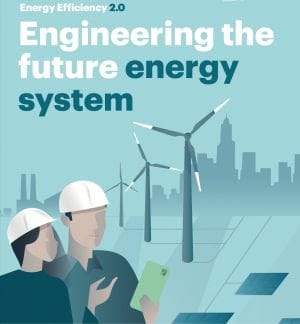
The Danfoss technical paper, “Energy Efficiency 2.0: Designing the Future Energy System,” suggests that transitioning from a fossil fuel-based system to a fully electrified system could reduce final energy consumption by up to 40%. Electrification, along with demand-side flexibility, plays a crucial role in this transition.
Kim Fausing, President and CEO of Danfoss, emphasizes the need to act quickly to adopt energy efficiency solutions that enable using less energy and the right energy at the right moment. He highlights that while solutions are available, decision-makers must prioritize energy efficiency and establish an appropriate regulatory and economic framework to achieve net zero by 2050.
About Danfoss and Its Commitment to Sustainability
Danfoss is a pioneer in developing advanced technologies aimed at building a smarter and more efficient future. Specializing in refrigeration, air conditioning, heating, and motor control, Danfoss is committed to providing sustainable and innovative solutions, contributing to reducing environmental impact and promoting more efficient energy use across various sectors.
This Danfoss study highlights the vital role of energy efficiency and demand-side flexibility technology, not only to mitigate carbon emissions but also to deliver substantial savings at both social and individual levels, paving the way for a more sustainable and energy-efficient future.
Source: Felipe Rariz – pressaporter.