






 Portuguese
  Spanish


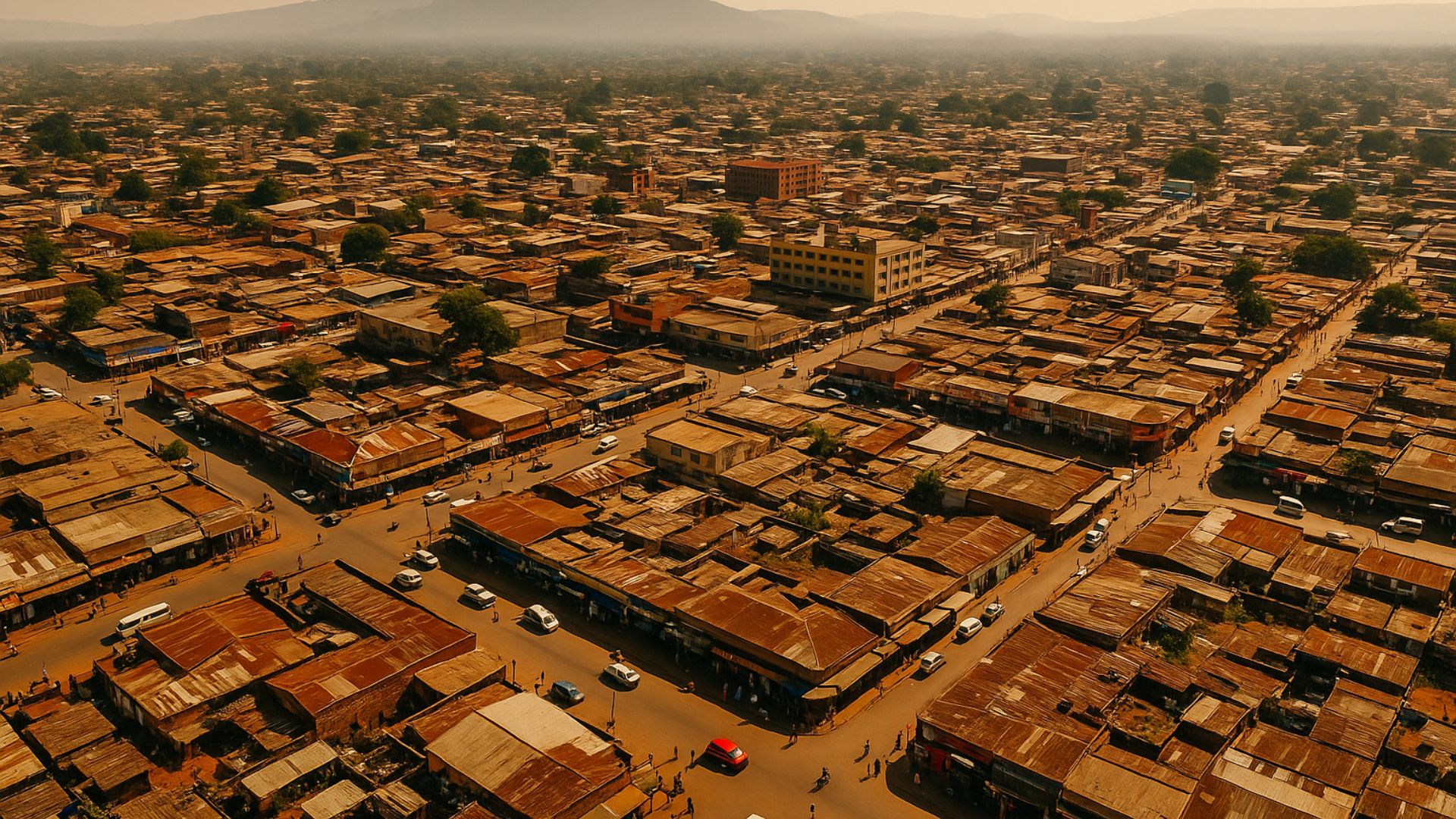


Country Experiences Cycles Of Hyperinflation, Multiple Currencies And Strong Instability While Trying To Recover Economic Confidence After Successive Structural Crises.
The economy of Zimbabwe has become one of the most extreme examples of monetary collapse ever recorded, with an episode of hyperinflation where prices would double within about 24 hours, 100 trillion Zimbabwean dollar notes in circulation, and estimates that at certain times, more than 90% of the workforce was out of formal employment.
Today, even after successive currency changes, the country of nearly 17 million people remains among the world’s most fragile economies, with still high inflation, widespread poverty, and strong dependence on the US dollar.
Prolonged Crisis Affects Millions In Zimbabwe
Located in southern Africa, Zimbabwe features savannas, extensive plains, and rich biodiversity, as well as great cultural diversity.
-
Brazil’s ANP Opens 86 New Oil Blocks in the Equatorial Margin, Expanding the Amazon River Mouth Frontier

-
Warren Buffett’s Lesson: How Discipline, Extra Income, and Small Investments Can Transform Your Financial Future

-
Brazilian Startup Turns Coffee Grounds into Plant-Based Leather, Cutting Water Use by Over 50 Times for High-Impact Sustainable Fashion

-
Eco Invest Auction Aims to Unlock $10 Billion in Investments, Focusing on Green Fertilizers, Critical Minerals, Batteries, and AI for Clean Industry in Brazil





For part of the 20th century, the country was seen as one of the most promising economies in the region, backed by fertile land, relevant mining, and strong agricultural productivity.
This scenario changed drastically in recent decades.
The economy experienced a combination of long recession, productive collapse, hyperinflation, and loss of institutional credibility.

The GDP shrank significantly during various periods, poverty increased, and millions became reliant on food assistance, especially in years of severe drought.
Disordered Land Reform Cripples The Agricultural Sector
The root of some current problems stems back to the years following independence, achieved in 1980.
The country inherited severe inequality in land access, with the most productive areas concentrated in the hands of a minority of large white landowners.
Instead of conducting a gradual land reform, with clear compensation and technical support, the government authorized or tolerated invasions of productive farms.
Experienced owners and workers were expelled, and properties that previously exported tobacco, maize, and other commodities had production halted or drastically reduced.
This led the main pillar of the economy, the export-oriented agribusiness, to weaken.
The drop in domestic food production created shortages, pressured prices, and increased dependence on imports and international aid.
Printing Money Triggers Historic Hyperinflation
The decline in external revenues and the weakening of the productive base led the government to adopt an increasingly interventionist policy.
Without sufficient revenue to cover public spending, salaries, and state-owned enterprises, the state began to print large volumes of money to finance the deficit.
This intense expansion of the monetary base, without a proportional increase in production, fueled an inflationary spiral throughout the 1990s and 2000s.
The process culminated, between 2007 and 2008, in one of the most extreme episodes of hyperinflation in history, with monthly inflation reaching 79.6 billion percent, making it common for prices to double within approximately 24 hours.

To try to keep up with the surge, the Central Bank began issuing banknotes with increasingly higher values, including the 100 trillion Zimbabwean dollar note.
The local currency lost almost all its purchasing power and ceased to function as a store of value.
Dollarization Ends Hyperinflation But Creates New Dependence
With the total collapse of confidence in the local currency, the country abandoned the Zimbabwean dollar in 2009 and began to operate with multiple currencies, primarily the US dollar.
The change effectively ended hyperinflation almost immediately.
Wages and contracts began to be denominated in strong currencies, banks reopened indexed accounts, and trade resumed stable pricing.
The scenario provided some relief, with a moderate recovery in growth, but the economy remained fragile, with high poverty and informality.
Return Of The Local Currency Reignites High Inflation
Starting in 2019, the government decided to gradually end dollarization and reintroduced a new version of the Zimbabwean dollar.
The return of the currency occurred in an environment of low confidence, limited international reserves, and a recent memory of hyperinflation.

The combination of money issuance, distrust, and external shocks led to a new inflationary cycle.
In 2020, annual rates exceeded 500%, and the population increasingly began to use US dollars for everyday transactions.
Studies indicated that 70% to 80% of transactions in the country began to occur in dollars, despite attempts to strengthen the local currency.
ZiG: The New Gold-Backed Currency
In April 2024, faced with the rapid devaluation of the Zimbabwean dollar, the Central Bank launched the Zimbabwe Gold (ZiG).
The currency was announced as being backed by gold, commodities, and currencies, replacing the old local dollar and circulating alongside the US dollar.
The proposal aimed to rebuild confidence in the monetary system.
The share of ZiG in transactions increased throughout 2024 and 2025, reaching over 40%, although the dollar remained dominant in everyday trade.
Even so, challenges persisted, with episodes of devaluation and high inflation.
Recent projections indicate an expectation of annual inflation declining to a level between 15% and 20% by the end of 2025, after months above 80%.
Unemployment, Informality, And Poverty Remain High
Even during stabilization periods, the labor market remained fragile.
Studies estimate that, at certain times, more than 90% of the workforce was out of formal employment, sustaining an economy heavily marked by informality.
Poverty also deepened.
International reports indicate that almost half of the population lived in extreme poverty, a situation aggravated by severe droughts that increased demand for food assistance.
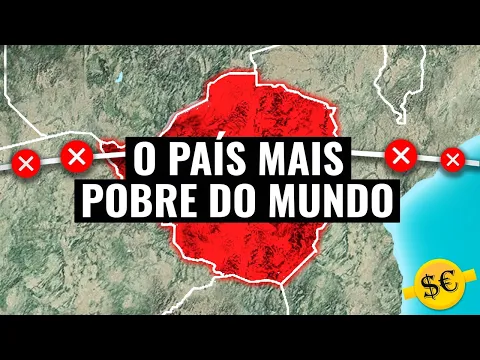

Corruption And Institutional Instability Deteriorate The Economy
Zimbabwe faces endemic corruption and fragile institutions.
In the 2024 Corruption Perception Index, the country ranked 158 out of 180, reinforcing distrust in public management.
Essential sectors, such as energy, water, and transportation, suffered from mismanagement, non-transparent contracts, and lack of maintenance.
Frequent blackouts, unstable supply systems, and poor health services deter investors and hinder consistent recovery.
Unstable Exchange Rate Rules Increase Uncertainty
The government has repeatedly altered exchange rate rules and the use of foreign currencies over recent years.
The country alternated between dollarization, reintroduction of the local dollar, simultaneous use of multiple currencies, and the launch of a new currency.
Price freezes, rigid exchange controls, and interventions in private accounts and assets also marked this period.
These measures increased the parallel exchange rate, encouraged informal dollarization, and created an unstable business environment.







Cuidado com os Sleelacks! Entendedores entenderão!
É triste ver essa juventude de hoje , buscando mídia a qualquer custo! MENTINDO NA CARA DURA! Esse evento acima, aconteceu em 2008 , quase 20 anos atrás!!!!
Para as pessoas clicarem , como se fosse , hoje…
E como está hoje?