Portuguese
  Spanish


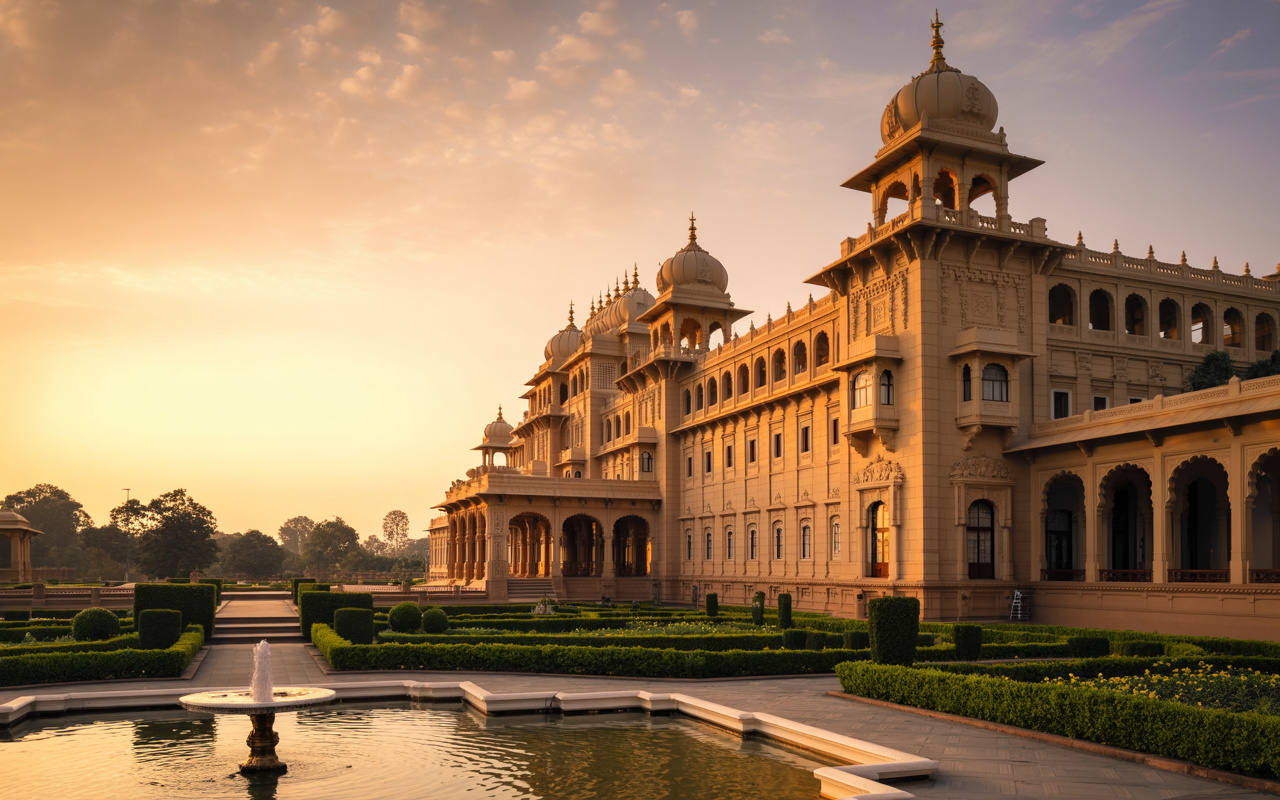


With 2.8 Million m² and Palatial Architecture, Lakshmi Vilas Palace in India Is the Largest Private Residence in the World — Home to a Single Family for Over a Century.
The largest private home ever built by man is not in Dubai, nor in Beverly Hills. It is located in India and is so vast that it rivals entire cities. Lakshmi Vilas Palace, built in 1890 for the royalty of Baroda, occupies an incredible 2.8 million square meters — more than 400 soccer fields, more than many entire neighborhoods in Brazilian capitals — and remains inhabited by a single family: the Gaekwad, heirs of one of the most powerful dynasties of the Indian subcontinent. While Antilia, the modern mansion of billionaire Mukesh Ambani, impresses with its 37,000 m², Lakshmi Vilas eclipses it with an almost mythical scale and entire areas never opened to the public.
Lakshmi Vilas Palace: The Ultimate Symbol of Indian Elite
Built at the height of the maharajas’ power, the palace is considered one of the largest architectural icons of the colonial period. Its structure mixes Indo-Saracenic styles, Renaissance influences, and Eastern details that result in a unique work.
At the time of its construction, it already featured rare technologies: hydraulic elevators, internal plumbing, and advanced lighting — an advance that many Western urban centers did not even have.
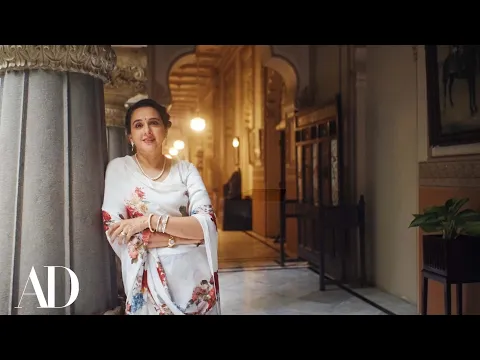

Inside, Italian marble, Belgian stained glass, artisanal furniture, and rare artworks compose monumental halls. Historical accounts state that the palace’s private theater, inspired by the Royal Opera House in London, accommodates more than 600 guests.
-
Rare fox feared “extinct” found alive on Caribbean island after over two decades without official sightings

-
21-Year-Old Brazilian Student Turns Homemade Popsicle Hobby into $100,000-a-Month Business

-
Australia Dumps Hundreds of Thousands of Tons of Gravel into Rivers to Restore Natural Barriers and Reverse 150 Years of Erosion

-
Bird-Inspired Robot Glides on Air Currents up to 10 m/s, Balances Itself, and Aims to Save Energy in Industrial Inspections and Meteorological Balloons




Monumental Gardens Larger Than Entire Neighborhoods
The gardens of Lakshmi Vilas are not just extensive — they are planned on an urban scale. There are groves, artificial lakes, fountains, and ceremonial areas that extend over so many hectares that they surpass the total size of historical European cities.
The space also includes a private golf course, vast historical hunting grounds, and private trails. It is estimated that a large part of the complex has never been fully documented, reinforcing the air of mystery surrounding the property.
Secret Chambers and Inaccessible Wings to This Day
Despite tourist visits to a small part of the property, most remains inaccessible. Historians report the existence of underground tunnels, hidden corridors, private treasure chambers, and exclusive rooms used for royal meetings.
Indian royalty has always maintained a tradition of private quarters, protected for both spiritual and strategic reasons — and Lakshmi Vilas preserves this legacy.
To this day, no complete image of the private residential wing has been disclosed. The most sacred areas of the palace have remained unchanged for generations, preserving part of the history of the maharajas and cultural fragments from past eras.
Global Comparisons: No Modern Private Palace Comes Close
For comparison:
- Buckingham Palace: ~77,000 m²
- Antilia (Mukesh Ambani): ~37,000 m²
- Lakshmi Vilas Palace: 2,800,000 m²
In other words, the Indian palace is more than 36 times larger than Buckingham and over 75 times larger than Antilia.
Even among royal palaces, almost nothing comes close — except religious complexes and state palatial properties, which are not private residences.
Tradition Preserved, Modernity Surrounding
Today, the Gaekwad family manages museums, cultural, and ceremonial areas in the palace, preserving the heritage as the modern city grows around it.
Vadodara, where the palace is located, has become an industrial and educational hub, but Lakshmi Vilas remains a time capsule — where centuries coexist alongside Indian modernity.
A royal structure that has survived colonial empires, economic changes, and political eras while keeping alive traditions that few places in the world have preserved.