Portuguese
  Spanish


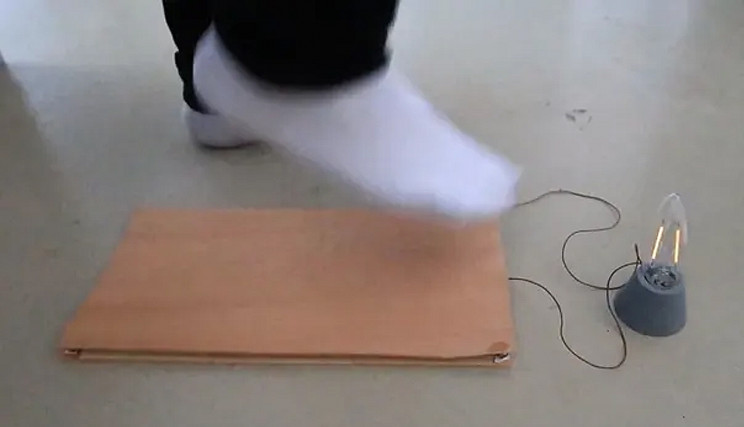

Researchers Develop Device Capable of Capturing Energy as You Walk on Its Surface
Climate change is forcing companies and governments around the world to seek cheap and renewable alternatives for electric energy generation. Researchers from ETH Zurich in Switzerland, Chongqing University in China, and Northwestern University in Illinois, USA, are developing a way to capture the energy generated by our feet that promises to revolutionize wooden floors.
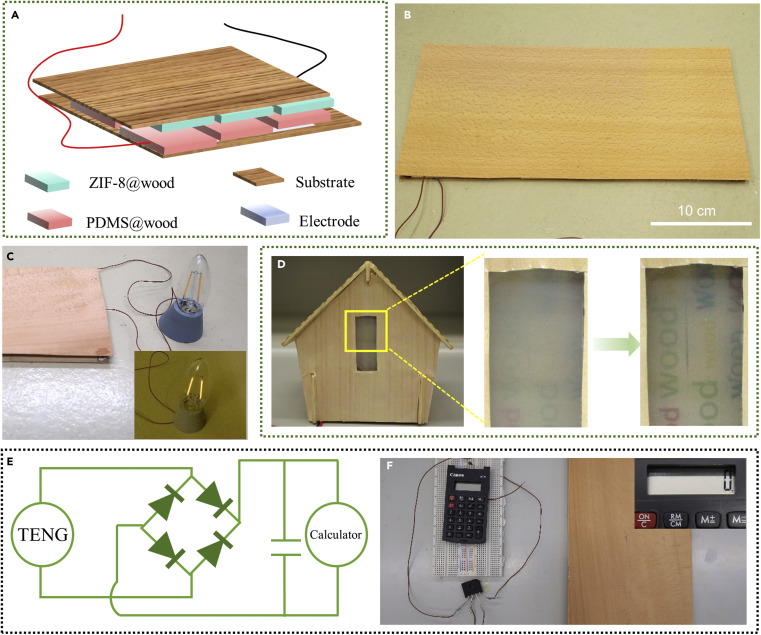
The idea of the study is to generate energy through wooden floors. They developed a prototype for energy capture called a nano generator, where wood is used with a silicone covering and nano crystals. A study published in the journal Matter reports that the device is capable of generating electricity to power LED lamps and other low-energy equipment.
How Does the Wooden Floor That Generates Energy Work?
The device consists of two pieces of wood that sandwich electrodes. When stepped on, the pieces of wood become charged due to contact and separation. This effect is known as triboelectric.
-
Brazilian scientists are simultaneously advancing two research projects on clean hydrogen and driving solutions that could transform the energy matrix, enhance industrial competitiveness, and accelerate large-scale emission reduction targets.

-
Advancement in renewable energy: A R$ 150 million project launched by Petrobras and Finep aims to create state-of-the-art electrolyzers for green hydrogen, strengthening national research and preparing Brazil to compete in a billion-dollar energy market.
-
Illiterate or semi-literate grandmothers were trained to repair solar systems, open rural workshops, and light up homes that still depended on kerosene.
-
The world has bet on green hydrogen as the fuel of the future, but now faces the side effect: producing 1 kilogram requires about 9 liters of ultrapure water, and the largest projects on the planet are precisely in the driest regions of the Earth, where water is already scarce for people.




Although the project has been successful in its prototypes, scientists emphasize that more work is needed to create a product capable of being sold on an industrial scale.
“We have focused our attention on developing an approach to make it even more industrially friendly. And for that, we may need to sacrifice overall efficiency in favor of easier methods for modifying the wood,” highlighted Panzarasa, senior author of the project.
The ability to generate energy in homes is expected to become more common in the near future. The average energy production from a single device is not high; however, it can generate a significant amount if several devices are installed in a residence.
“Thus, while the electrical output of a single device is not as high as what we published, the combination of many devices in a larger flooring unit will ultimately produce a significant amount of energy,” he concluded.