






 Portuguese
  Spanish


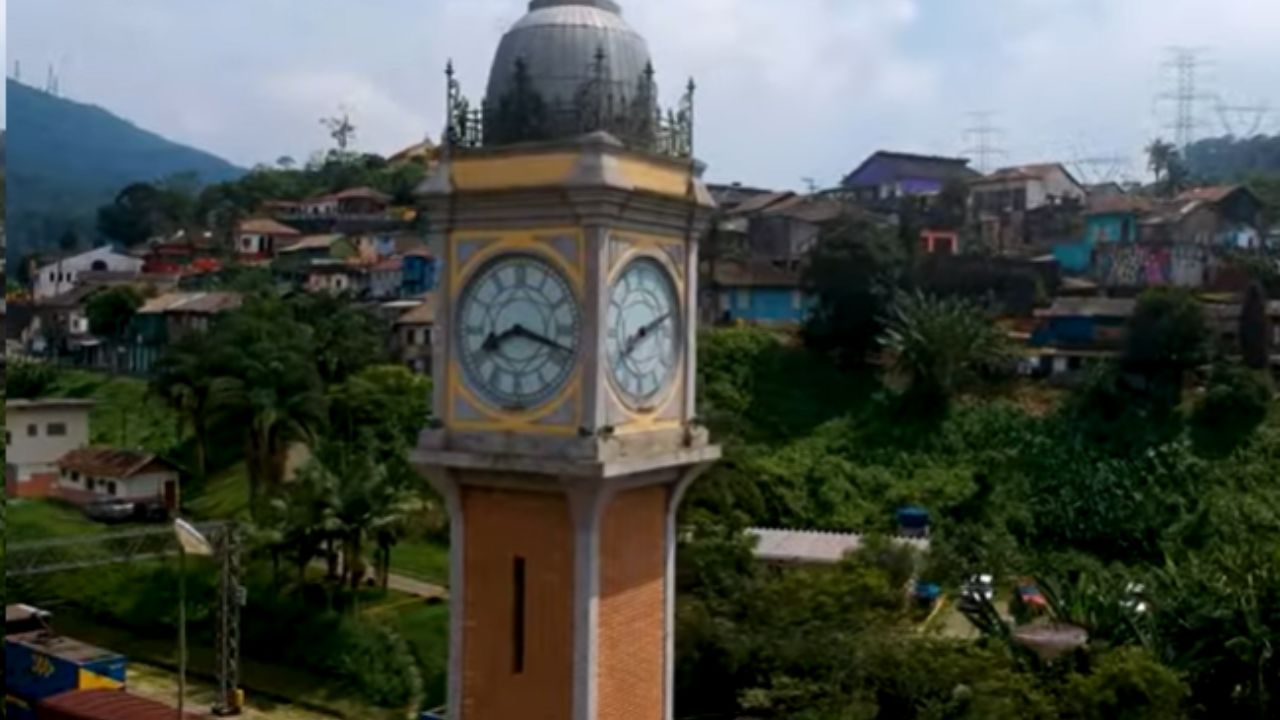


Built by the São Paulo Railway in the 19th century, Paranapiacaba emerged around a clock tower inspired by Big Ben that dictated the rhythm of the railway and the lives of the residents.
On top of the Serra do Mar, the English village in the São Paulo countryside of Paranapiacaba seems frozen in time, and there is a reason for that. According to the portal Turismo Santo André, the village emerged in the 19th century as a base for the workers of the Santos–Jundiaí railway, built by the British company São Paulo Railway. The name, which comes from Tupi and means “place from where one sees the sea”, names one of the most fascinating relics of the industrial era in Brazil.
But what makes Paranapiacaba different from so many other railway villages in the country is the detail that marked its creation: an English clock. According to Pátio Ferroviário – Turismo Santo André, the clock tower was erected around 1898, equipped with a mechanism imported from London, from the brand Johnny Walker, and its chimes synchronized the functioning of the entire village. It was the beat of trains, workers, and residents.
The English Village That Followed The Chimes


The British engineers of the São Paulo Railway designed Paranapiacaba as a company town, inspired by Victorian models from England. The wooden houses with steep roofs, the urban layout, and even the drainage system reminded one of British villages from the 19th century. The station clock, installed at the highest point of the village, was not just decorative; it was the nerve center of daily railway life.
-
Brazilian Entrepreneur Turns Door-to-Door Jewelry Sales into a Family Business Empire with Over 70 Stores

-
$75 Million Bridge in Brazil Opens to Connect Cities, Create Jobs, and Cut Travel Time from 30 to 2 Minutes; Spanning 1.24 km, It’s Among the Country’s Largest and Ends Decades of Ferry Queues.

-
Brazilian Farmer Builds 8-Ton Tractor from Army Truck Engine, Plants Over 100 Hectares of Soybeans
-
11-Year-Old Entrepreneur Turns Fear of Bees into Honey Lemonade, Wins $60,000 on Shark Tank, Secures Whole Foods Deal, and Expands Brand Across U.S. Stores




As described by Turismo Santo André, the hours marked on the tower determined the train schedules, shift changes, and even the domestic routine. Each chime echoed through the characteristic fog of the mountains, guiding time and work. It was, literally, the heart that made the village pulse.
The site Guia Viagens Brasil emphasizes that the clock, with a style similar to Big Ben, was brought by the English company and became a symbol of local identity. No wonder it remains the main postcard of Paranapiacaba, a living reminder of when British time commanded the São Paulo countryside.
When Time Stopped: The Decline and Historical Rescue
With the advance of new railway technologies and the decline of cargo transport through the mountains, Paranapiacaba lost its original function. Many workers left the village, and the clock, once a symbol of precision, even stopped for years. Still, the village resisted.
According to the Prefeitura de Santo André, the tower and clock were restored in 2019, gaining new lighting and complete maintenance. The project aimed not only to preserve the heritage but also to recover the memory of the railway and the British cultural value that shaped the city. Today, Paranapiacaba is protected by IPHAN and features historical tourism routes, trails in the Atlantic Forest, and cultural festivals that attract thousands of visitors every year.
With each chime of the restored clock, the sound echoes not only in the mountains but in history. The village has started “moving through time” again, now with the rhythm of tourism and preservation.
A Piece Of England In Brazil
Walking through Paranapiacaba is like stepping into a period film. The narrow streets, the wooden buildings, and the chilly climate of the mountains enhance the charm of an authentic English village in the São Paulo countryside. Everything there refers to the era of the Industrial Revolution and the British ingenuity that brought to Brazil the first modern railway.
Today, the clock continues marking the hours of the past and present, reminding us that the village was born from a symbol of time, literally. It is a story that unites technique, culture, and emotion, showing that time can stop, but memory does not.
The English village in the São Paulo countryside of Paranapiacaba is not just a tourist attraction; it is a living lesson in history about how time shaped the work, life, and identity of a people. The station clock, raised over a century ago, remains the link between the industrial past and the cultural present of the city.
And you, have you visited Paranapiacaba or do you have memories of a place that also seems to have stopped in time? Share in the comments: what impresses you most about this mix of English past and Brazilian soul?


