Portuguese
  Spanish


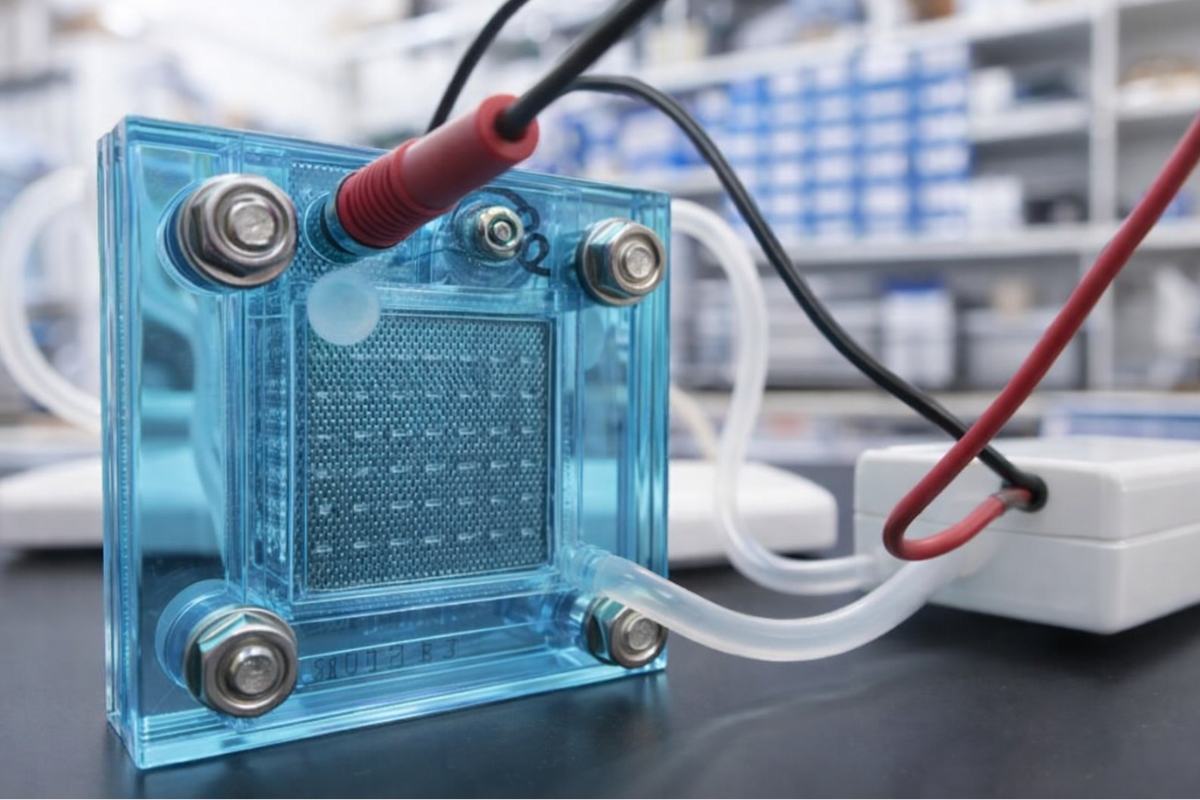


New Iron Catalyst Developed In The USA Could Reduce Hydrogen Fuel Cell Costs By 45%, Replacing Expensive Platinum And Making Clean Trucks And Cars Viable
Researchers at the University of Washington announced a breakthrough that could finally unlock the clean energy market: the development of a highly efficient iron catalyst. This innovation has the potential to cut the total fuel cell cost by up to 45%, eliminating the historical dependence on costly platinum and finally making hydrogen-powered vehicles viable for the mass market and global logistics.
New Hydrogen-Powered Cars Catalyst Uses Iron Instead Of Platinum
Until now, the biggest economic “bottleneck” for the popularization of hydrogen has been the use of platinum group metals (PGMs). In a conventional proton exchange membrane (PEM) fuel cell, platinum is the essential component for accelerating the oxygen reduction reaction. However, its scarcity and the geopolitical instability of its supply chain drastically increase the final product cost. Estimates suggest that a conventional vehicle priced at €27,000 (around R$166,000) could see its price rise to over €63,000 when adopting a hydrogen system based on precious metals.
The introduction of an iron catalyst completely changes the industrial paradigm. Unlike platinum, iron is the fourth most abundant element in the Earth’s crust, it is cheap, and is available on all continents. This transition allows for economies of scale that the limited mining of precious metals could never support, removing the barrier that kept hydrogen as a “niche” technology.
-
Harley-Davidson Enters Urban Electric Era with LiveWire S4 Honcho Minibikes: Lightweight, Affordable, 85 km Range, Priced Around $5,000

-
Turbocharged Engines with Direct Injection: Why High-Performance Engines Over 130 HP/Liter and Turbines at 200,000 RPM Challenge Durability

-
Chevrolet’s Parent Company to Invest Billions in Brazil to Modernize Factories, Update Cars, and Accelerate Hybrid Launch by 2028

-
Practical Driving Tests in Brazil Surge by 23.5%, Exceeding 2.2 Million by 2026, as New Rules Make the Process Cheaper and Simpler


Stabilizing The Iron Catalyst For Industry
Historically, iron was discarded by researchers due to its low chemical stability. In acidic environments and under the extreme operating conditions of a fuel cell, iron tended to degrade quickly, losing effectiveness in just a few hours. However, the study published in Nature Catalysis describes the use of the initiated chemical vapor deposition (iCVD) technique to circumvent this problem.
Through this advanced process, scientists have managed to coat the active sites of the metal with a protective layer that stabilizes the material during thermal activation. The result is an iron catalyst that not only resists corrosive wear but also maintains competitive energy density and extended lifespan. This balance between durability and performance is the fundamental requirement for the technology to move from laboratory benches to withstand the harsh routines of the roads.
Energy Efficiency And The Future Of Heavy Transportation

Fuel cells operate silently and cleanly, generating electricity by combining hydrogen and oxygen, with the only byproducts being heat and pure water vapor. While an internal combustion engine wastes about 80% of fuel energy, hydrogen cells exceed 60% efficiency. If a cogeneration system is used to recover heat, the total thermal efficiency can reach an impressive 85%.
The initial focus of this revolution is on heavy fleets. Long-distance trucks, ships, and urban buses require high autonomy and fast refueling times — characteristics where lithium batteries still face weight and charging time limitations. With the drastic cost reductions provided by the iron catalyst, the implementation of hydrogen corridors and fueling infrastructures becomes financially attractive for governments and private companies.
This advancement signals a future where global decarbonization will no longer rely on scarce metals. By replacing “white gold” with an iron-based solution, the industry takes the most pragmatic step in its history to transform hydrogen into the central pillar of the sustainable energy matrix.
More Information: Zeng, Y., Qi, M., Liang, J. et al. Regulating In Situ Gaseous Deposition To Construct Highly Durable Fe–N–C Oxygen-Reduction Fuel Cell Catalysts. Nature Catalysis (2026). doi.org/10.1038/s41929-026-01482-2