





 Portuguese
  English
  Spanish
  2 min of reading


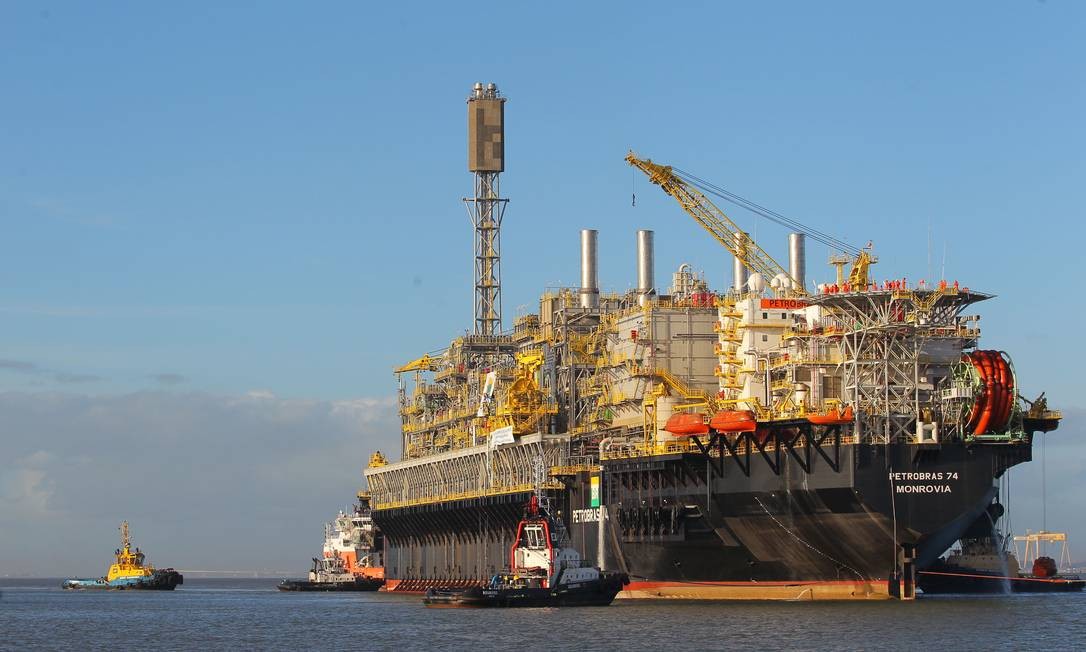
Petrobras Forecasts Búzios Field Production of Up to 2 Million Barrels of Oil Per Day by End of 2020
Currently, the amount of oil produced in Petrobras’ large Búzios field is 600 thousand barrels. The forecast was presented by the state company’s executive manager Marcio Kahn during the Pre-Salt Oil Technical Forum (PPSA). In the coming years, the area is expected to receive eight more drilling units, totaling 12 production units by 2030.
Also Read
Búzios Field of Petrobras: Oil Production
Today, Petrobras’ Búzios has four FPSOs (P-74, P-75, P-76, and P-77). The next units, P-78 and P-79, are expected to begin operations in the field in 2025. The vessels will be part of the company’s so-called new generation of high-capacity FPSOs, each producing 180 thousand barrels of oil per day.
The executive manager of Libra, Mariana Cavassin, also participated in the event and presented the HISEP Submarine technology (high-pressure separation). The innovation could assist Petrobras’ Búzios field and is expected to start operating in the Mero 3 field in 2024 and is currently in testing phase.
-
Oil surges again after attacks and standoff between the US and Iran increase global tension

-
HIDDEN TREASURE AT THE BOTTOM OF THE SEA? Oil discovery nearly 20,000 feet deep challenges engineering limits off the coast of Brazil
-
90 billion barrels of oil, 1.669 trillion cubic feet of natural gas, and 84% of probable reserves in offshore areas are under the Arctic, and the melting ice that opens maritime routes and exposes this energy treasure is turning the North Pole into a strategic dispute between the USA, Russia, China, and Canada for oil, gas, navigation, and military power.
-
IBS and CBS regulations change credit reimbursement and raise financial alert in the oil and gas industry





The Technology Can Help Increase Oil Production from Petrobras’ Búzios Field
The HISEP will be used to accelerate production in the Mero field and increase the recovery factor by separating and re-injecting underwater gas with high CO2 content produced along with the oil. According to Mariana, the technology helps mitigate environmental impacts, as CO2 is reinjected into the reservoir from the seabed.
Finally, the manager advocated for extending the production sharing contract for Mero for a maximum of 35 years. According to her, this extension, similar to the concession model, would reduce uncertainties for the development of Petrobras’ production and increase the sector’s attractiveness.








Be the first to react!