Portuguese
  Spanish


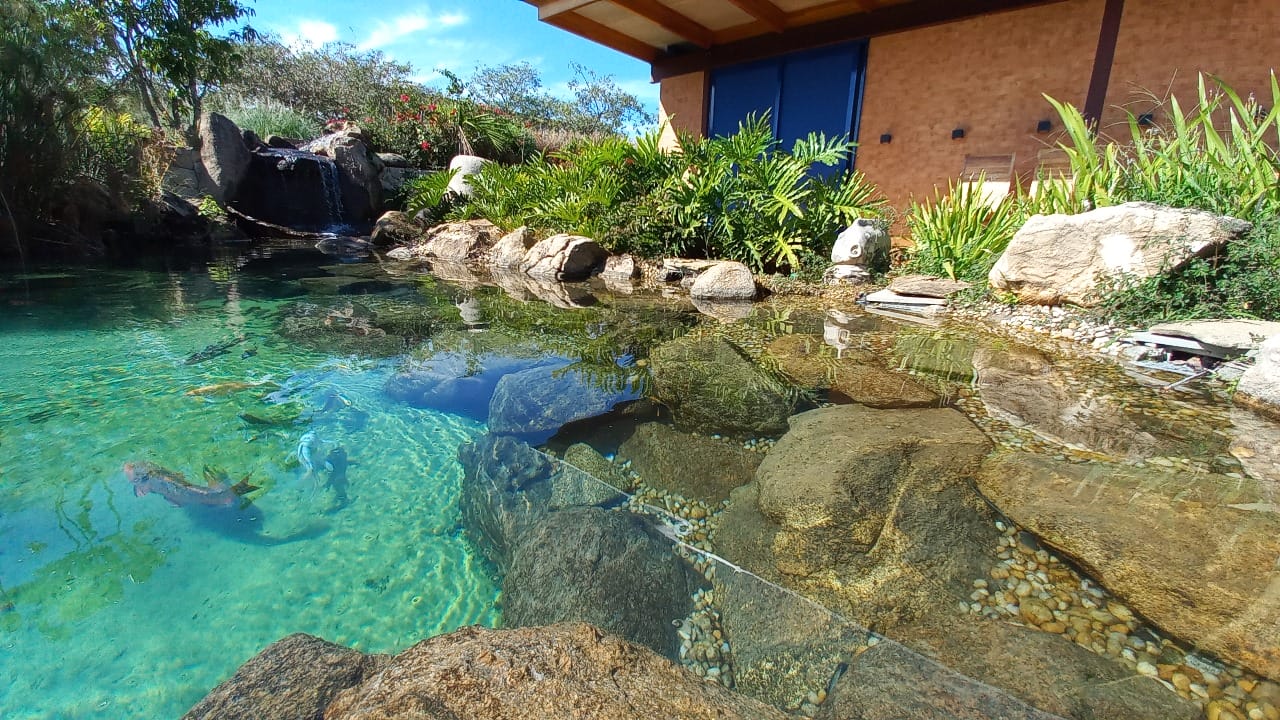

Ecological Innovation In Leisure Areas
Biological pools are emerging as a revolutionary trend in Brazil, combining sustainability, natural beauty, and lower environmental impact. These pools, which incorporate sand, fish, plants, and stones, consume up to 70% less water and emit less CO2 compared to traditional pools. The absence of cement and steel structures in biological pools significantly contributes to reducing the carbon footprint, attracting more and more followers throughout the country.
Technology And Harmony With Nature
Biological pools stand out for their innovative use of filtration systems, including biological filters that use microorganisms to purify the water. In this artificial ecosystem, fish play a vital role in controlling algae and mosquito larvae, simulating the dynamics of natural ecosystems. This approach allows pools to stay clean without the use of chlorine or other chemicals, using only ozone as a disinfectant, which is a thousand times more effective than chlorine and does not harm human health.
Health And Connection With Nature
Biologist Rafael Catarino, founder of Clímax Ambiental, emphasizes that biological pools offer a unique opportunity to reconnect with natural cycles. According to him, diving into a biological pool can have a relaxing effect similar to “forest bathing,” beneficial for both the mind and body. The demand for these pools skyrocketed after the pandemic, highlighting a growing interest among people in integrating nature and sustainability into their living spaces.
-
Eco Invest Auction Aims to Unlock $10 Billion in Investments, Focusing on Green Fertilizers, Critical Minerals, Batteries, and AI for Clean Industry in Brazil

-
Oceanographer Turns Abandoned Fishing Nets from Brazilian Waters into Bags, Creating Jobs and Earning Over $7,000 Monthly

-
Australia deploys poisoned sausages and uses traps, shooting, and fences in a battle against invasive cats that kill over 1.5 billion native animals annually, threatening more than 200 species.

-
NASA Rover Captures “Tired Face” on Mars, Highlighting Human Brain’s Tendency to See Faces in Rock Formations




Environmental Education For New Generations
Biological pools also prove to be excellent educational tools, especially for children. Interaction with fish, birds, frogs, insects, and plants provides a deeper understanding of natural cycles, as well as offering a healthy and fun alternative to video games and television. Catarino points out the importance of maintaining the ecological balance of these pools by carefully selecting fish species and controlling the use of ozone to avoid harming aquatic inhabitants.
Sustainability And Maintenance
If well designed and maintained, biological pools can be less labor-intensive than conventional ones, while also offering additional benefits. For example, water rich in organic matter, resulting from cleaning the filters, can be used for fertigation in gardens and vegetable patches, saving money on organic fertilizers and reducing waste production.
Environmental Impact And Multiplied Benefits
The trend of biological pools reflects a larger movement towards sustainability and respect for the environment. In addition to providing a unique recreational space connected to nature, these pools contribute to reducing water consumption and CO2 emissions, perfectly aligning with the principles of a more ecological and responsible lifestyle.
Conclusion: A Dive Into Sustainability
Biological pools represent much more than just a simple alternative to conventional pools. They are an expression of a conscious lifestyle that values harmony with the environment and promotes health and well-being. With the growing demand for these pools in Brazil, they are establishing themselves as a smart and sustainable choice for contemporary leisure.
Source: João Manuel.