Portuguese
  Spanish


A fossil prior to the dinosaurs, found in the municipality of Dona Francisca, in the central region of Rio Grande do Sul, revealed a new species of reptile that lived approximately 240 million years ago. The animal was named Silescelida acristata and belongs to an important group for understanding the origin of lineages related to crocodiles and dinosaurs.
The discovery was reported by CNN Brazil on June 11, 2026, based on a study conducted by researchers from the Paleontological Research Support Center of the Quarta Colônia, UFSM, and published on June 10 in the scientific journal Scientific Reports. The case draws attention because an essential part of the material was lost for about two decades before being rediscovered.
Fossil remained incomplete for more than 20 years
The fossilized material was found in rocks from the Triassic Period, in an area that today is part of the Geopark Quarta Colônia UNESCO. According to the information disclosed, part of the fossil contained fundamental data to determine the origin of the animal, but this fragment remained missing for more than 20 years.
-
China to Drill 15 Kilometers into the Earth, Set to Break Russia’s Record for Deepest Man-Made Hole

-
Researchers Use Algae to Enhance 3D-Printed Walls, Boosting Strength by 25% and Speeding Construction by 33%

-
Drill Uncovers Freshwater Rivers Hidden Beneath the Ocean Floor
-
3,000-Ton, 81-Meter Attack Submarine Begins Sea Trials, Equipped with Heavy Torpedoes and Anti-Ship Missiles


The piece was only located in 2022, during a technical visit to the scientific collection of PUCRS, the Pontifical Catholic University of Rio Grande do Sul. The rediscovery allowed researchers to finally describe and formally identify the new species.
New species lived before the dinosaurs
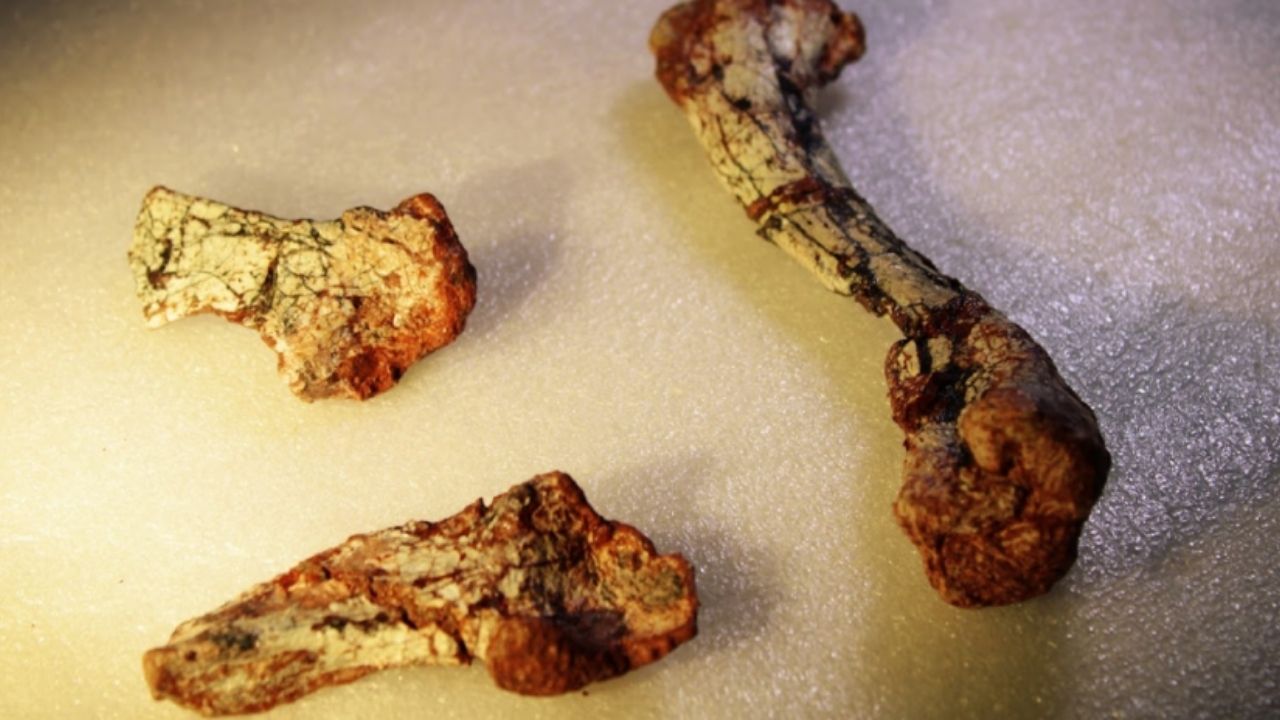
The Silescelida acristata is believed to have lived around 240 million years ago, in a period before the dominance of dinosaurs. This point makes the discovery especially relevant because the animal helps fill gaps about ancient reptiles that preceded groups more well-known to the public.
The species belongs to the archosauriforms, a group of reptiles with anatomical characteristics similar to those observed in crocodiles and dinosaurs. In evolutionary terms, this places the fossil in an important position to understand bodily transformations that marked the history of these animals.
Rare lineage may have reached South America
Kinship analyses indicate that Silescelida acristata may be related to the Euparkeriidae, a rare and still poorly understood group. Until then, fossils associated with this lineage were known primarily in countries like South Africa, China, Russia, Poland, and Germany.
In this context, the fossil from Rio Grande do Sul represents the first record of a member of this lineage in South America, according to the source. This expands the known map of these animals and places Brazil in a more relevant position in research on archosaur ancestors.
Rio Grande do Sul returns to the center of paleontology
The Quarta Colônia region is already known for important findings related to the Triassic. According to UFSM, the area where the fossil was found has already revealed fragments of some of the world’s oldest dinosaurs, which reinforces its scientific relevance.
The discovery in Dona Francisca adds a new layer to this scenario. The fossil does not belong to a dinosaur but to a reptile preceding them, which helps understand the evolutionary environment that existed before the rise of these animals on the planet.
Animal resembled a small alligator
According to the information released, the Silescelida acristata was similar in size to a small alligator. The body was slender, locomotion was quadrupedal, and the diet probably included smaller animals.
UFSM reported that related species had limbs in a semi-erect position, more under the body than projected laterally. This characteristic would have allowed more efficient and agile movement, reducing the contact of the belly with the ground.
Locomotion helps to understand an evolutionary turning point
The position of the limbs is one of the most important characteristics of the finding. In ancient animals, changes in the way of walking can indicate adaptations that paved the way for faster, more efficient, and less dragged movements.
This detail is relevant because it helps explain transformations seen in ancestors of crocodiles and dinosaurs. The fossil, therefore, is not just an isolated piece: it serves as a clue about a transitional phase in the evolution of reptiles.
Species name holds reference to disappearance
The name Silescelida combines terms associated with “silence” and “leg”. The reference to silence is linked to the long period during which part of the fossil remained missing before being rediscovered.
The reference to the leg relates to the type of preserved material, composed mainly of limb bones, including the femur. The epithet acristata means “without crest,” because the femur does not have a raised bony crest common in almost all close relatives of the species.
Study involved UFSM and PUCRS collection
The study was conducted by researchers from the Paleontological Research Support Center of the Fourth Colony, linked to UFSM. The lead author is Maurício S. Garcia, a paleontologist and doctoral candidate in the Animal Biodiversity Graduate Program at the university.
The material of Silescelida acristata currently integrates the scientific collection of PUCRS, in Porto Alegre. The combination of fieldwork, scientific collection, and academic analysis was decisive for the lost fragment to cease being an incomplete piece and become a newly formally described species.
Discovery changes Brazil’s scientific weight in this group
By identifying the first South American record of this possible lineage, researchers expand the known geographical distribution of the group. Previously, the records were associated with distant regions, outside South America.
The discovery also reinforces the importance of Brazil for studies on archosaurs and their ancestors. Rio Grande do Sul now appears not only as a site of ancient fossils but as a key piece to understanding a rare lineage preceding dinosaurs.
Why the finding matters beyond curiosity
Fossils of this type help scientists reconstruct deep stages of life’s history on Earth. When a fragment lost for decades allows the identification of a new species, it shows how scientific collections can hold information not yet understood.
The case also reminds us that paleontology depends as much on excavations as on preserved collections. A stored fossil, revisited and compared with new tools, can reveal relationships that went unnoticed for years.
An ancient fossil with modern impact
The Silescelida acristata lived about 240 million years ago, before the dinosaurs, but its identification only became possible in 2022, when the lost fragment was located in the scientific collection of PUCRS. The formal description, published in 2026, transformed an incomplete piece into relevant evidence for paleontology.
The discovery shows how a seemingly silent fossil can change the map of a rare lineage and expand Brazil’s role in the study of the ancestors of crocodiles and dinosaurs.
Do you think scientific collections still hold other discoveries capable of rewriting parts of the history of life on Earth? Leave your opinion in the comments.