Portuguese
  Spanish


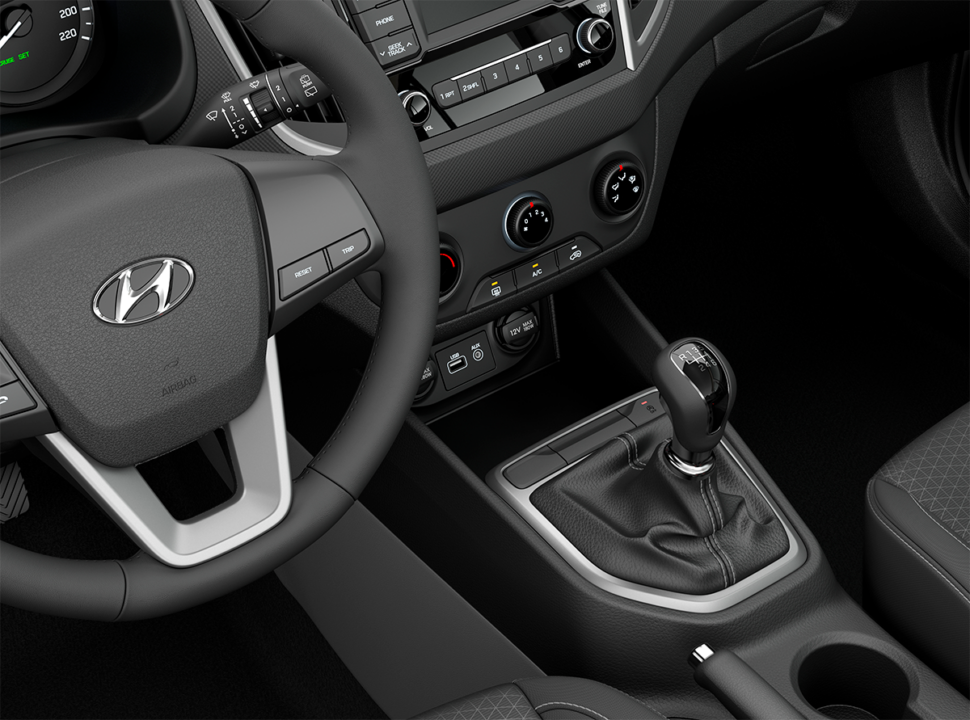

Hyundai Creta SUV Stands Out in the Used Market: Model Available for R$ 68 Thousand, with Excellent Equipment Package, Outperforming Competitors.
First presented at the 2016 Auto Show in São Paulo, Hyundai’s popular car, the Creta, quickly established itself as the first SUV produced at the Piracicaba (SP) factory. Hyundai made significant investments to compete with segment giants such as Honda HR-V, Nissan Kicks, Jeep Renegade, Chevrolet Tracker, and Ford EcoSport. Now, 8 years after its launch, the Hyundai Creta is standing out in the used market, offering excellent value for money for those looking for a complete and affordable SUV. Discover why the Creta has been attracting so much attention from consumers in the used car market.
A Bit About the History of Hyundai’s Popular Car
The Hyundai car came in versions: Attitude 1.6, manual or automatic, 1.6 Pulse, manual or automatic, 2.0 Pulse, Automatic, and Prestige 2.0, automatic. Regarding engines, besides the 1.6 16V from the Gamma family, the same as in the HB20 that delivers 140/123 hp at 6,000 RPM and torque of 16.5/16 kgfm at 4,500 rpm (manual or six-speed automatic), the news in Hyundai’s SUV was the new 2.0 16V engine with 166/156 hp and 20.5/19.1 kgfm only with automatic transmission.
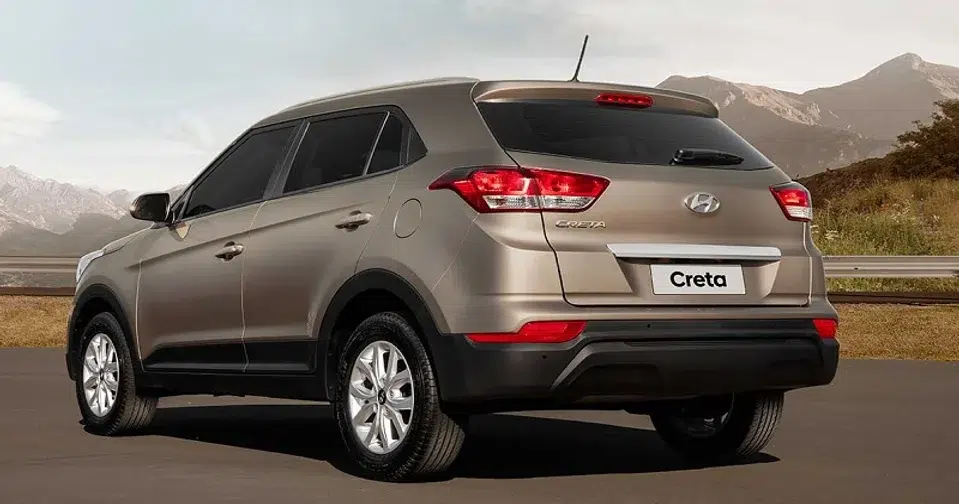
Well-equipped, the simplest version of Hyundai’s popular car already included electric steering, tire pressure monitoring, start-stop, and a sound system with Bluetooth and USB with a 3.8-inch screen.
-
Turbocharged Engines with Direct Injection: Why High-Performance Engines Over 130 HP/Liter and Turbines at 200,000 RPM Challenge Durability

-
Chevrolet’s Parent Company to Invest Billions in Brazil to Modernize Factories, Update Cars, and Accelerate Hybrid Launch by 2028

-
Practical Driving Tests in Brazil Surge by 23.5%, Exceeding 2.2 Million by 2026, as New Rules Make the Process Cheaper and Simpler
-
Brazil’s Lula Government Allocates $463 Million Quota for Electric Car Parts, Waives Import Tax Until December, Sparking Competition Among BYD, Automakers, and Unions as Consumers Question Impact on Prices and Local Industry


Those seeking traction and stability controls, hill-start assist, and parking sensors could only find them starting from the intermediate version of Hyundai’s SUV. The more expensive version already included six airbags, digital AC, ventilated seats, and multimedia with GPS.
What is the Best Hyundai Creta Unit to Buy?
Any version of Hyundai’s SUV would be a great choice, as all are very well equipped. Additionally, another advantage was its interior space, effectively utilizing a solution inherited from the Elantra mid-size sedan with which it shared the platform.


In this way, the Hyundai car, measuring 4.27 meters in length, 1.78 m in width, 1.63 m in height, and 2.59 m in wheelbase, comfortably accommodates up to 5 adults without difficulties. With a good 431 liters of trunk space, if that volume is not sufficient, it is easy to fold down the seats of Hyundai’s popular car to expand the capacity to 1,425 liters.
With average prices of R$ 65 thousand or 12% below the Fipe Table, one can find the cheaper options of the Creta, such as the Attitude with a manual transmission. The automatics in the same version sell for around R$ 68 thousand.
Looking at 2019 versions of the Hyundai Creta, which still benefit from factory warranty until the end of the year, they have average values of R$ 75 thousand, referring to the Attitude version with a 1.6 engine and automatic transmission.
What to Note When Buying Hyundai’s SUV
A chronic defect in the Hyundai Creta is related to leaks on rainy days and even during washes. Symptoms include fogged lenses. If possible, conduct a test by spraying water. A common issue with Hyundai’s popular car is the low durability of the Hyundai Creta’s battery.
There are many owners who complain, according to research we conducted on sites such as Reclame Aqui and clubs or forums related to the model.
Another common complaint about Hyundai’s car is the air conditioning system that simply stops working. Among possible failures, the source could be linked to refrigerant gas leakage, compressor issues, and even a dirty radiator.