






 Portuguese
  Spanish


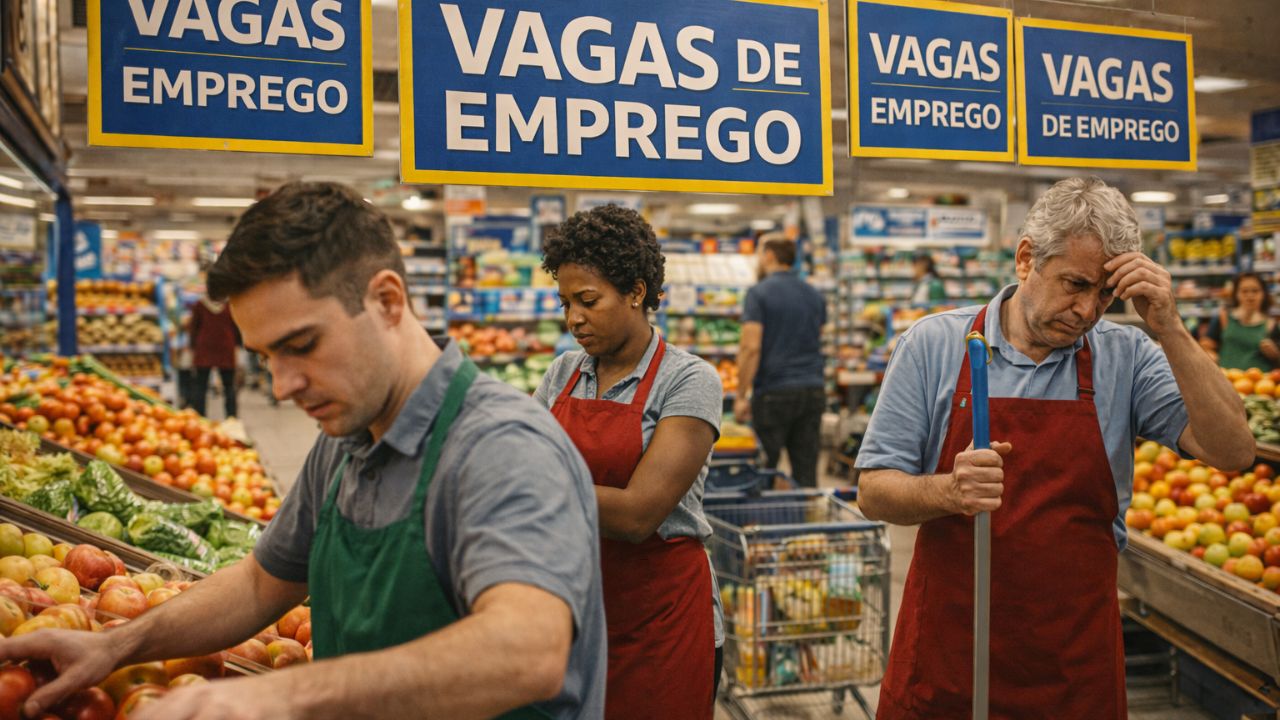


Even With Thousands Of Opportunities, Supermarkets Face High Turnover, Function Overload, And Direct Competition With More Flexible Jobs That Attract Those Who Once Entered Retail
In the 2000s, working in supermarkets was almost a rite of passage. However, today, even with hundreds of thousands of job openings, the sector cannot hire as it used to, and the reason is not a “lack of people” on the street.
With unemployment at a low level, the internet changing the market, and the traditional model being rigid, supermarkets have become a place where many enter out of immediate necessity, but few stay by choice. And this says more about the sector than about the worker.
The “First Job” Lost Its Status


For a long time, supermarkets were the gateway to formal work. It was common to start as a bagger, cashier, or stock clerk, earn the first money, and “learn the routine.”
-
Brazil to Introduce B16 Diesel with Increased Soybean Oil Content for Trucks by 2026
-
Brazil’s July Bolsa Família Payments May Include Extra $150 and $50 for Families with Children, Pregnant Women, and Updated CadÚnico Registration

-
Brazilian Woman Buys €1 House in Sicily, Clears 50 Truckloads of Debris, and Transforms Ancient Ruin into Inspiring Life Project by 2026

-
Havan Competitor Expands in Brazil with 170 Stores, Offering Everything from Stationery to Asian Food and Focusing on Affordable Products to Attract Shoppers



However, this logic has weakened. Today, many people find income in more flexible alternatives, even if informal, and exchange predictability for autonomy. When the comparison is standing for eight hours, dealing with peak times, and working on weekends, retail starts competing with options that didn’t exist as strongly in the past.
If There Is A Job, Why Does No One Stay?
The problem is not just opening a position. It’s filling and keeping it. In supermarkets, turnover is high, and when someone accepts, they often leave quickly. The mental calculation of the worker is simple: effort, hours, pressure, commute, weekends, and salary.
And the sector still faces a perception factor. When the worker feels that the company needs him more than he needs the company, the balance of power shifts. The position still exists, but staying becomes a daily negotiation.
The “Etc” On The Badge And The Function Overload
One point that frequently arises is the accumulation of tasks. The person comes in to operate the register but also restocks products, helps with cleaning, and covers whatever “comes up.” In supermarkets, this becomes routine because the flow isn’t high all the time and the operation seeks efficiency.
The problem is when this comes as a surprise. Accumulation without clarity feels like abuse, not collaboration. And perception weighs as much as salary value.
Low Salary In A Cost Of Living That Does Not Forgive
When the entry-level salary doesn’t keep up with the basics, the decision is rational. Between rent, transportation, and food, many people conclude that the effort is not worth it. It is in this void that flexible alternatives gain ground, even without guarantees.
At the same time, many supermarkets operate with low net margins, often between 2% and 5%. This limits how much they can raise pay and benefits without affecting price, productivity, and structure. The result is a sector trapped between the need to hire and the difficulty of paying more.
What Supermarkets Are Doing To Try To Turn The Tide
With the squeeze, supermarkets have begun to seek audiences that were previously ignored: seniors, retirees, inexperienced individuals, and candidates coming from social programs. They have also accelerated recruitment processes and reduced the time between application and hiring using platforms that match profile, job, and distance.
But there is a clear limit. Hiring is one step, retaining is another. Without decent integration, a minimally healthy environment, predictability, and some growth perspective, the worker will leave at the first equivalent opportunity.
Self-Service And The Future Of The Register
Another response from the sector is automation. Self-checkout and self-service help reduce pressure on some roles, but they also bring operational challenges, customer acceptance, and potential losses.
Still, for many supermarkets, technology has become part of the plan to continue functioning with fewer people available. The risk is treating technology as a unique solution and ignoring the main issue: working conditions and value proposition for those in the store.
In your opinion, what would make the most difference for supermarkets to start hiring and retaining people again: higher salary, better scale, less function overload, or a real career plan?


Vamos destacar alguns pontos importantes!!
Na minha sincera opinião, precisa mudar com estratégias claras e objetivas,e pensar no colaborador como um alicerce dentro da Empresa, pensar em seu bem estar, físico e emocional,Se os gestores e toda parte administrativa se organizassem, acredito que não teria tanta rotatividade de funcionários, porque são desmotivados e não valorizados, precisam oferecer benefícios atrativos, menos carga horária,e mais flexibilidade!!
Aí sim teríamos colaboradores, maís felizes e capazes de desenvolver seu trabalho!!!
Antigamente aceitavam isso pq a maioria era analfabeta, hoje graças as redes sociais o povo foi compartilhando a farsa de “vestir a camisa da empresa” e os filhos aprenderam com os erros dos pais.
Se vc pode ganhar uns 4 mil sendo entregador, pra que perder tempo ganhando salário mínimo?
Hoje tá cheio de 40tão que adorava falar “trabalho desde dos 14 anos e esses jovens só fica no videogame” e agora está chorando na fila do sus, geral está vendo que ninguém recompensa bondade ou funcionário esforçado.
melhorar o salário, rede grande de supermercado tentar cativar o funcionário contratando para ficar mais perto de casa, acho que melhoraria bastante a alto estima, e também acho que aos domingos e feriados o supermercado em geral deveria fechar um pouco mais cedo, estou a 32 anos no ramo e ouço bastante sobre isso, acho que perdemos bastante em pleno domingo ou feriado o funcionário tendo que ficar até às 20:00, acho que um horário flexível até às 16:00 é o ideal, e nesses dias ter um pagamento em dinheiro na hora cativa bastante o trabalhador, poderia tentar cativa-lo