Portuguese
  Spanish


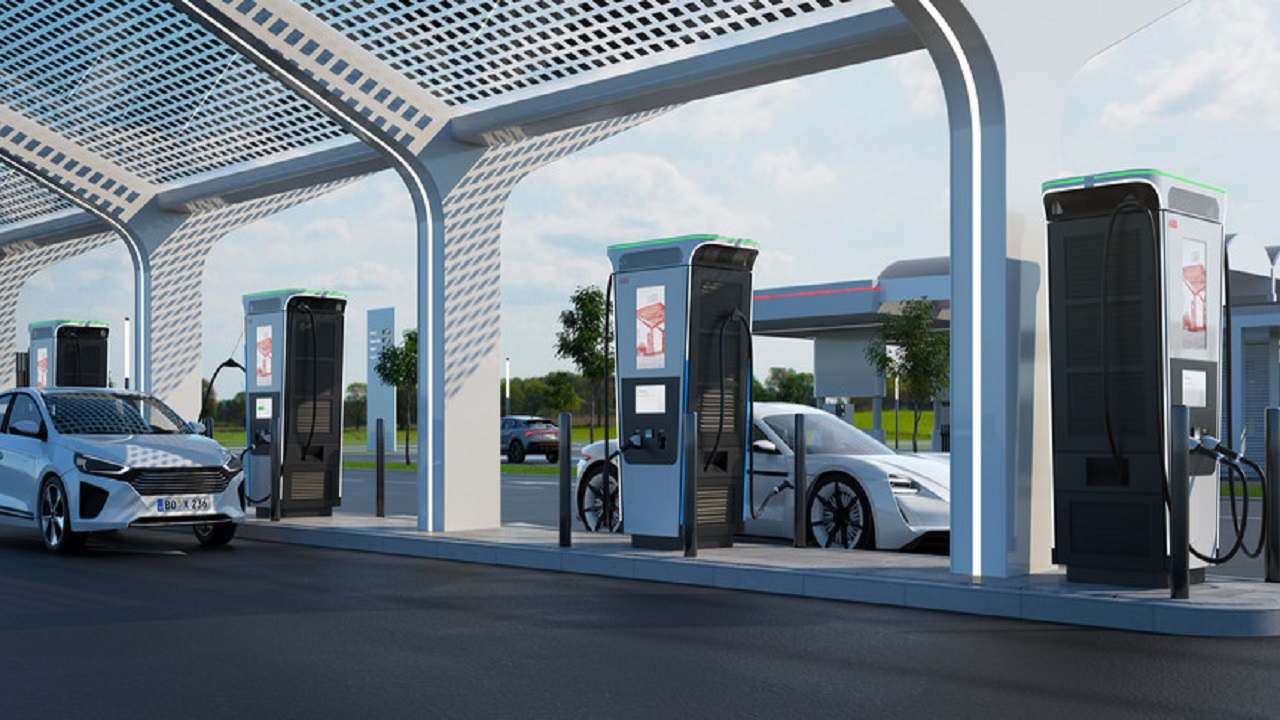

Portugal Inaugurated Its First Charging Hub for Electric Cars This Wednesday (22). The Venture Received an Investment of 2 Million Euros from the Environmental Fund
Since Wednesday (22), the city of Leiria, in Portugal, has its first hub – a station with several chargers for electric cars. In addition to this, other hubs will also be implemented in eight more major urban centers in the country. The inauguration of the electric car charging hub in Portugal took place around 2 PM, on Rua de Santo André – the first of a total of nine hubs. The venture results from an investment of approximately two million euros, composed of the Economic and Social Stabilization Program (PEES), launched by the Government of Portugal using funding from the Environmental Fund.
Read Also
Location of Electric Car Charging Hubs in Portugal
According to MOBI.E, a public sector company that has acted as the Managing Entity of the Electric Mobility Network (EGME) for 6 years, in addition to Leiria, the following cities will also have electric car charging hubs: Coimbra, Guimarães, Almada, Loulé, Matosinhos, Loures, Vila Nova de Gaia, and Viseu.
-
Chevrolet’s Parent Company to Invest Billions in Brazil to Modernize Factories, Update Cars, and Accelerate Hybrid Launch by 2028

-
Practical Driving Tests in Brazil Surge by 23.5%, Exceeding 2.2 Million by 2026, as New Rules Make the Process Cheaper and Simpler
-
Brazil’s Lula Government Allocates $463 Million Quota for Electric Car Parts, Waives Import Tax Until December, Sparking Competition Among BYD, Automakers, and Unions as Consumers Question Impact on Prices and Local Industry

-
Chinese Giant Invests $1.3 Billion in Brazil to Produce 50,000 Cars Annually, Create Jobs, Develop Local Suppliers, and Manufacture Electric, Hybrid, and Combustion Models by 2027



Each hub has one ultra-fast charging station (150 kW), five normal charging stations of 22 kW, and three fast charging stations of 50 kW. Additionally, there is a transformer station that allows for the charging of 18 electric cars at the same time.
According to Luís Barroso, president of the company, this pilot project aims to signal the electric vehicle market on how the Mobi.E network’s response could progress in areas of higher demand, such as major urban centers. The growing number of users will be able to find an available charger in the same location more easily, relatively quickly, depending on their current needs.
The Mobi.E Network Has Over 2,000 Charging Stations for Electric Cars
In a statement to the press, the Secretary of State for Mobility, Eduardo Pinheiro, states that electric mobility is essential for reducing emissions of gases that contribute to the greenhouse effect, largely responsible for the climate changes already impacting society.
According to Eduardo, the government of Portugal will continue to support measures like this, which promote the use of electric cars and phase out polluting vehicles, as well as other solutions aimed at active mobility and public transport. The secretary emphasized that he will continue working to ensure the growth of the public charging network in the territory, responding to the increasing number of electric cars in circulation in the country in the coming years.
The Mobi.E network currently has over 2,300 charging stations and 4,800 sockets, and for the most part, these stations are located in publicly accessible spaces.
Electric Mobility Advances in Brazil
Nissan and Movida inaugurated an electric car charging station on Marginal Tietê this month. The space has 11 chargers, with a waiting room for drivers to wait for their vehicle to charge.
The chargers feature 7.5 kW, allowing for a full charge in 5 hours, and one fast charger of 50 kW, enabling a vehicle to charge in just 40 minutes.