Portuguese
  Spanish


Netflix Faces Unprecedented Lawsuit With Procon-SP Over Password Sharing, Affecting Subscribers and Bringing Changes to Streaming Policies in Brazil. The Case Could Influence Industry Practices and Generate New Debates on Digital Rights.
Understand the Lawsuit Between Netflix and Procon-SP
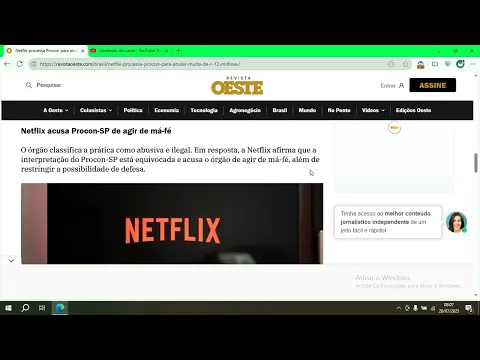
In a scenario marked by significant changes in the consumption of digital content, Netflix filed a lawsuit against Procon-SP (São Paulo Consumer Protection and Defense Foundation) after being fined R$ 12.5 million due to the end of password sharing among users.
The case made headlines by involving two of the biggest names in their segments: on one side, the world leader in video streaming, and on the other, one of Brazil’s most active consumer protection institutions.
Origin of the Fine and Netflix’s Reaction
The discussion began in 2023 when Netflix decided to restrict password sharing, a measure that generated a strong backlash among Brazilian subscribers.
-
Floating Solar Panels Aim for Rougher Seas with Norwegian Rope Mesh Technology, Following DNV Review, Opening New Clean Energy Opportunities in Coastal Areas

-
Olympus Mons: The Solar System’s Tallest Volcano, Over Three Times the Height of Mount Everest, Puzzles Scientists with Its Prolonged Volcanic Activity
-
Alaska’s 1,287 km Pipeline Built on 78,000 Metal Supports to Prevent Thawing, Survives Earthquakes and Remote Forests, Highlighting the Challenge of Hot Oil in a Harsh Environment
-
Brazilian Student Innovates Sustainable Ceramic Tableware Using Rice Husks and Recycled Glass, Achieving Up to 60% Waste Composition and Comparable Performance to Conventional Materials


According to Procon-SP, the new policy violated at least seven clauses of the service’s own terms of use, in addition to imposing extra costs on consumers without prior notice.
The agency assessed that the “extra subscribers” functionality, created as an alternative to the old sharing system, was abusive and illegal, as it required the account holder to purchase additional accesses to allow others to use the service.

The penalty imposed by Procon-SP prompted an unprecedented response from Netflix, which turned to the courts to seek the annulment of the fine.
According to the company, the state agency’s interpretation was mistaken and curtailed its right to defense, constituting what it called a “restriction of the adversarial system”.
In an official statement released on July 29, 2025, the company stated: “Netflix clarifies that it did not make any mention or accusation that Procon-SP acted in bad faith. The purpose of the action proposed by Netflix is the declaration of the illegality of a fine mistakenly imposed on the company”.
The case is pending in the 9th Public Finance Court of São Paulo and represents an attempt by Netflix to avoid paying a penalty deemed disproportionate by the company.
In its defense, the platform argues that the fine creates legal uncertainty in the country, especially because, according to its representatives, there are previous court decisions contrary to those made by Procon-SP.
Sharing Netflix Password and the New Streaming Rules
The discussion about the password sharing of streaming services, particularly Netflix, gained global momentum starting last year.
Until then, it was common for a single subscription to be used by different people, often in different households or even in different cities.
However, in the face of increasingly fierce competition and the search for revenue growth, Netflix launched an offensive to curb this practice, limiting simultaneous access to the same account.
The impact of the new policy was immediate.
Despite the criticisms received and the dissatisfaction expressed by consumers, Netflix observed a significant growth in its subscriber base, achieving unprecedented financial results.
Data released in quarterly reports show that after the restriction on password sharing, the service registered an increase in subscriptions and record revenues.
The international repercussions of the strategy led other streaming platforms to announce similar policies.
HBO Max, for example, has already confirmed that it intends to adopt a similar restrictive model in European countries starting in 2025.

Controversy, Consumer Rights, and the Streaming Market
At the center of the controversy is the definition of the limits of account usage and transparency in the relationship between companies and consumers.
According to the Consumer Protection and Defense Foundation, the main criticism lies on the absence of clear and timely communication regarding changes.
For the agency, requiring payment for each new access infringes the right to information and imposes an unexpected financial burden on users.
On the other hand, Netflix justifies the changes as a necessity to ensure the service’s sustainability and combat the misuse of accounts.
According to official information, indiscriminate password sharing represented significant annual losses for the company.
The company also emphasizes that new subscription options have been created to meet different audience profiles, including lower-priced tiers and plans specific for domestic use.
Consequences of the Lawsuit for Users and the Market
The repercussions of the case go beyond the courts and are already influencing market behavior.
The discussion around the right to share Netflix passwords, or those of any other streaming service, has become a recurring topic in debates about consumer rights, digital privacy, and pricing policies.
For digital rights experts, the episode underscores the importance of clear rules and predictability in contracts for the provision of digital services.
While the lawsuit is still pending in court, consumers remain vigilant about the possible consequences for their streaming experience in Brazil.
If Procon-SP’s decision is upheld, experts believe that there could be repercussions not only for Netflix but also for the entire industry, setting precedents that could affect the operations of other platforms in the country.