






 Portuguese
  Spanish
  4 min of reading
  1 comment


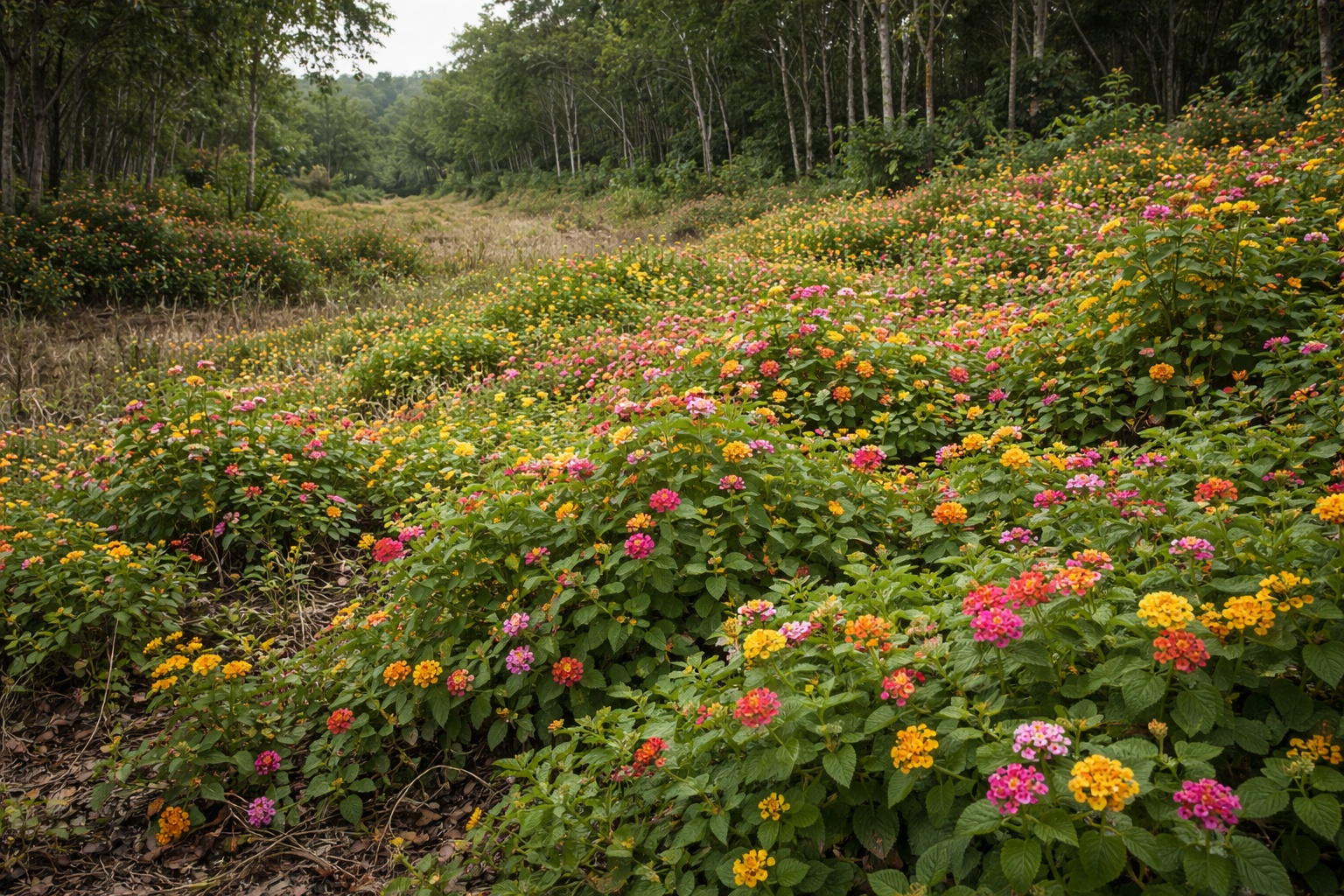


Present in 60 Countries, Toxic and Difficult to Eradicate, Lantana Camara Is One of the Most Destructive and Economic Invasive Plants in the World.
Lantana camara, known in various regions simply as lantana, is considered one of the most aggressive invasive plants on the planet. Tough, resilient, toxic, difficult to eradicate, and capable of altering entire ecosystems, it spreads today across more than 60 countries in Asia, Africa, Oceania, and the Americas, according to the IUCN and the Global Invasive Species Database, being classified as an invasive species of “high interest” for various governments.
The history of Lantana camara is ironic. It started as a ornamental plant, brought by Europeans from the 17th century for tropical gardens due to its colorful flowers and immense regrowth capacity.
What was decorative became an international ecological problem when the species escaped gardens and began to spread through savannas, pastures, degraded forests, agricultural areas, and urban edges.
Today it is ranked among the 100 worst invasive species on the planet by the IUCN and the ISSG (Invasive Species Specialist Group).
-
Producers pierce PET bottles, bury them next to the plants, and create drip irrigation that delivers water directly to the roots and reduces waste in the garden.

-
Seven women from the same family turned a cheese factory in Minas into a tourist attraction, where visitors can watch the milking process, see the artisanal cheese being made, and even take home products made on the farm.

-
He tore up all the grass in the yard, turned the house into an urban farm, and sold food to the neighbors until the city hall showed up with a fine for zoning violation.
-
After working as a waiter for ten years, he borrowed R$ 500 from his brother, created 40-minute lines with an açaí cart on the street, and today runs a farm with 600,000 trees in Pará and a network worth R$ 45 million.



Toxic to Animals and Agricultural Problem
Lantana camara is not suitable for livestock. Its leaves contain lantadines, toxic compounds that cause in cattle, sheep, and goats:
• jaundice
• hepatic necrosis
• loss of appetite
• photosensitivity
• death in severe cases

Data compiled by agricultural institutions in India and Australia indicate that lantana poisoning in livestock causes significant veterinary losses, reduced weight gain, and even two important indirect effects:
• reduction of native pastures (due to competition)
• increased management costs
In regions such as India, Kenya, and Tanzania, lantana already occupies millions of hectares previously dedicated to pastures and agriculture.
Suffocates Forests, Prevents Regeneration, and Alters Soil
The impact of Lantana camara is not only agricultural — it is ecological. The plant forms dense thickets, with canopies of 2 to 4 meters in height, capable of:
• blocking light
• suppressing native seedlings
• preventing forest regeneration
• expelling shade-sensitive species
• altering soil microbiota
In African and Australian savannas, lantana creates flammable vegetation barriers that increase the frequency and intensity of fires, further accelerating the conversion of native areas to fields dominated by the invasive plant itself.
Forestry studies indicate that where lantana establishes, young trees simply cannot grow, initiating a cycle of ecological impoverishment.
Why Does It Spread So Quickly?

The formula for the success of Lantana camara involves biology + human scenarios:
• Intense fruiting year-round
• Dispersal by birds (fruits ingested and distributed over great distances)
• Deep roots and drought-resistant
• Vigorous regrowth after cutting and burning
• Tolerance to poor, acidic, and degraded soils
• Tolerance to heat and dry periods
In other words: the more degraded the environment, the stronger the lantana becomes.
And as if that weren’t enough, it also resists most conventional herbicides, forcing the use of complex chemical combinations or manual removal.
Million-Dollar Economic Losses
Estimates compiled by agricultural agencies in India and Australia indicate annual million-dollar losses associated with lantana, mainly in:
• reduction of usable pastures
• livestock poisoning
• increased management and control costs
• reduced agricultural productivity
• damage to forested and touristic areas
The global financial impact is underestimated because it involves various sectors — livestock, tourism, conservation, and land use. But regional studies published in Biological Conservation suggest impacts in the range of hundreds of millions of dollars when considering combined tropical and subtropical countries.
Difficult and Often Useless Control
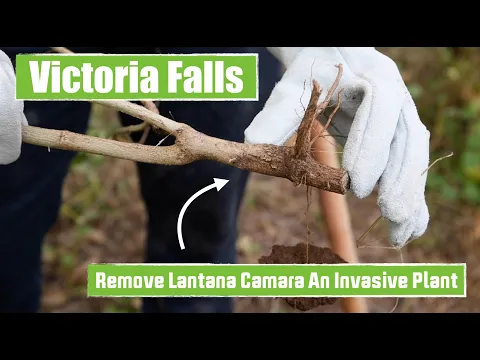
Governments have already tried burning, herbicides, biological consortia, and mechanical removal, but the plant responds with:
• regrowth after cutting
• persistent seed bank in the soil
• expansion post-fire
Biological control programs use insects that attack lantana, but the process is slow and does not eliminate the species, at most reducing aggressiveness.
Why It Is Considered One of the Worst Invaders in the World
Lantana camara combines five characteristics that almost no other plant can simultaneously possess:
- Toxicity to domestic herbivores
- High dispersal by birds
- Dominance of degraded ecosystems
- Direct economic impact
- Resistance to chemical and mechanical control
This combination explains why lantana has become a continental problem in Africa, India, Australia, and parts of South America and why experts place it among the most destructive invaders of the 21st century.
Lantana camara is a classic case of how an ornamental plant can turn into a global ecological problem.
Toxic, resilient, difficult to eradicate, and adapted to degraded environments, it now colonizes entire landscapes, alters ecological chains, threatens forest regeneration, and generates significant economic losses, especially in tropical countries.
If humanity continues to degrade soils and tropical forests, lantana is likely to strengthen, expanding the invasion frontier and confirming its status as one of the most dangerous invasive plants in the world.








Is this true for North Carolina, specifically for landscaping in an urban neighborhood?