Portuguese
  Spanish



New Zealand Aircraft Breaks the Sound Barrier and Ascent Record, Remotely Piloted by Brazilian Iago Amaral. Is This the Future of Aviation?
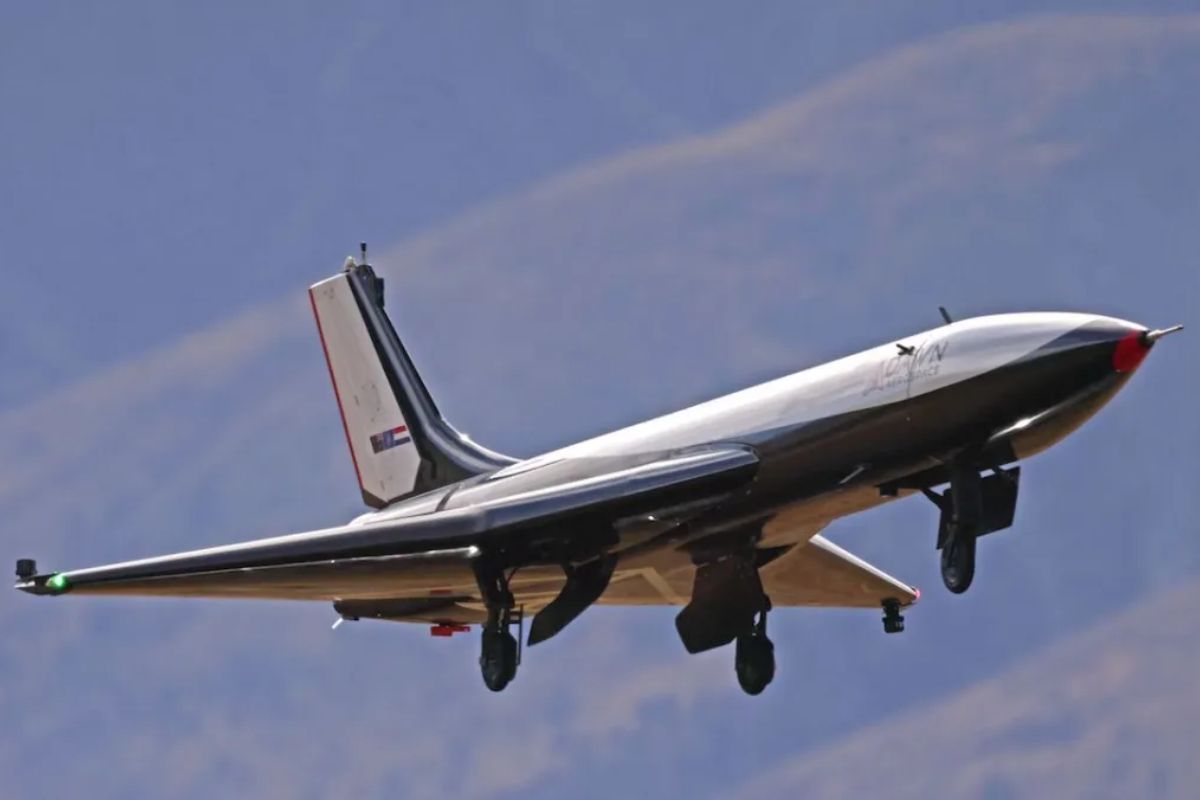
Civil supersonic aviation is being reborn. The reason is the MK II Aurora. An unmanned aircraft from Dawn Aerospace, a company based in New Zealand. On November 12, it made history. It broke the sound barrier, an unprecedented feat for civil flights since the Concorde was retired in 2003. The remote pilot behind this milestone is Brazilian Iago Amaral. Discover this aircraft that promises to change aviation.
Breaking Records: The Historic Feat of Dawn Aerospace
The flight of November 12 by the MK II Aurora was remarkable. The aircraft reached Mach 1.1 (approximately 1355 km/h). It achieved an altitude of 25,150 meters, double that of commercial aircraft. This was the first flight of a remotely piloted civil aircraft to reach supersonic speed.
Moreover, the Aurora broke a 1970 ascent record held by the F-15. It went from 0 to 20 km altitude in 118 seconds, surpassing the previous record by 4.2 seconds. And according to Iago Amaral, this is still not the aircraft’s limit.
-
Brazil Welcomes Spanish Wamos Air and Nigerian Air Peace, Potentially Transforming International Routes and Increasing Competition

-
Offshore air transport soars in Brazil, surpasses 2.5 million passengers, and reveals how oil has transformed Rio’s airports into key pieces of national logistics.

-
Latin America becomes the “global champion” of aviation taxes, tickets may become more expensive in Brazil, and IATA’s warning exposes risk for flights, tourism, and passengers.
-
Brazil has lost 85 air routes since 2019 and is still flying less than before the pandemic, leaving passengers with fewer destinations, fewer frequencies, and a more limited air network.




Inside the Aurora: Technology, Performance, and Construction
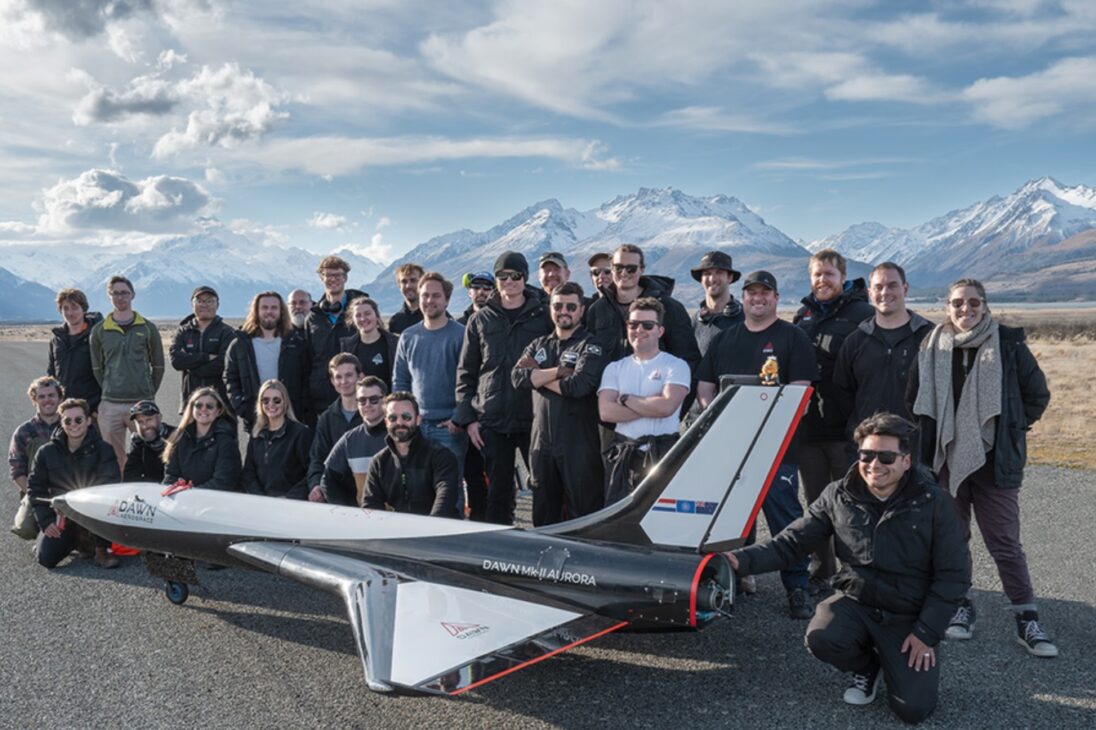
The MK II Aurora uses a rocket engine with two modes. The bi-propellant mode (hydrogen peroxide and kerosene) was used in the supersonic flight and does not allow acceleration control. The mono-propellant mode (hydrogen peroxide only) allows power variation. The aircraft is entirely made of carbon fiber. It weighs 125 kg dry and has a maximum takeoff weight of 260 kg. It measures 4.8 meters in length and 2.4 meters in wingspan. Its payload capacity is 4 kg.
Fuel consumption is high: it loses 1 kg per second during burn. After about 2 minutes, the fuel runs out and the Aurora turns into a glider, returning for a landing without engine power, similar to the space shuttle.
Remote Piloting: The Experience of Brazilian Iago Amaral
The MK II Aurora is remotely piloted by Brazilian Iago Amaral, a native of Curitiba. He controls the aircraft using a FPV (First-Person View) system, with cameras and instruments. Iago has been experienced with flight simulators since he was 6 years old and also with model aircraft.
He emphasizes that remote piloting is a distinct discipline from conventional piloting. Amaral was hired by Dawn Aerospace in New Zealand in 2022 after the company sought a pilot with his profile for nearly 9 months. He is currently the only pilot on the project.
Testing Platform: The Purpose and Evolution of the MK II


The main purpose of the MK II Aurora is to serve as a testing platform. It allows for scientific experiments and the development of technologies for future access to space. The project aims to combine the performance of a rocket with the versatility of an aircraft. The operation follows standards of conventional aviation, using certified runways and communication with other aircraft.
The Aurora has already conducted 58 flights (as of the interview date) and has undergone several modifications over time, including engine swaps (from jet to rocket), tank increases, and optimizations of weight and center of gravity.