Portuguese
  Spanish


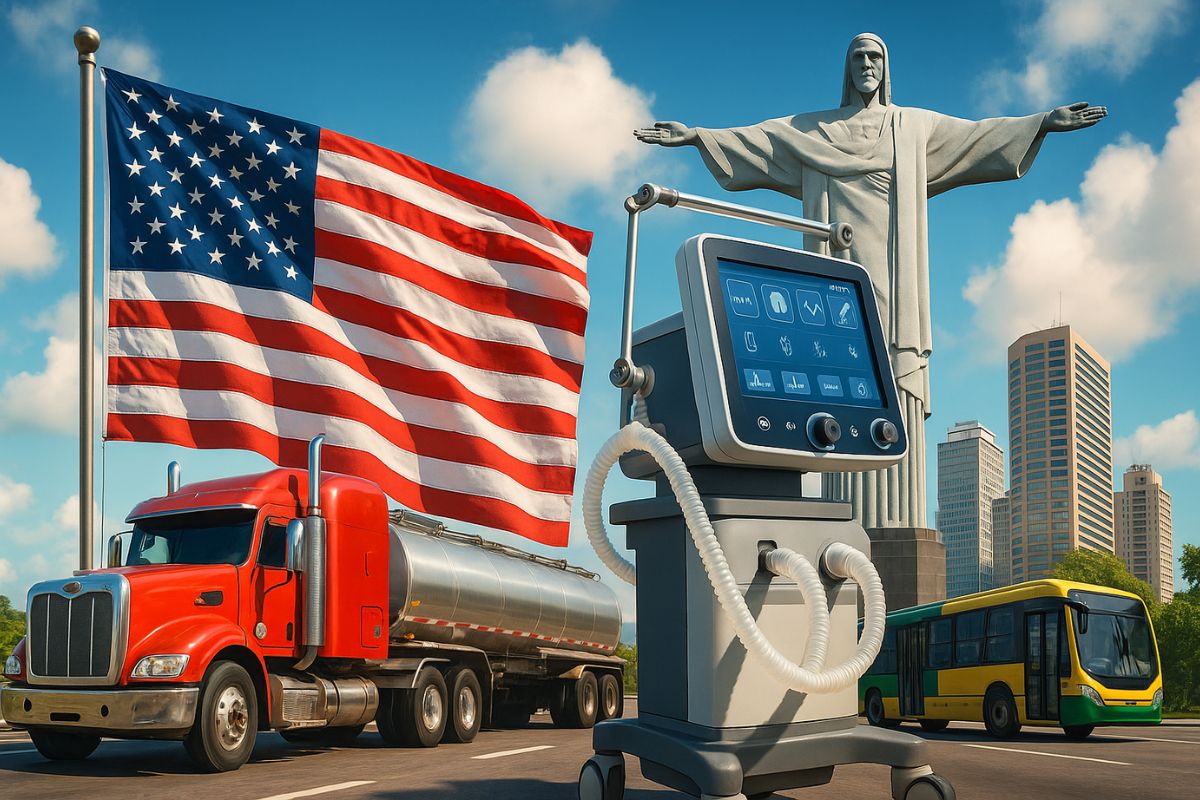


American Products That Brazil Buys: From Diesel to High Technology. U.S. Imports Supply Strategic Sectors in Brazil and Go Far Beyond Fuels and Medicines
The trade relationship between Brazil and the United States is historic and strategic. Currently, the American products that Brazil buys supply essential sectors such as energy, health, aviation, and technology. Even being a major exporter of commodities, Brazil depends on imported items to keep its economy and infrastructure functioning.
According to foreign trade data, the U.S. is among the three main international suppliers to Brazil, moving billions of dollars a year. Many of these products are more present in the daily life of Brazilians than one might think.
Fuels: Diesel Leads the List
The diesel oil and other petroleum derivatives are the main American products that Brazil buys. Despite producing oil, the country still has limited refining capacity. This forces the importation of large volumes, especially during periods of high demand or when refineries undergo maintenance.
-
Brazil’s Imigrantes Highway Celebrates 50 Years with Plans for Major Expansion, Including a 6 km Tunnel and Third Lane to Ease Traffic to São Paulo’s Coast

-
Brazilian Job Market Surprises: Unemployment Falls to 5.6%, Hits Record Low for May, Brazilian Incomes Rise, and Underemployment Reaches Lowest Level Ever Recorded by IBGE

-
Chinese E-commerce Giant Predicts Robots Will Replace 700,000 Delivery Workers as Autonomous Vehicles Expand to 200 Cities, Offering Training for Workers to Maintain Their Machines

-
Trump warns Europe with 100% tariff threat on digital tax, potentially impacting wine and trade agreements


This dependence ensures the supply of road transport — the backbone of Brazilian logistics — but also makes internal prices sensitive to exchange rate fluctuations and international market oscillations in energy.
Medicines and Pharmaceutical Products
The United States is home to some of the most advanced laboratories in the world, which explains why Brazil imports vaccines, antibiotics, and treatments for chronic diseases. In addition to ready-made medicines, essential pharmaceutical inputs for the national industry also arrive.
The importation of these products ensures access to modern treatments but also reinforces the need to expand local production of inputs to reduce vulnerability in health crisis situations.
Industrial and Medical Technology
Medical equipment, industrial machines, automation systems, and agricultural machinery are also among the main American products that Brazil buys. American engineering and reliability make these items key components for the productivity and competitiveness of Brazilian companies.
Without this equipment, hospitals, industries, and agribusiness would face more difficulty in maintaining the efficiency and quality standards required by the global market.
Aviation and Defense
The Brazilian aviation sector relies on aircraft, parts, and maintenance systems coming from the United States. Boeing, for example, supplies planes and components to national companies and for strategic areas such as defense.
In addition to aircraft, navigation systems and embedded technology are imported to modernize the fleet and ensure international safety standards.
Electronic Components and IT
The digital transformation has increased the demand for chips, servers, software, and information technology infrastructure from the U.S. These products supply everything from universities and hospitals to startups and government agencies.
This is one of the segments most sensitive to dollar fluctuations, and any exchange rate oscillation can significantly increase the costs of innovation and modernization projects.
Benefits and Risks of This Dependence
Importing from the U.S. brings advantages such as quick access to cutting-edge technology, high-quality products, and reliable suppliers. However, external dependence in critical sectors exposes Brazil to exchange rate risks, international political instabilities, and potential trade barriers.
Experts advocate for a balance: maintaining the strategic partnership with the U.S., but investing in local production of sensitive items to reduce vulnerabilities.
And you, which of the American products that Brazil buys surprised you the most? Do you think we should invest more in local production to reduce dependence? Share your opinion in the comments.