






 Portuguese
  Spanish


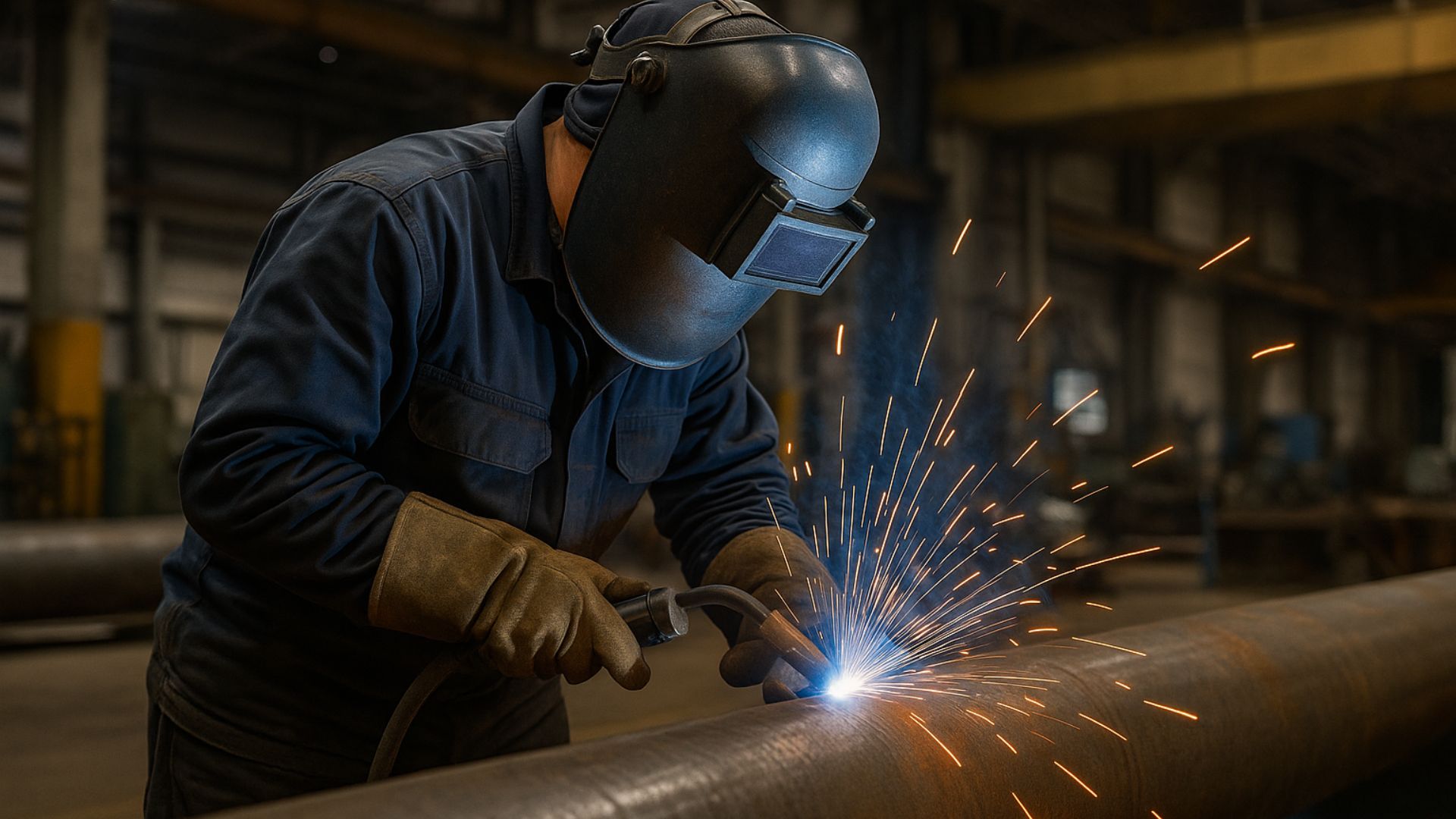

High-Demand Profession Combines High Salaries, Lack of Specialists, and Expansion of Free Courses That Allow Quick Entry into the Market.
The career of specialized welder has established itself as one of the technical professions that combine salaries above R$ 8,000 in the highest ranges, lack of qualified professionals, and expansion of free courses for beginners.
The demand mainly comes from sectors such as shipbuilding, oil and gas, energy, metal construction, and steel production, which compete for trained labor and are in a hurry to fill vacancies in ongoing works and projects.
Specialized Welder and the Industrial Market
The specialized welder works by joining, cutting, and repairing metal structures in industrial contexts.
-
Brazilian Startup Turns Coffee Grounds into Plant-Based Leather, Cutting Water Use by Over 50 Times for High-Impact Sustainable Fashion

-
Eco Invest Auction Aims to Unlock $10 Billion in Investments, Focusing on Green Fertilizers, Critical Minerals, Batteries, and AI for Clean Industry in Brazil

-
Half of Brazilians Prefer Lower Taxes with Private Health and Education, While 44% Opt for Higher Taxes for State-Provided Services, Datafolha Survey Reveals

-
Brazil’s Most Expensive Toll Rises to R$ 40.60 on Route from São Paulo to the Coast, Nearly Matching Bus Fare to Santos




This professional participates in the assembly of pipelines, platforms, warehouse structures, towers, tanks, ships, bridges, and heavy equipment.
The activities follow strict safety and quality standards.
In practice, he executes welds in different positions and working conditions.
Often, he works at heights, in confined spaces, or in environments with high technical demands, such as refineries, plants, offshore platforms, and mineral and metal processing plants.
Besides manual skill, he needs to interpret drawings and projects, understand material specifications, and follow standardized procedures to ensure the integrity of the components.
In various segments, the welder is a key player to keep the production line running.
A poorly executed weld can compromise the operation of equipment, generate rework, increase costs, and even cause serious accidents.
Therefore, companies prioritize professionals who master specific processes and demonstrate experience in complex industrial projects.
Salaries Above R$ 8,000 and Specializations
Although the national average salary for welders is around R$ 3,200 per month, specialized functions can pay well above this amount.
In large works, contracts with additional payments for hazardous conditions, shifts, and remote locations significantly increase compensation.

In underwater welding, for example, there are references of monthly earnings between R$ 5,000 and R$ 15,000, with occasional reports of earnings close to R$ 20,000.
In this niche, the professional needs to accumulate diving certifications, mastery of submerged techniques, and physical endurance to work in extreme conditions.
Other occupations related to the field also raise the earning potential.
Certified welding inspectors earn between R$ 5,000 and R$ 9,000.
Welding engineers can reach salary ranges of R$ 7,000 to R$ 18,000 per month in sectors such as energy, naval, petrochemical, and automotive.
The combination of responsibility, operational risk, and scarcity of qualified labor explains why the higher salary ranges in the career exceed R$ 8,000.
Labor Shortage and High Demand
The welding sector is among areas with the greatest difficulty in hiring.
Despite the decline in unemployment in various segments, companies that rely on technical qualification report a lack of prepared workers.
The physical demands and the need for constant updating lead some professionals to migrate to administrative, supervision, inspection, or other technical roles.
This movement opens new operational vacancies and maintains a chronic shortage of experienced welders.
Free Courses and Training from Scratch
Public programs, institutions of the S System, and private platforms have expanded the offer of free welding courses, even for beginners.
Municipalities and states offer training through mobile training units and mobile training centers.

The courses cover processes such as coated electrode, MIG, MAG, and TIG, with in-person classes, intensive schedules, and Senai certifications.
Some last less than a month in an intensive format.
There are also free or low-cost online alternatives that teach welding fundamentals, safety, types of processes, and basic equipment use.
Initial Training and Essential Content
The courses for beginners cover three main blocks.
The first addresses work safety and use of PPE, including risks of burns, electric shocks, inhalation of metal fumes, and accidents with equipment.
The student learns to use the appropriate welding mask, gloves, aprons, and boots.
The second block presents welding techniques.
The differences between coated electrode, MIG/MAG, TIG, and oxy-fuel cutting are explained.
The laboratory practice occupies a good part of the course load, with repetition of beads, position adjustments, and correction of common defects.
The third block covers reading and interpretation of drawings and projects, notions of materials, thermal expansion, and joint quality.
Instructors reinforce the importance of following procedures and standards, as many companies require traceability of welds.
Career Prospects and Professional Development
Those who join the field usually start as an apprentice or junior welder.
The initial work often takes place in workshops, metal shops, or maintenance companies.
With experience, advanced courses, and certifications, it is possible to move to large works and industries of greater complexity.
The career path includes stages such as specialized welder, team leader, welding inspector, and, for those seeking higher education, even welding engineering.
With each professional advancement, responsibility and remuneration increase, especially in companies with high safety standards and large industrial investments.
With the continued expansion of infrastructure works, energy demand, and industrial maintenance, the market continues to offer opportunities and appreciation for those who qualify.








