






 Portuguese
  Spanish
  3 min of reading
  0 comments


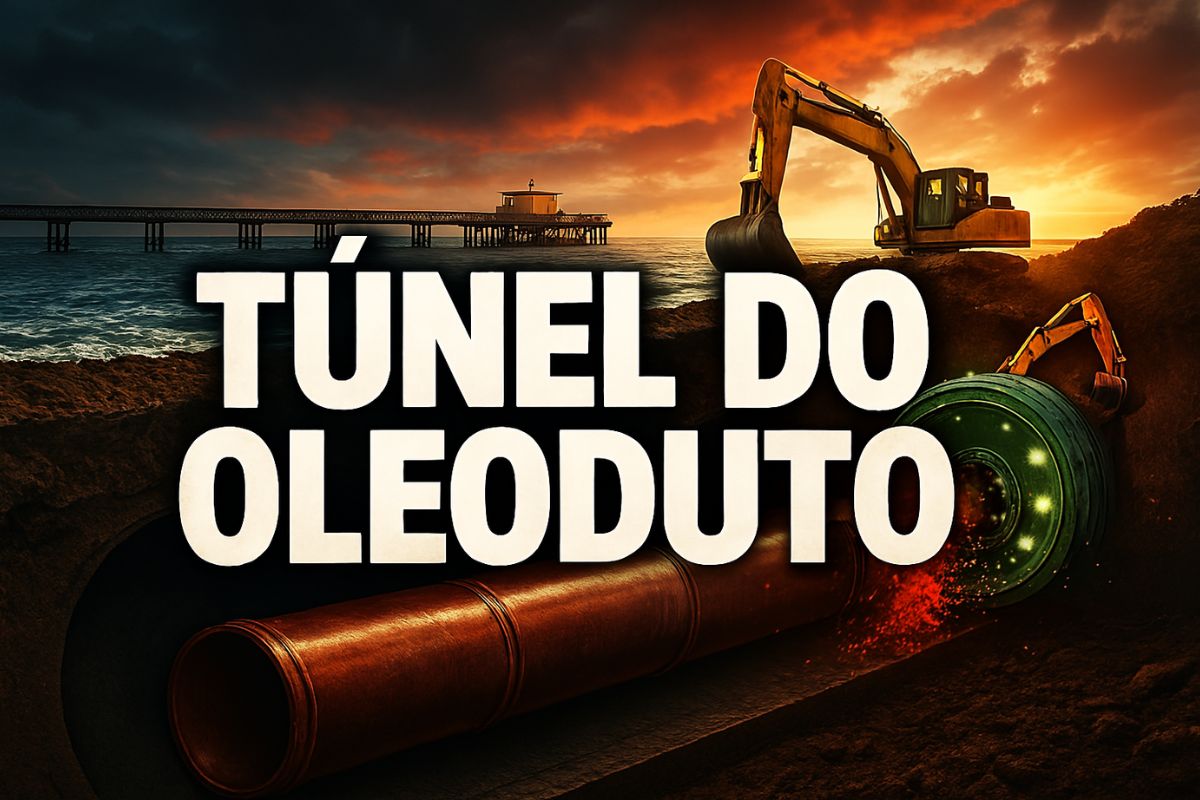
The Pipeline Tunnel of Line 5 Was Approved by the U.S. Army Corps of Engineers. The Structure Will Be Built Under the Straits of Mackinac, Between Lakes Michigan and Huron, Aiming to Replace an Old Stretch and Avoid Environmental Risks. A Brazilian Company May Participate in the Work.
The controversial Line 5 pipeline tunnel, operated by Canadian Enbridge, has just received the green light from the U.S. Army Corps of Engineers, taking a decisive step toward becoming a reality. Construction will occur about 30 meters below the bed of Lake Michigan, over a stretch of 7 kilometers, and its mission is to replace a pipeline segment over 70 years old, which still transports around 540,000 barrels per day of oil and natural gas between Canada and the United States.
The project is considered one of the most delicate and important in the Great Lakes region, and may go down in history as a solution to engineering that balances energy security, critical infrastructure, and environmental pressure.
What Is Line 5 and Why Does the Pipeline Tunnel Matter?
Line 5 is one of Enbridge’s main pipelines, crossing the Canada-U.S. border and serving a large part of the central-northern U.S. region with petroleum derivatives such as gasoline and propane. In Michigan alone, more than half of the propane consumed comes from this system.
-
Say Goodbye to Warped Wooden Decks: Composite Flooring Made from Recycled Plastic and Sawdust Offers a Low-Maintenance Outdoor Solution

-
Forget the mansions: the Casa de Mainha, a low-cost renovation in the Agreste of Pernambuco with natural ventilation, won the world’s largest architecture award with over 120,000 votes.

-
Couple trades four-bedroom house in Canada for a retired school bus costing less than $7.5k bought on Facebook, dismantles the vehicle down to the screws, and transforms the yellow scrap into a luxury home on wheels, with a bedroom, bathroom, kitchen, and handmade skylight.

-
Tired of seeing residents sleeping on the streets, a U.S. city approved a village with 55 micro-houses, rent starting at $300, and an 1880 school transformed into a community center to accommodate people without requiring a minimum income.



The problem? A section of the line crosses the Straits of Mackinac, a sensitive and ecologically rich area, with a high risk of leaks. To avoid an environmental disaster and maintain fuel flow, Enbridge proposed the construction of a sealed and pressurized tunnel, where the new pipeline will be installed with protection against corrosion and external impacts.
Brazilian Participation in the Game
One of the candidates to execute the project is the Brazilian company Liderroll, specialized in the installation of pipes in confined environments. The company is already recognized for developing advanced systems for underground operations and can provide cutting-edge national technology for one of the largest energy infrastructure projects in the United States in the coming years.
Liderroll already operates in international markets and sees the project as a gateway to new partnerships in the North American energy sector.
Environmental Controversy and Impasse with Indigenous Communities
Despite the technical advancement, the pipeline tunnel remains surrounded by controversy. Environmental organizations and seven indigenous nations have withdrawn from the consultation process, citing a lack of dialogue and haste in approval. The government’s decision to expedite the license under the argument of “national energy emergency” has been criticized by groups advocating for the protection of sacred waters and territories in the region.
Still, Enbridge maintains that the tunnel will increase safety and dramatically reduce the risk of leaks, as well as maintain jobs and energy supply for millions of people.
When Does the Work Start?
With military approval already granted, the next step depends on additional state and environmental permits. Enbridge’s initial expectation was to start construction in 2023, but delays with public consultations and legal disputes may push the schedule to 2025.
The tunnel is expected to be excavated with high-precision tunnel boring machines, under controlled pressure, similar to the process used in major projects like the Eurotunnel or the North Ring Road of São Paulo. The estimated cost exceeds US$ 500 million.


Be the first to react!