






 Portuguese
  Spanish


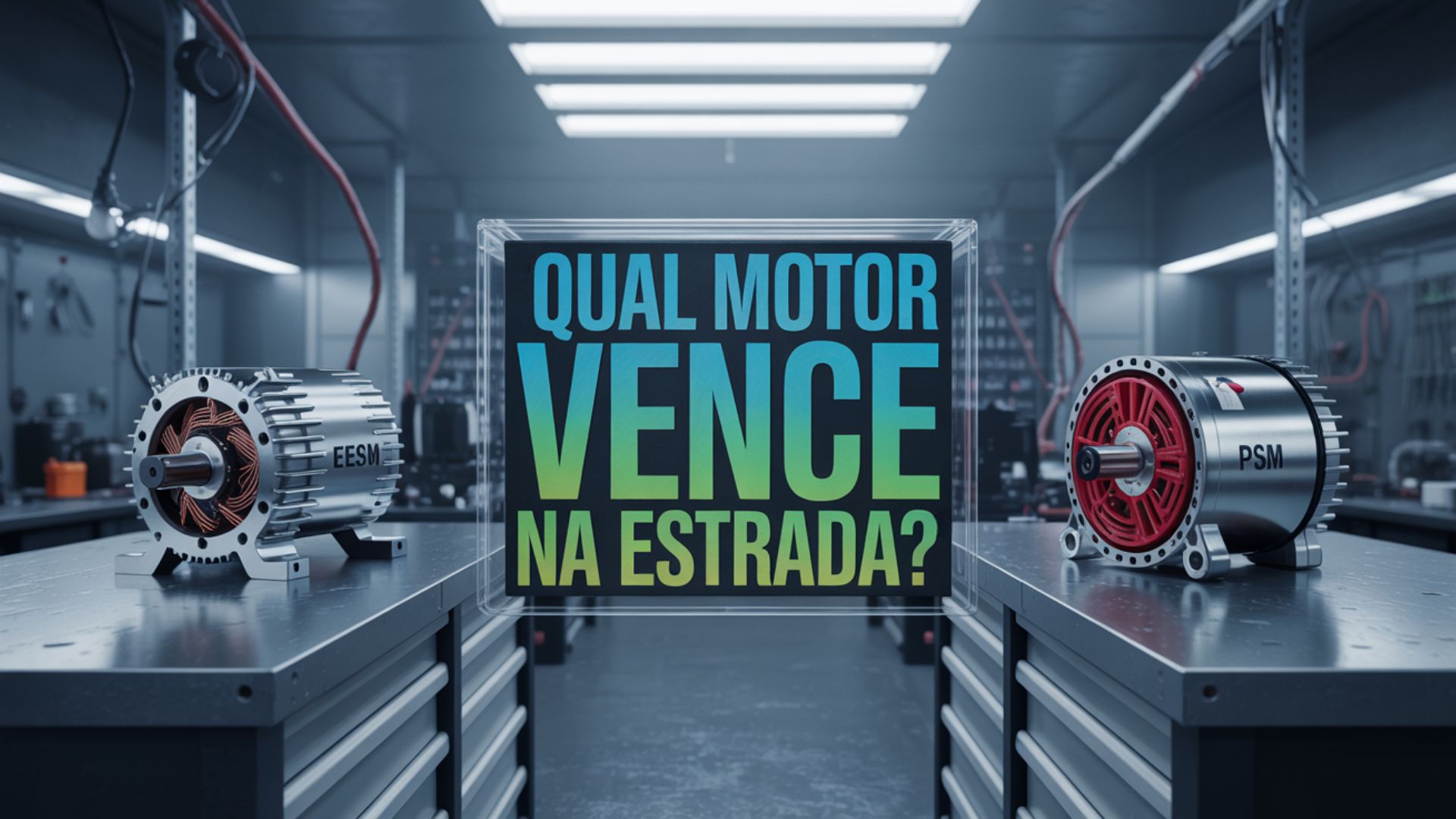

Comparison of Electric Motors Shows How the Absence of Magnets, the Use of Coils, and Efficiency at High Speed Can Alter Energy Consumption on Highways and Directly Impact the Range of Electric Vehicles.
The Electrically Excited Synchronous Motor (EESM) has a consumption advantage at high speed when compared to the Permanent Magnet Synchronous Motor (PSM).
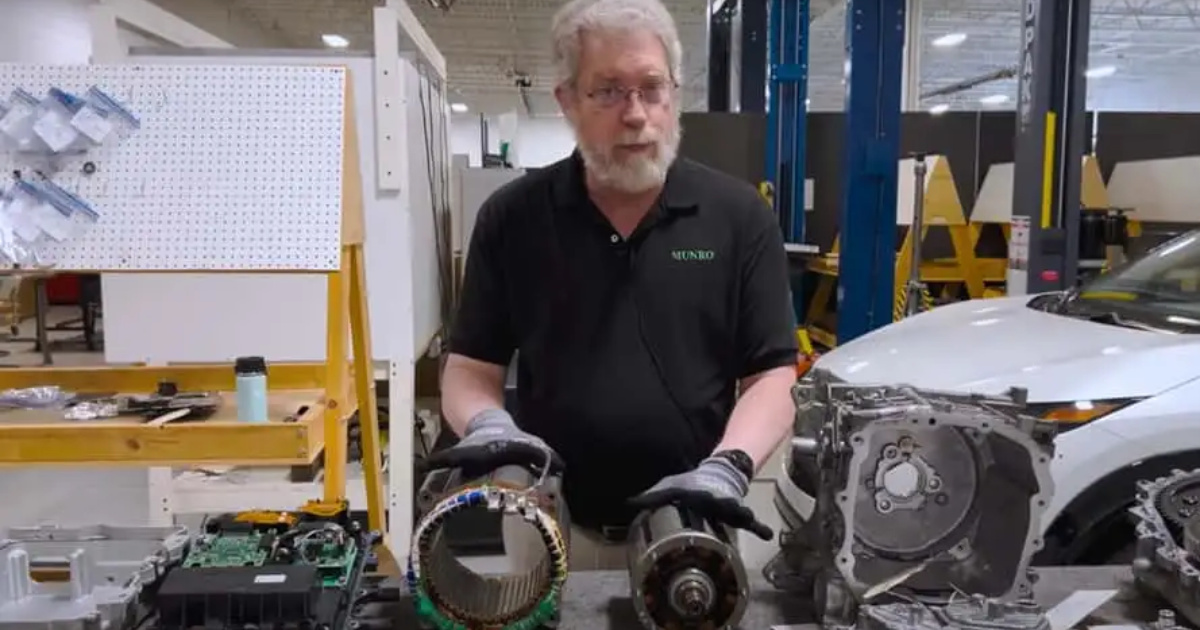
This assessment is highlighted by Paul Turnbull, an engineer at Munro Associates, as he analyzes the Nissan Ariya and explains how the architecture with a wound rotor, without rare earth magnets, behaves in highway conditions.
Difference Between PSM and EESM in Energy Efficiency
In urban routes, the efficiency of both types is usually high, with more noticeable gains for the PSM at low RPM.
-
2027 Toyota Corolla Cross Unveiled: New Design, Enhanced Fuel Efficiency, Reduced Maintenance Costs, Advanced Technology, Connected Services, and Up to 10-Year Warranty

-
Fiat Cronos Precision 2018: Affordable Sedan with Spacious Trunk and Reliable Maintenance
-
Volkswagen to Cut Production by 1 Million Cars by 2030, Reducing Jobs and Platforms, Focusing on More Profitable Models

-
Toyota Launches First 100% Electric Car in Brazil: bZ4X with 343 HP, All-Wheel Drive, 361 km Range, Priced at $419,990 BRL, Limited to 99 Units



On highways, however, the picture changes: according to Turnbull, the EESM consumes less energy to deliver the same power, favoring range on long trips.
The difference arises from how each motor creates the magnetic field in the rotor. In the PSM, the field is fixed thanks to permanent magnets.
In the EESM, the field is generated by electrically powered coils in the rotor itself. In the asynchronous motor, used on a smaller scale in recent electric cars, the field appears through induction.
Although all operate on the same principle — interaction between the magnetic fields of the stator and rotor — the method of excitation alters consumption as RPM increases.
Why the Highway Changes Motor Efficiency
At high speeds, the PSM faces the so-called induced counter field. As the rotor spins faster, the induced voltage in it — which cannot be directly controlled, as it comes from the magnets — creates opposition that the inverter needs to compensate with more current in the stator.
This increases electrical and thermal losses and, consequently, the energy expenditure of the system. In the EESM, the rotor field is adjustable.
The inverter can reduce the excitation of the rotor coils when the speed increases, preventing the system from “struggling” against an excessive magnetic field.
This control decreases the current needed in the stator, reduces losses due to the Joule effect, and improves efficiency precisely where consumption tends to be most critical.
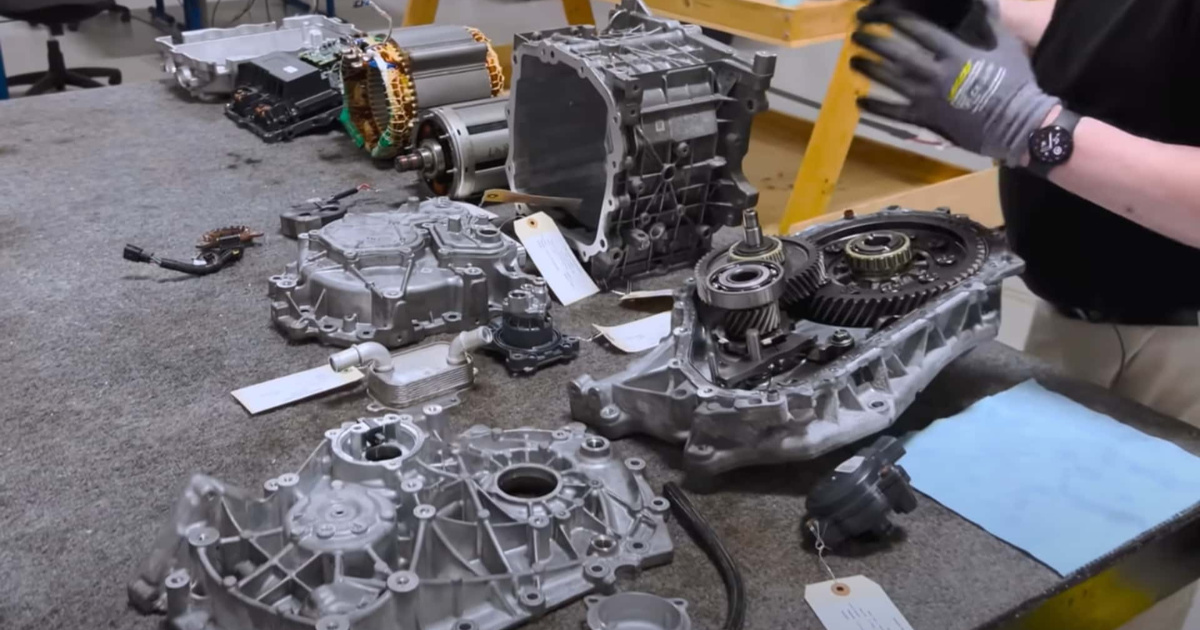
Internal Structure of the Electric Motor
Electric car motors share a basic structure. The stator is a hollow cylinder with winding that creates the rotating magnetic field.
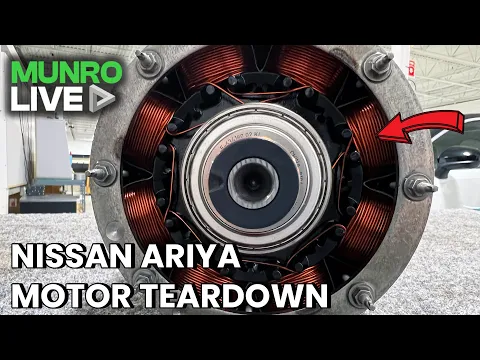
The rotor, positioned inside, follows this field and delivers torque to the shaft. In the Ariya analyzed by Turnbull, the EESM rotor has eight poles formed by copper coils.
As the rotor is in motion, the power supply to these coils happens through slip rings, a common solution when it is not possible to use fixed cables.
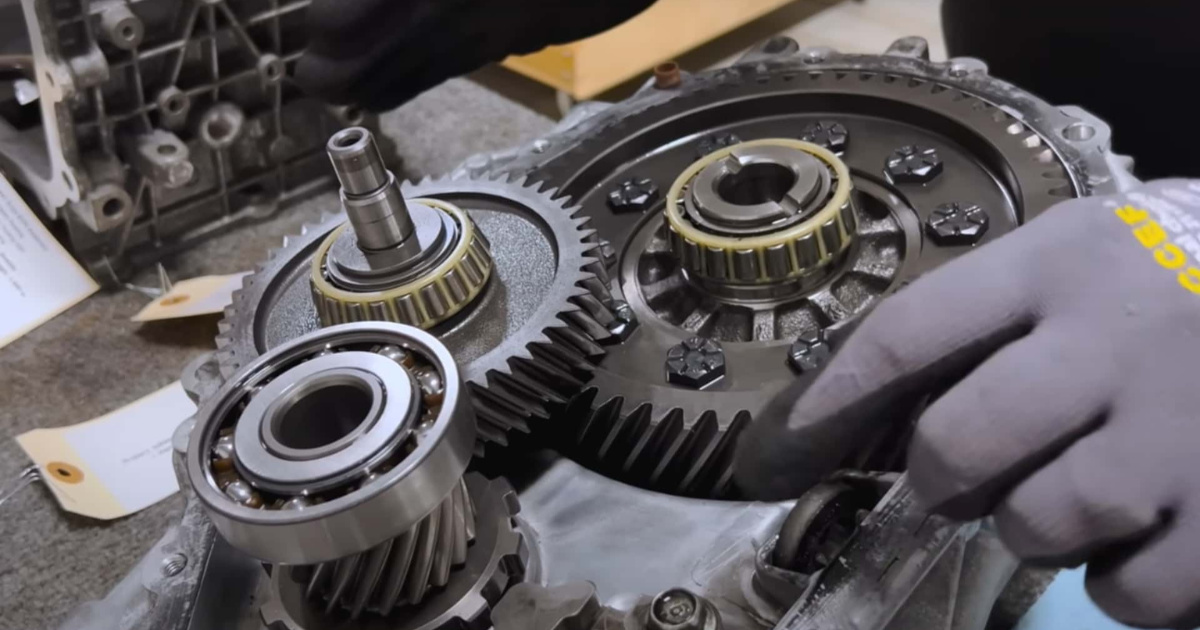
This architecture implies two distinct electrical consumptions: current in the stator to form the main field, and current in the rotor to excite the coils.
At first glance, this would suggest a higher expenditure than the PSM, which does not require energy in the rotor.
In real-world usage, however, the highway scenario favors the EESM because the ability to adjust excitation reduces the total system demand at sustained speeds.
Efficiency in the City and on the Highway
In urban stretches, with frequent stops and lower RPM, the PSM tends to be slightly more efficient.
The fixed field of the magnets offers high specific torque and immediate responses, useful traits at low speed.
On the highway, the advantage shifts to the EESM, whose rotor flow control avoids losses associated with the induced counter field. In practice, this translates to lower energy consumption at cruising and greater range per charge on trips.
Impact of the Absence of Rare Earth Magnets
Another relevant point is the independence from rare earth magnets. The EESM does not use neodymium or other elements whose supply chain is concentrated and subject to price variations, tariffs, and trade restrictions.
This choice reduces exposure to geopolitical risks and simplifies the disposal or recycling of the motor at the end of its life cycle.
Manufacturers That Use the EESM
In addition to the Nissan Ariya evaluated by Turnbull, the EESM appears in projects from different manufacturers. BMW, Renault, and Nissan itself adopt variations of the wound rotor in their electric families.
In some cases, such as in the all-wheel drive models of the Ariya, there are EESMs on both axes to distribute torque effectively.
In other instances, the solution combines a main EESM and a second motor reserved for temporary traction demands. In the Renault ecosystem, the wound rotor concept has been applied to compact and midsize models.
In the case of BMW, the focus is on integrated propulsion systems — motors, power electronics, and transmission — optimized to reduce losses at high speeds, a scenario where the EESM tends to perform best.
Range on Long-Distance Trips
Efficiency at cruising speeds is usually the most significant factor affecting range on trips, especially in countries with long highway connections.
If the powertrain can reduce the current required to maintain 100 km/h or 120 km/h, electrical losses decrease, and consumption in kWh/100 km improves.
This is precisely the range where the EESM, by being able to modulate the rotor excitation, gains an advantage over the PSM.
Additionally, thermal management operates with greater leeway when currents are lower.
Less heat means less operation of cooling systems and, therefore, more indirect savings, completing the cycle of gains achieved by active control of the magnetic flow.

Technical Differences and Consumer Choice
With increasingly technical vocabulary present in electric vehicle specifications, understanding the difference between PSM and EESM helps interpret promises of efficiency and range.
For those who mainly drive in the city, both provide good results.
For those who frequently face highways, the excited architecture tends to exhibit lower consumption at cruising speeds, especially when associated with modern inverters capable of rapidly and precisely adjusting excitation.
Meanwhile, the reduction of dependence on critical materials remains a strategic component for the industry, explaining the expansion of EESM in different brands and segments.
Paul Turnbull’s assessment, on the Munro Associates channel, shows in practice how the Ariya’s motor behaves under conditions that most impact travel range.
In Brazil, where road travel is common, understanding which type of motor offers better performance in each situation can help consumers and manufacturers plan the use of electrification more effectively.








