






 Portuguese
  Spanish


The Renault Kwid Zen 2026 Stands Out As One of The Cheapest Cars In Brazil, But Is The Maintenance Cost Also Advantageous? Check Out The Values Of Insurance, IPVA, Revisions, Consumption, And Parts.
The Renault Kwid Zen 2026 has arrived on the market reaffirming its proposal to be one of the cheapest new models available in Brazil. But how much does it cost to maintain this car in Brazil?
Always competing for space with the Fiat Mobi Like, the French hatchback stands out for its low starting price and mechanical simplicity, points that make it attractive for those seeking savings.
However, when considering the purchase of a car, the acquisition price is just the first step.
-
Looking for a Car for Dirt Roads? Fiat Uno, Strada, and Volkswagen Gol Offer Durability and Affordability

-
MG Motor to Produce Two Electric Cars in Brazil with $75 Million Investment, Creating 600 Jobs
-
Nissan Kicks S Direct 2018: Affordable Used SUV with Over 13 km/l Fuel Efficiency, 432-Liter Trunk, and CVT Automatic Transmission
-
Iconic Orange Double-Decker Bus, a Dutch Fan Favorite for Over 20 Years, Arrives in Texas for the World Cup After Touring Brazil, England, Qatar, and More


The real challenge is calculating how much it costs to maintain the vehicle throughout the year, taking into account fixed expenses such as insurance, IPVA, fuel, and revisions.
See How Much It Costs To Maintain The Renault Kwid Zen 2026
Technical Sheet: Modest Performance, But Sufficient
The Renault Kwid Zen 2026 comes equipped with a 1.0 flex three-cylinder engine, positioned at the front and with a compression ratio of 11.5:1.
It delivers up to 71 hp of power with ethanol at 5,500 rpm and torque of 10 kgfm at 4,250 rpm.
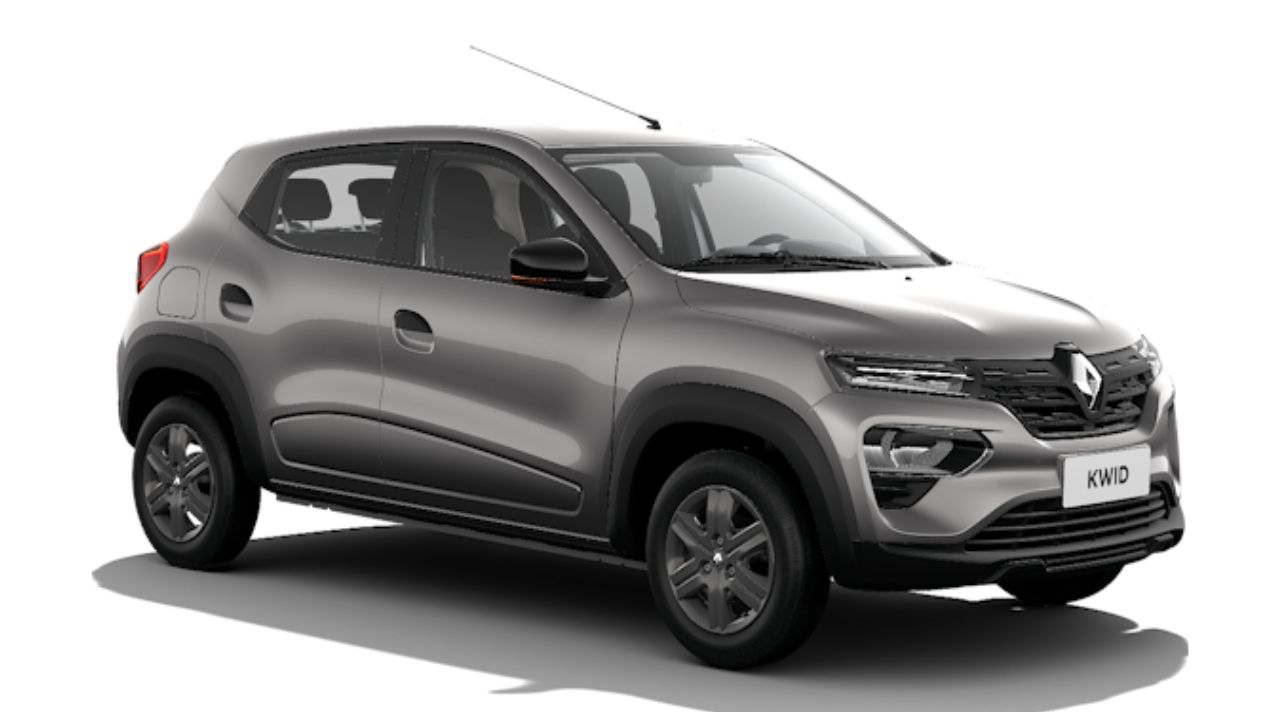
The performance numbers are not impressive, as the 0 to 100 km/h varies between 14 and 13.5 seconds, depending on the fuel.
The top speed is around 152 km/h with gasoline and 156 km/h with ethanol. Despite its simplicity, the set is sufficient for urban use, which is precisely the focus of this model.
The manual five-speed transmission reinforces the proposal of low cost and cheaper maintenance.
Insurance: An Expense That Weighs On The Wallet
The insurance is one of the points that vary the most according to the driver’s profile. For the Kwid Zen 2026, the survey considers male and female drivers over 30 years old and married.
The values show a significant difference between genders: for men, the average annual cost reaches R$ 3,748.93, while for women the value drops to R$ 2,088.
This difference is explained by the calculations of insurers, which take into account statistics of claims and risk profile.
For many drivers, the insurance cost ends up being almost as relevant as the spending on fuel throughout the year.
IPVA: Advantage Of Being Among The Cheapest Cars
The IPVA, calculated based on the Fipe Table, is another fixed expense that should be included in the calculation.
Since the Kwid Zen is one of the most affordable vehicles in the country, the tax is relatively low compared to medium and large models.
Using the 4% rate, which corresponds to the value practiced in states like Rio de Janeiro, São Paulo, and Minas Gerais, the owner of the Kwid Zen 2026 pays around R$ 2,884.
This cost is yet another attraction for those looking for a new car without committing too much of their annual budget.
Fuel Consumption: One Of The Model’s Strong Points
When it comes to energy efficiency, the Kwid Zen shows why it is considered an economical car.
According to data from Inmetro, it achieves averages of 10.4 km/l in the city and 10.8 km/l on the highway with ethanol. With gasoline, the numbers rise to 14.6 km/l in the city and 15.5 km/l on highways.
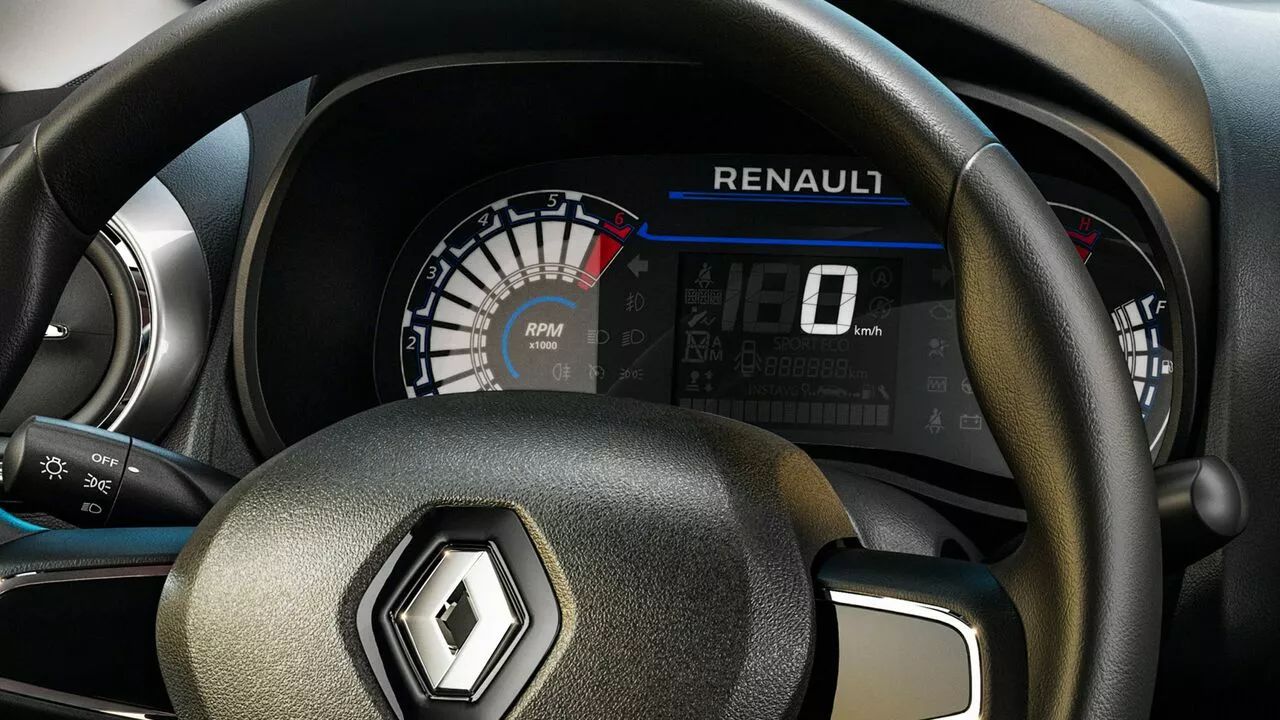
In a simulation of 15,000 km traveled per year, with 70% in urban areas, the average annual expenditure reaches R$ 6,329.57 with gasoline and R$ 6,346.96 with ethanol, according to average prices from the National Agency of Petroleum (ANP).
This means that even with high fuel prices, the Kwid remains competitive in terms of economy.
Revisions: Accessible And Predictable Schedule
Another important point is the revision plan. The Kwid Zen 2026 presents relatively low values, with the first revision costing R$ 604.63 at 10,000 km.
The next two revisions are priced at R$ 673.89 each, while the 40,000 km revision goes up to R$ 1,041.79. The 50,000 km revision returns to an intermediate value of R$ 743.16.
The predictability of costs is a positive factor, as it allows the owner to better plan their annual budget.
Parts Basket
Although it is an entry-level car, the Kwid does not escape the high prices of original parts in Brazil.
A headlight, for example, costs R$ 961.18 each. The front bumper costs R$ 817.64, while the rear one costs R$ 494.69.
A rear light has an average price of R$ 315.28 and the side mirror is around R$ 711.02 each.
These values show that, in the event of collisions or repairs, the owner may face relatively high costs, even in a car with an affordable proposal.
How Much It Costs To Maintain The Renault Kwid Zen 2026 Per Year?
Adding insurance, IPVA, fuel, and revisions, the annual cost of maintaining the Renault Kwid Zen 2026 reaches R$ 13,567.13 for men and R$ 11,906.20 for women.
This difference is mainly due to the cost of insurance.
Although it is not the cheapest car in the market in terms of maintenance, it positions itself as a solid alternative for those seeking savings and predictability in expenses. The values were estimated according to a piece from MobiAuto in June, therefore, some prices may have undergone adjustments.


