






 Portuguese
  Spanish


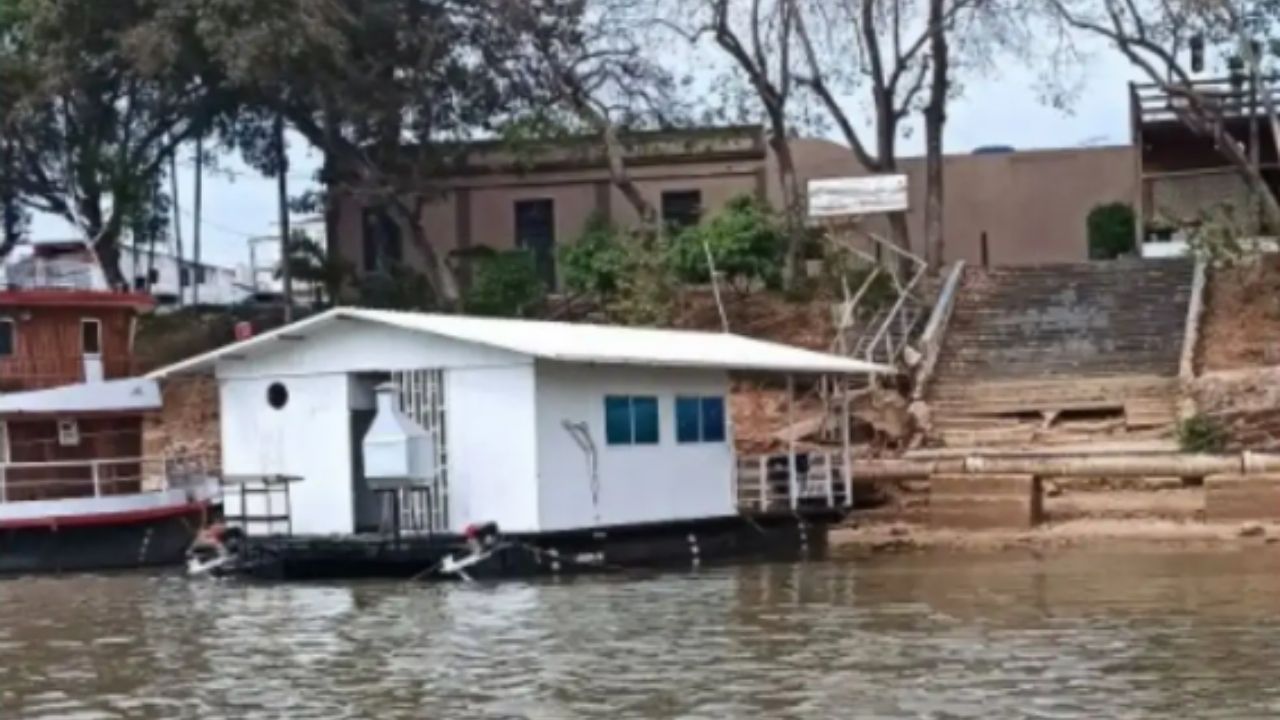
Built by Aristonil Coelho da Costa and Celiane Jesus da Silva, professional fishermen from Cáceres, the floating house has four bedrooms, accommodates 16 people, has a septic tank, leisure area, barbecue, and solar energy, according to Primeira Página, in a report published on January 7, 2025, about the project.
The floating house built by Aristonil Coelho da Costa and Celiane Jesus da Silva, professional fishermen from Cáceres, 220 kilometers from Cuiabá, attracted attention after going viral on social media. The structure took four years to complete and was presented by Primeira Página on January 7, 2025.
The project stemmed from the couple’s desire to live on the Paraguay River and took shape as a vessel equipped with engines, bedrooms, kitchen, social bathroom, barbecue, leisure area, solar energy system, and required documentation for navigation. The publication sparked curiosity because it combines housing, leisure, and mobility in a structure outside the common standard of a house.
House on the river was built by professional fishermen

Aristonil and Celiane have been married for 17 years and live in Cáceres, a city in Mato Grosso marked by a direct relationship with the Paraguay River. According to Primeira Página, the two work as professional fishermen and decided to turn the idea of a navigable dwelling into their own project.
-
While the World Opens New Airports and High-Speed Trains, Brazil Rushes to Complete Projects Stalled for 40 Years

-
Brazil Invests in Massive Waterway to Transport Soybeans by Barge, Reducing Costly Truck Reliance
-
Bridge Rebuilt in Just One Year Reconnects Two Brazilian States
-
Custom Furniture Costs in Brazil Expected to Range from $350 to Over $1,450 per Square Meter by 2026, with Kitchens, Closets, and Laundries Highlighting the Impact of Premium Features


The construction of the floating house was not outsourced as a ready-made project. Aristonil stated that he assembled the structure with the help of an assistant and that the experience accumulated in welding and mechanics contributed to the execution. This detail helps to understand why the project combines housing, vessel, and practical navigation solution.
Four years until the house was ready
The couple took four years to complete the structure, as it was done gradually until it reached its current form.
The delay is linked to the level of finish and the functions gathered in the vessel. The floating house was designed to accommodate people, navigate, and offer a structure for permanence, which requires more than a simple platform on the water.
Structure has bedrooms, kitchen, and leisure area
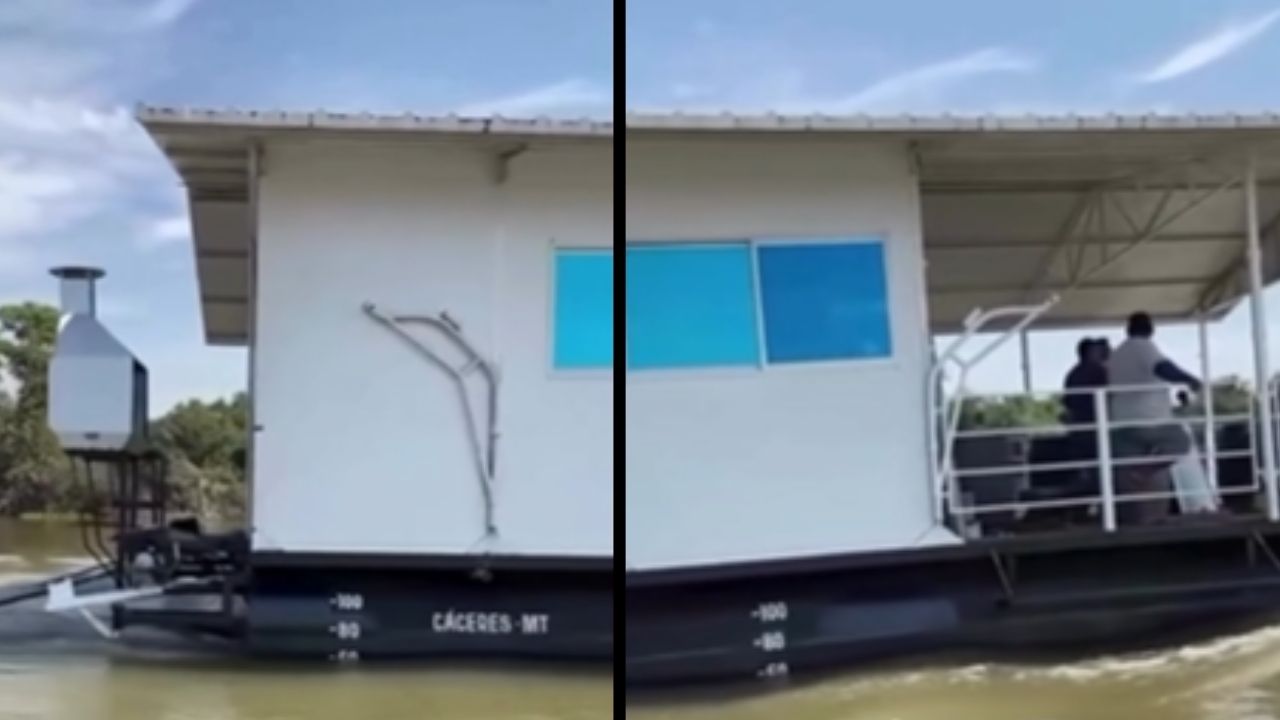
According to Aristonil, four bedrooms were built with the capacity to accommodate 16 people. The vessel also has a social bathroom, kitchen, front area, and barbecue, elements that bring the structure closer to a leisure house.
In the video that circulated on social media, internet users highlighted precisely the size and appearance of the construction. The presence of a balcony, barbecue, and structured rooms was one of the points that most sparked comments and questions about how the house worked in practice.
Motors allow movement through the water
One of the project’s differentials is the presence of motors. The structure is not just a stationary house on the river: it was conceived as a vessel, with the ability to move through the water.
This point explains part of the impact on social media. The idea of a floating house that can navigate arouses curiosity because it mixes characteristics of a residence, boat, and leisure space, especially in a region where the river is part of the local routine.
Solar energy was included in the vessel’s composition
The report informs that the structure includes a solar energy system. The source text does not detail power, number of panels, or autonomy, so the data should be treated only as a component of the project, without technical extrapolations.
Even so, the presence of solar energy reinforces the attempt to make the vessel more functional during use. In structures on the water, self-supply and operation solutions are decisive for enhancing comfort, safety, and permanence.
Septic tank answered the questions of internet users
After the video went viral, one of the main questions from the public was about waste during the trips. Celiane explained to Primeira Página that the floating house has a septic tank.
She also informed that the trash is stored in bags and disposed of upon return, using household collection and selective collection for cardboard, cans, and glass bottles. The explanation was important because the relationship with the Paraguay River appears as a central part of the project.
Vessel underwent Navy inspections
Celiane stated that the house is regulated and has undergone several Navy inspections. According to her, during the inspection, the ecological aspect of the vessel is checked before it is cleared for navigation.
This fact differentiates the structure from an improvised construction. The floating house was presented as a documented vessel, with formal requirements fulfilled to be able to navigate in the region.
Paraguay River appears as a setting and reason for the project
In Celiane’s speech, the Paraguay River does not appear only as a landscape. She stated that the couple loves the river and built something connected to leisure and joy, also highlighting the care for the environment.
The emotional relationship with the river helps explain the choice for a navigable house. Instead of a fixed dwelling on land, the project brings the couple’s routine closer to the water, movement, and the landscape that is part of life in Cáceres.
Interest in tours arose after the repercussion
Celiane said that initially, the structure was made for the couple’s use. However, after the repercussion, there were interested parties in renting the vessel and seeking tours.
The source does not provide information on prices, schedule, hiring rules, or commercial operation. Therefore, the data should be presented with caution: there is public demand and interest, but the report does not detail a structured tourist service in operation.
Viralization came from the mix of house and boat
The social media post caught attention because the structure breaks the common image of a traditional house. It has bedrooms, a barbecue, a leisure area, solar energy, and engines, but it is on the water and can navigate.
This combination explains the reaction of internet users. Many comments stemmed from the curiosity of seeing a construction that looks like a house, functions as a vessel, and even allows for imagining trips on the river.
Project enhances tourism and leisure potential in Cáceres
Cáceres already has a strong connection with the Paraguay River, and the floating house fits into this context as a leisure structure with visual appeal. The demand for trips shows that the idea sparked interest beyond the family.
Even so, the case should not be treated as a consolidated tourist venture without source data. The confirmed point is that the video went viral, generated curiosity, and led people to inquire about the possibility of using the vessel for trips.
A house that also needs to follow rules
The case shows that building on water requires more than creativity. When the structure navigates, documentation, inspections, safety, waste disposal, and environmental responsibility come into play.
Celiane’s talk about the septic tank, stored trash, and Navy inspections helps to show that the house was not presented merely as a curiosity. It also depends on rules to function as a vessel in a sensitive area like the Paraguay River.
Housing, navigation, and leisure in the same project
The house built by Aristonil and Celiane combines elements of housing, a boat, and a leisure area. Four bedrooms, kitchen, bathroom, barbecue, engines, and solar energy transform the project into something different from a common vessel.
The floating house attracted attention precisely because of this combination. It is not just an adapted boat nor a conventional house: it is a hybrid structure, designed to be on the river and offer permanence, movement, and interaction.
A project that went from dream to vessel
After four years of construction, the house of Aristonil and Celiane began to circulate on social media and became a topic due to its scale, finish, and function. What started as the couple’s project now attracts curiosity from people interested in visiting or taking trips.
The floating house of Cáceres shows how an idea linked to the Paraguay River can unite housing, leisure, solar energy, environmental care, and regulation. Would you live or spend a weekend in a house that sails? Leave your opinion in the comments.


