






 Portuguese
  Spanish


After about 7 months stuck in permits, volunteer Gurunandan Rao gathered his team and resurrected an abandoned lagoon in Bengaluru, India, in a single 24-hour journey. The environmental recovery almost doubled the water capacity of the site and brought back birds like kingfishers and herons.
The hardest part of saving a lagoon was not the manual labor, but the paperwork. In Bengaluru, southern India, volunteer Gurunandan Rao spent about 7 months trying to unlock permits and authorizations to recover a dead lagoon, suffocated by trash and sludge. When the green light finally came, the work itself was done in a single 24-hour journey. The story was reported by The Better India.
The result appeared quickly. According to the report, the team started the work at dawn, around 2 a.m., and in 24 hours the lagoon was reborn: the environmental recovery almost doubled the water capacity of the site. The proof of life came soon after, with the return of birds like kingfishers and herons to the area.
The 7 months stuck in permits
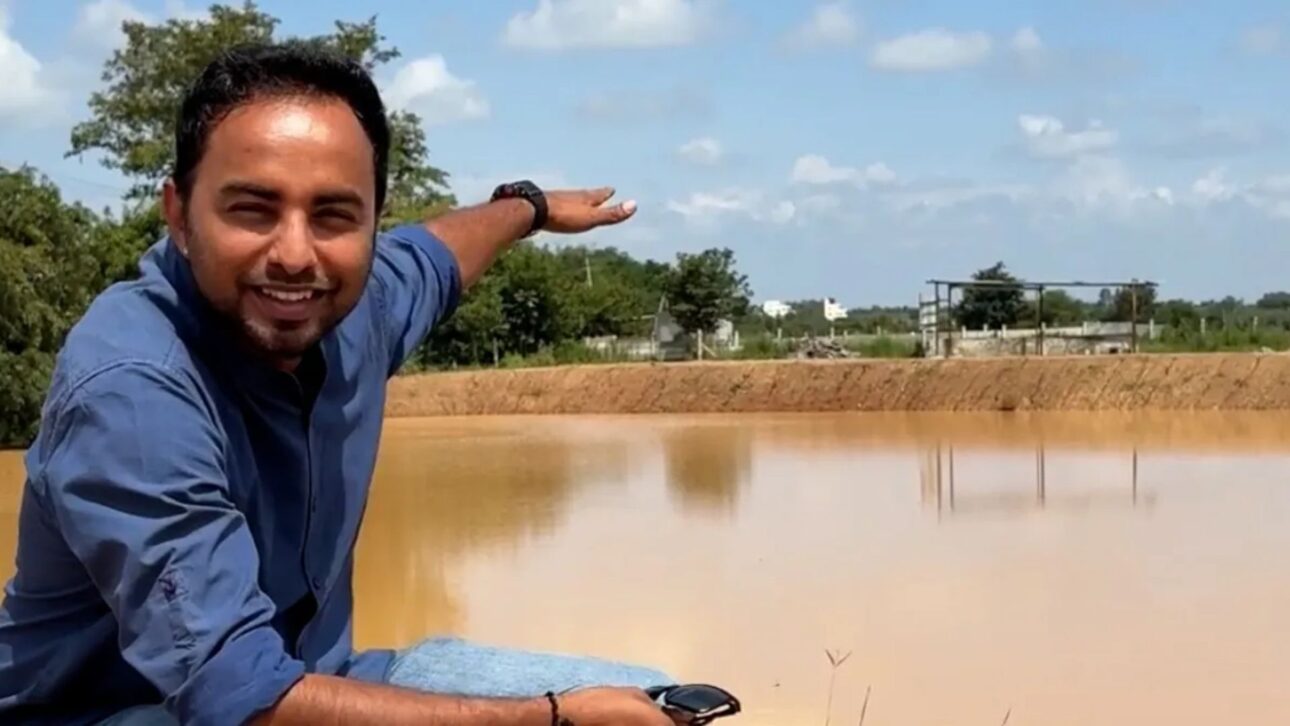
The delay was not due to a lack of will, but rather of stamps. Before moving a single shovel, Gurunandan Rao and his team spent about 7 months chasing permits, talking to government agencies, mobilizing residents, and resolving encroachments around the lagoon.
-
1909 Train Car Once Destined for Abandonment Transformed into Luxury Accommodation in the U.S. After $3,000 Restoration

-
86-Year-Old Brazilian Man Starts Homemade Bread Business After Learning from TV Recipe

-
Drivers Struggle with Mud on Amazon Highway as Truck Skids and Blocks Road During Rainy Season
-
Former Brazilian street cleaner overcomes challenges to become a lawyer, now advocates for workers’ rights.



It was the slowest and most exhausting phase of the entire project.
This is a common obstacle in environmental actions. Recovering a public water body requires authorizations from various instances, and any pending issue stalls the entire work. For a volunteer, maintaining morale during months of bureaucracy is almost as difficult as the heavy work that follows.
The contrast is what gives strength to the story. Seven months of paperwork for 24 hours of work show where the real bottleneck of environmental recovery lies: not in the technique, but in the clearance.
When the bureaucracy finally got out of the way, the transformation of the lagoon was almost immediate.
The Dead Lagoon of Bengaluru
The initial scene was one of neglect. The lagoon, locally known as Bikkanahalli, was choked with sludge, trash, and years of neglect, to the point where it practically no longer held water.
From a living body of water, it had turned into a stagnant deposit, useless to the neighborhood and the fauna.
The problem is bigger than just one lagoon. Bengaluru was once known as the city of lakes, but uncontrolled urban growth dried up and polluted much of these water bodies in India.
Each lost lagoon means less water available and more risk of flooding and drought for the population.
That’s why recovering a lagoon is so important. Bringing life back to an urban body of water directly addresses the city’s water crisis, restoring a natural reservoir that helps replenish the groundwater.
Gurunandan’s choice of that dead spot had, therefore, a clear target: water.
The 24 Hours That Changed Everything
When it was cleared, it was a single sprint. According to The Better India, after months of stagnation, the volunteer concentrated all the physical work into a single journey of about 24 hours, starting in the early morning, around 2 a.m.
The rush made sense: to take advantage of the authorization window and the concentrated effort of the team.
The work involved removal and deepening. Removing the sludge and accumulated debris from the bottom, excavating and cleaning the basin were the tasks that, done in a block, restored the lagoon’s capacity to hold water again. It was intensive environmental recovery, against the clock.
Concentrating everything in 24 hours has its advantages. Bringing together machines, volunteers, and focus in a single effort reduces costs, avoids new pending issues, and creates a strong symbolic milestone.
The turnaround from a dead lagoon to a living lagoon in one day is the kind of feat that inspires other communities to try the same.
The Water Capacity That Almost Doubled
The number that sums up the success is that of the water. With the bottom cleaned and deepened, the lagoon began to store almost twice the amount of water it held before, according to the report.
More depth means more volume retained with each rain, and that changes everything for a region that suffers from water scarcity.
The gain goes beyond the visible water mirror. A full lagoon recharges the surrounding aquifer, helping nearby wells and springs and acting as a sponge against floods during heavy rain periods.
It is concrete water security for those living nearby.
This is the heart of well-done environmental recovery. It’s not just about making the landscape beautiful, but about restoring function to a body of water.
By almost doubling the lagoon’s capacity, Gurunandan’s work transformed a stagnant problem into a useful reservoir for the city.
The return of birds as proof of life
Nature gave the most beautiful verdict. Shortly after the work, kingfishers and herons returned to the lagoon, a sign that clean water brought back fish and insects and, with them, the chain of life that had disappeared.
When birds return, it means the ecosystem is breathing again.
These birds function as an environmental thermometer. Kingfishers only stay where there is water with fish, and herons seek healthy shores to feed.
Their presence is living proof that the environmental recovery did not remain on paper but actually reached the lagoon’s ecosystem.
More than decoration, it is an indicator of health. The return of fauna shows that the lagoon has ceased to be a dead point and has resumed its role in the urban environment.
For residents, seeing birds again over the water is the clearest translation that it was worth facing the 7 months of licenses.
A foundation that has already recovered 34 bodies of water
The case is not an isolated event. Gurunandan Rao works for the Hands On Foundation, an initiative that, over about eight years, has mobilized more than 11,000 volunteers and helped recover 34 bodies of water in India. The Bengaluru lagoon is just the latest example of a method that repeats itself.
The strength lies in citizen mobilization. Instead of waiting only for the government, the foundation organizes residents and volunteers to clean, dig, and care for the lagoons, proving that environmental recovery can originate from the community itself. It is ordinary people taking water as a collective responsibility.
In Brazil, the example fits like a glove. Many Brazilian cities coexist with degraded lagoons, reservoirs, and streams, suffocated by garbage and sewage, waiting for action.
The story of Bengaluru shows that, once bureaucracy is overcome, a volunteer task force can bring life back to a body of water in a very short time.
And you, do you know a lagoon that needs to be reborn?
The story of Gurunandan Rao proves that the greatest enemy of environmental recovery is sometimes the paperwork, not the work itself: it took 7 months of permits for just 24 hours of work that resurrected a dead lagoon in Bengaluru, India, almost doubled the water capacity, and brought back kingfishers and herons.
And you, do you know any lagoon, reservoir, or stream in your city that is dying from neglect and could be reborn with such an effort? Share here in the comments where it is and what you think most hinders the environmental recovery of these places in Brazil.


