






 Portuguese
  Spanish
  5 min of reading
  0 comments


City in Southern Minas gathers technical education, technology-based companies, and electronic production in an ecosystem known as the Electronics Valley, where professional training, industry, and innovation help explain the transformation of a small municipality into a national reference.
Santa Rita do Sapucaí, in Southern Minas Gerais, has established itself as one of Brazil’s main electronics hubs by converting an economy marked by agriculture into a technology, technical education, industry, and entrepreneurship ecosystem nationally known as the Electronics Valley.
With just over 40,000 inhabitants, the municipality gathers technology-based companies, startups, educational institutions, and innovation programs that manufacture and develop solutions used in telecommunications, electronic security, automation, software, electromedicine, and industrial equipment.
The city’s national prominence comes from the direct link between professional training, applied research, and local-scale industrial production, in a model that differs from traditional industrial districts by relying less on simple assembly and more on products with proprietary engineering.
-
Federal Police involved in the case to identify the person responsible for hacking the Civil Defense system, which sent ten false alerts, frightened residents of different capitals, and turned messages about real risks into notifications with “misanthropy” and even alien attacks.

-
Extreme drought causes ghost village to reappear at the bottom of the reservoir that supplies Athens, revealing houses, a school, and ruins swallowed since the 1980s as the lake shrinks and exposes the water crisis threatening the capital of Greece.

-
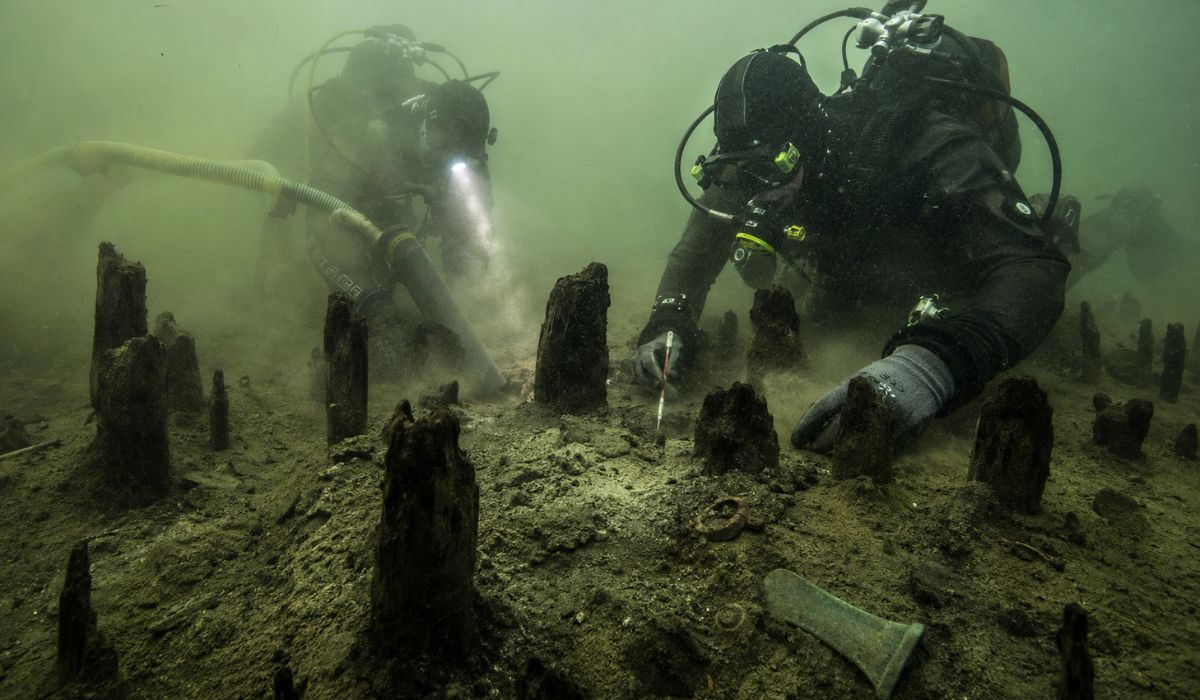
An entire village lay asleep at the bottom of a lake for 3,000 years: divers suction sediments in Italy and reveal more than 600 wooden stakes, bronze tools, and traces of a Bronze Age settlement hidden underwater.
-
They call it the “Shopee house” and even cardboard, but the R$ 20,000 house is a certified Wood Frame from Alea, financed by Minha Casa Minha Vida: understand if it’s worth more than masonry.



Electronics Valley was born from technical education
The economic change gained momentum in 1959 when the Francisco Moreira da Costa Technical School of Electronics, ETE FMC, began its activities in Santa Rita do Sapucaí at the initiative of Luzia Rennó Moreira, known as Sinhá Moreira.
Recognized as the first mid-level electronics school in Latin America, the institution formed the base of technicians that supplied the first local companies, at a time when the municipality still heavily relied on rural activities.
In the following decades, engineering and technology institutions, such as Inatel, expanded this educational base and helped create a continuous flow of professionals capable of designing, prototyping, and manufacturing electronic products within the city itself.
Between classrooms, laboratories, and factories, technical training began to circulate in an integrated manner, allowing students, teachers, technicians, and entrepreneurs to participate in the same production chain focused on innovation and hardware development.
Electronic production includes telecommunications, health, and automation
Within the local ecosystem, companies operate in electronics, industrial automation, telecommunications, software, digital security, electromedicine, and components, with production lines focused on boards, devices, sensors, transmitters, embedded systems, and high-complexity equipment.
Institutional sources and reports about the sector indicate that the city once played a significant role in the manufacturing of Brazilian electronic voting machines, especially during the period when production took place with companies installed in the local industrial hub.
This fact requires temporal precision, because the most recent production of new voting machines for the 2024 elections was completed in Ilhéus, Bahia, according to information released by the National Justice Council.
In the field of microchips, there is no confirmed evidence that Santa Rita do Sapucaí manufactures semiconductors on an industrial scale comparable to the national production concentrated at Ceitec, a federal state company located in Rio Grande do Sul.
Nonetheless, the municipality maintains a strong presence in projects, assembly, integration, and development of electronic products that use semiconductor components, in addition to companies related to tracking, security, connectivity, broadcasting, and medical equipment.
Numbers show the strength of the technology hub in Minas Gerais
According to Inatel, the Electronics Valley brings together more than 170 small and medium-sized companies in areas such as electronics, automation, telecommunications, software, and electromedicine, a scenario that helps explain the economic relevance of Santa Rita in the Brazilian interior.
A survey released by the Sebrae News Agency in Minas Gerais points to about 150 technology-based companies, 50 startups, and a production chain with approximately 17,000 items, including electronic components, software, and artificial intelligence solutions.
During the Fivel 2025, an industrial fair in the sector, data presented indicated that the region’s electronics market accounts for about 17,000 jobs, according to Sindvel, an entity representing local companies.
Instead of relying on a single segment, local production is distributed across niches ranging from broadcasting to the internet of things, including electronic security, industrial automation, and health technology.
Startups find support in incubators and technology fairs
The city’s innovation structure includes incubation programs and entrepreneurship support, such as Prointec, created to foster science, technology, innovation, and technology-based companies in Santa Rita do Sapucaí.
Through lines focused on incubation, post-incubation, acceleration of creative ventures, scientific and technological research, awards, and fairs, the program brings new businesses closer to educational institutions and the local productive sector.
It also serves as a showcase, the Fivel, an industrial fair in the Vale da Eletrônica, which brings together companies, universities, investors, and buyers around business, trends, and connections on the ETE FMC campus.
With this type of articulation, projects born in laboratories or technical courses can find clients, industrial partners, and paths to reach the market, strengthening the circulation of knowledge within the city itself.
Model differs from traditional industrial districts
The main difference between Santa Rita do Sapucaí and many conventional industrial districts lies in the origin of the production chain, as the mining hub was formed from local technical education and engineering.
In traditional models, factories may settle in a region attracted by tax benefits and leave the location when conditions change, while the Vale da Eletrônica relies on specialized labor, applied research, and an entrepreneurial culture.
This base accumulated over decades helps explain why a small city in the interior of Minas Gerais became a national reference in technology, with companies capable of developing their own products and maintaining ties with schools, colleges, and laboratories.
The recognition as Vale da Eletrônica was born from the combination of professional training, industry, and innovation, but the strength of the hub depends on the constant updating of its data and the distinction between current production, historical production, and technological projects in development.




Be the first to react!