






 Portuguese
  Spanish


In Venice, Tessitura Luigi Bevilacqua keeps a rarity alive: it produces soprarizzo velvet on 18 looms from the 18th century inherited from the old silk guild. The manual weaving is so meticulous that a weaver advances about 30 centimeters per day, at a pace the industrial world has forgotten.
In a world obsessed with speed, there is a place in Venice where time runs backward. There, after a whole day of concentrated work, an experienced weaver can produce only about 30 centimeters of fabric, just over the length of a school ruler. What seems like an absurd inefficiency is, in fact, the secret of one of the rarest and most coveted velvets on the planet.
According to Tessitura Luigi Bevilacqua itself, this extreme slowness is inseparable from the quality. The Venetian house produces soprarizzo velvet by hand, on 18 looms from the 18th century that belonged to the old silk guild of the Republic of Venice, keeping alive a technique that the modern industry has never managed to reproduce with the same soul.
30 centimeters per day: the time the world forgot
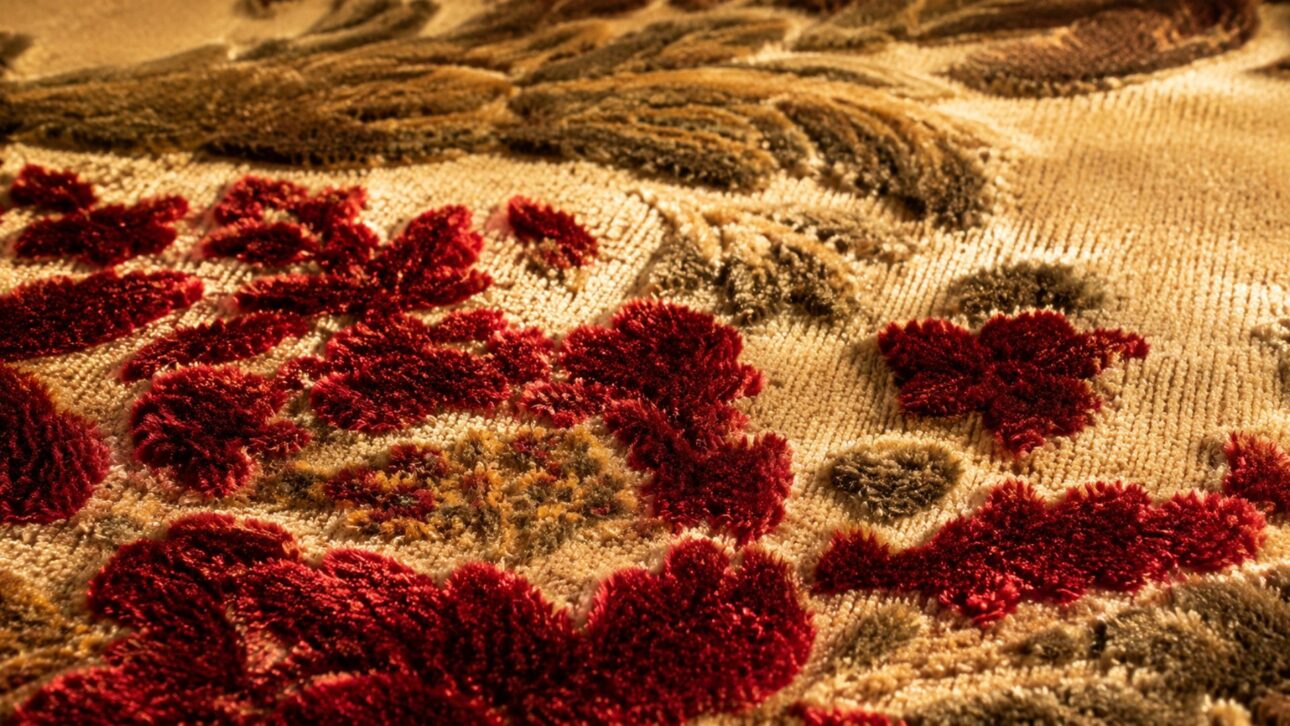
While an industrial machine spits out meters of fabric per minute, at Bevilacqua a day’s work yields only a few centimeters of soprarizzo velvet, a proportion that seems unthinkable in today’s economy. This slowness is not a defect to be corrected, but rather the very signature of the product, because each centimeter carries an amount of labor and precision impossible to speed up.
-
From Customer Service to Pipeline Welding: She Becomes the Second Female Welder in Utility’s History, Now Leading a Team in San Diego

-
Controversial 262-Meter Skyscraper in New York Blocks Empire State Building View, Offers 26 Luxury Apartments Priced Up to $18 Million

-
12-Year-Old Turns Childhood Drawings into a Sticker Brand, Earning $5,000 and Donating Part to Charity

-
Before “Ouviram do Ipiranga,” Brazil’s National Anthem Had a Sung Introduction Few Brazilians Know Today



It is this inverted mathematics that transforms the fabric into an object of absolute luxury. When production time is measured in centimeters per day, the result ceases to be a common commodity and becomes almost a textile jewel. Bevilacqua’s manual weaving accepts paying the price of slowness to deliver something that haste could never achieve, and it is precisely there that lies the fascination of soprarizzo velvet made on 18th-century looms.
The Tessitura Luigi Bevilacqua, from 1875
Behind the looms is a house with almost 150 years of continuous history. Tessitura Luigi Bevilacqua was founded in 1875, in the sestiere of Santa Croce, in Venice, and is considered one of the oldest weaving mills still in full operation in the world. Over generations, the company has specialized in the artisanal production of luxury fabrics, such as damasks, lampas, and above all, its emblematic soprarizzo velvet.
The memory of the house is as impressive as its looms. Bevilacqua holds an archive with more than 3,500 original designs, a collection that functions as a living library of patterns and ornaments accumulated over time. This repertoire allows the manual weaving to reproduce ancient motifs today with fidelity, linking the current work to centuries of Venetian textile tradition and making each piece a piece of history.
The 18th-century looms of the silk corporation
The heart of the factory is the machines that most places have long since retired. Bevilacqua operates with 18th-century looms, wooden equipment that belonged to the ancient silk corporation of the Republic of Venice, the institution that regulated the craft in the city when the textile trade was an economic powerhouse. Inheriting and keeping these 18th-century looms running is what gives the house an authenticity that no modern reproduction could simulate.
Operating such old machines requires knowledge that is also rare. Each 18th-century loom needs careful maintenance and weavers capable of understanding its delicate mechanics, a knowledge passed from person to person over generations. In Venice, keeping these looms alive means preserving not only the objects but all the engineering and human skill necessary to make them sing, something that is lost forever when one of these workshops closes its doors.
What is soprarizzo velvet
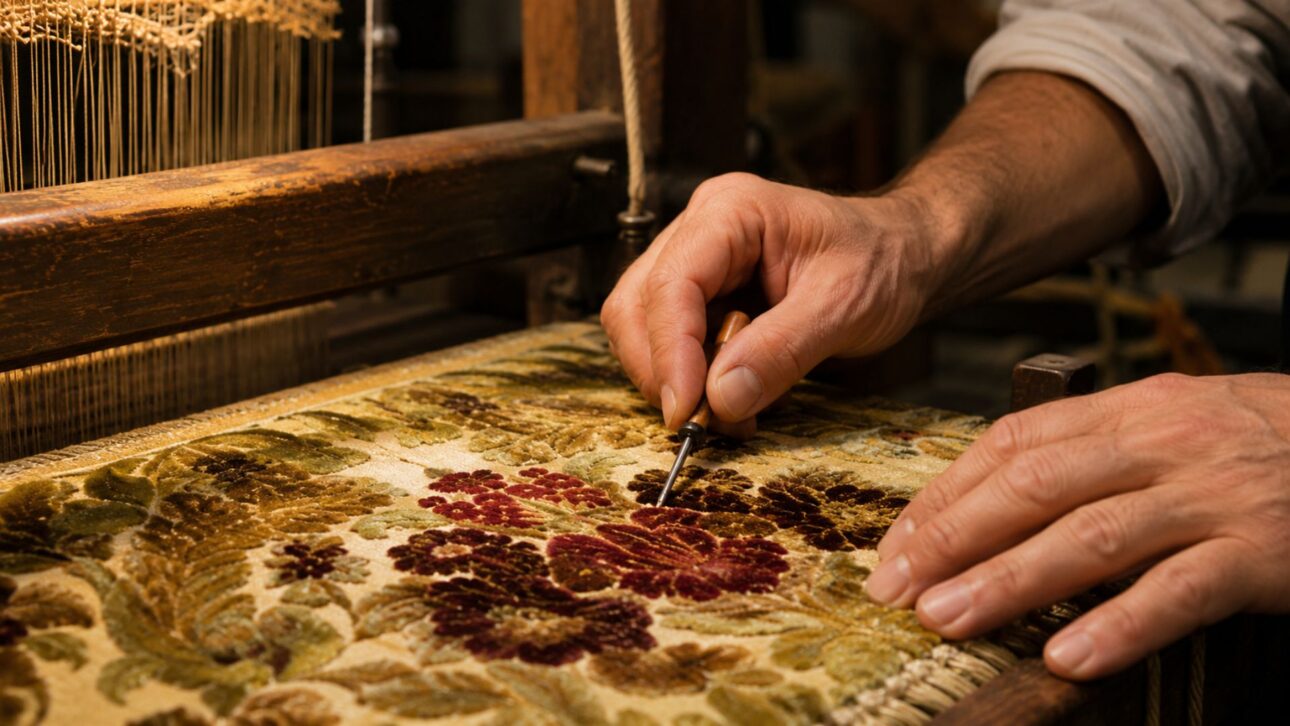
The soprarizzo velvet, also called cesellato, is considered a masterpiece of weaving because it combines, in the same fabric, two types of velvet: cut and curled. This alternation between the cut pile and the looped pile creates light and shadow effects that give depth and a sense of relief to the design, as if the pattern gains a third dimension.
This complexity places soprarizzo velvet in a separate category among luxury fabrics. Producing two different finishes simultaneously, in perfect harmony, is one of the most challenging tasks in manual weaving. The result is a robust and luminous fabric, used in upholstery, vestments, and sophisticated decorative pieces, justifying every hour invested in the 18th-century looms of Venice.
Why it takes so long: manual weaving step by step
The slowness has a precise technical explanation and is not a whim. In soprarizzo velvet, the weaver works with extra warp threads that are raised over thin rods or wires, forming loops that will later be partially cut by hand to create the characteristic relief. Each pass requires millimetric attention because a minimal error compromises the design, and it is this constant care that limits progress to about 30 centimeters per day.
Additionally, everything depends on human skill, not automation. Manual weaving cannot be rushed without compromising quality, as the precision of the cut and the regularity of the pile depend entirely on the craftsman’s hand and eye. This is why mastering this craft takes years, and why a master weaver from Bevilacqua is as valuable as the 18th-century looms he operates with such intimacy.
Here the loom never became a museum piece
There is a detail that differentiates Bevilacqua from so many industrial relics scattered around the world. In many places, century-old machines end up stopped, displayed behind a rope as museum pieces, admired but silent. In Venice, on the contrary, the 18th-century looms continue in daily commercial production, spinning and weaving for real, making the factory a rare case of heritage that still works instead of just resting.
This distinction is what makes the house so special in the global craft scene. It is not a historical reenactment for tourists, but a real operation that sells to demanding clients and receives visits by appointment. Keeping manual weaving active, and not frozen in a showcase, is what allows the soprarizzo velvet technique to remain alive, transmitted through the very act of working, and not just described on an explanatory plaque.
What the case of the 18th-century looms shows
The story of Bevilacqua is a celebration of patience and mastery, in a time that despises both. It shows how a factory in Venice manages to transform slowness into value, weaving soprarizzo velvet by hand on 18th-century looms and proving that not everything slow is delayed, sometimes it’s quite the opposite. Still, it’s worth keeping your feet on the ground, because this model only survives as a niche luxury: producing 30 centimeters per day makes the fabric extremely expensive and inaccessible for most, and the house depends on high-end clients and tourist interest to continue existing.
It is necessary, therefore, to read the case for what it is, without naive romanticism. The survival of this manual weaving is not proof that the industry is wrong, but rather a reminder that certain techniques are valuable precisely because they resist the logic of scale. Still, few examples summarize so well the price and beauty of doing things slowly: just 30 centimeters per day, from 18th-century looms, to keep alive in Venice an art that the rest of the world has traded for speed.
And you, would you pay more for a fabric knowing it takes an entire day of manual work to advance only 30 centimeters? Comment here if you think it’s worth preserving techniques like soprarizzo velvet or if they are doomed to become just museum curiosities.


