Portuguese
  Spanish


A $67 million project aims to transform Louisiana’s industrial waste into a strategic source of rare earths. The facility, operated by ElementUSA, plans to extract up to 1,000 tons per year of essential elements for technology and defense, strengthening the United States’ national critical minerals supply chain.
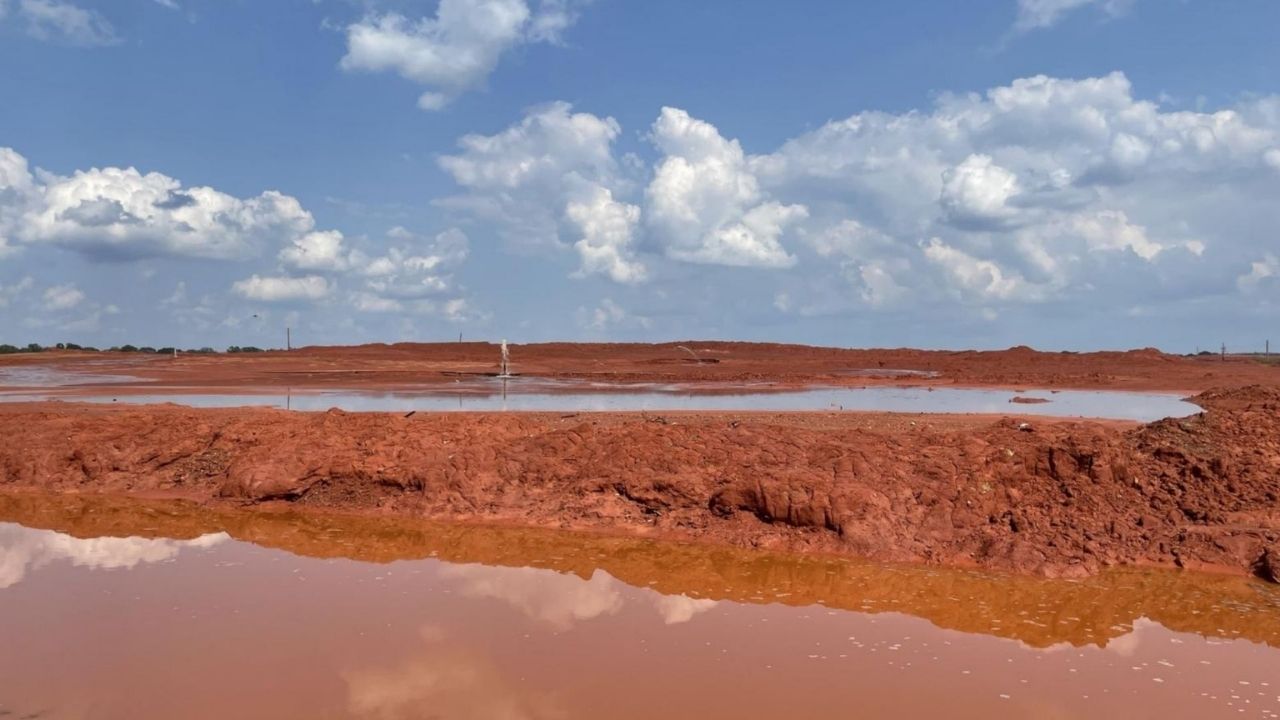
What seemed like just a mountain of industrial waste can turn into one of the United States’ most strategic assets. On the banks of the Mississippi River in Louisiana, red mud deposits accumulated from aluminum refining hold large quantities of rare earths, and a new project aims to recover this hidden treasure. The U.S. Department of Energy has granted $67 million to ElementUSA and the Colorado School of Mines to design, build, and operate a facility capable of extracting these valuable elements from the waste.
The initiative has a clear goal: to reduce American dependence on external suppliers and strengthen the national critical minerals supply chain. The facility, which will be located in Gramercy, Louisiana, will have the capacity to produce 150 to 1,000 metric tons of rare earths per year, transforming an underutilized environmental liability into a national strategic resource, with applications ranging from advanced manufacturing to defense systems.
The hidden treasure in the red mud
The raw material for this project is surprising: bauxite residues, known as red mud, generated by the alumina refining process. ElementUSA holds the exclusive rights to the waste from Atalco’s refinery in Gramercy, which accumulates more than 30 million tons of this mud on the banks of the Mississippi River. For decades, this material was treated only as industrial waste.
-
Ultrasound Body Scanner Promises Full-Body Mapping in 60 Seconds Without Radiation or Contrast, Enhanced by AI for a Faster, More Comfortable Preventive Exam Experience

-
In the US, researchers attached iPhones to a $25 grabber, turning 22 homes into a database to teach robots to open drawers and handle objects like humans.

-
IBM Breaks 1-Nanometer Barrier with 0.7 nm Chip Featuring Nearly 100 Billion Transistors and 3D Architecture, Promising AI Revolution

-
Apple Raises MacBook and iPad Prices as Memory Costs Surge by Up to 98%, Losing Edge Over Rivals and Highlighting AI Boom’s Impact on Consumers


What makes these residues so valuable is their polymetallic composition. They contain a high concentration, over 95%, of iron, rare earths, and critical minerals. Among the elements the project aims to recover are dysprosium, terbium, yttrium, gadolinium, neodymium, praseodymium, samarium, and lanthanum, names little known to the general public but essential for the manufacture of modern technologies. What was considered waste is now seen as a true open-pit mine.
Why rare earths are so sought after
Rare earths are at the center of a global dispute for strategic resources, and it’s no coincidence. These elements are indispensable for the production of semiconductors, energy systems, advanced manufacturing, and national security equipment. Without them, there are no smartphones, electric cars, wind turbines, or much of modern military technology.
The problem is that the supply chain for these materials is highly concentrated in a few countries, creating vulnerabilities for nations that rely on imports. This is precisely why the United States has been investing in alternatives to produce rare earths on its own territory. According to ElementUSA, the resource in Louisiana is so significant that it could supply between 45% and 385% of the annual American demand for critical minerals, a range that shows the enormous potential of the project.
How the recovery technology works
The differential of ElementUSA lies in its integrated process, which combines hydrometallurgical and pyrometallurgical techniques. This technology was designed to coproduce pig iron while simultaneously recovering a wide list of critical metals and rare earths, including scandium, gallium, germanium, yttrium, neodymium, titanium, vanadium, niobium, and tantalum, among others.
This ability to extract multiple elements from a single source brings important competitive advantages. Unlike mining projects focused on a single resource, the polymetallic approach offers lower production costs, diversified revenue sources, and greater resilience to price volatility.
Besides the main facility, the company is also developing a demonstration plant in Gramercy for the extraction of gallium and scandium, with additional funding of US$ 29.9 million from the US Department of Defense.
A partnership between industry and academia
The project combines the practical experience of ElementUSA with the technical knowledge of the Colorado School of Mines, one of the most respected institutions in the sector. Founded in 2021, ElementUSA specializes in transforming waste into products and creating processing infrastructure to recover minerals from primary and secondary sources.
The technical heart of this collaboration is the Critical Resources Accelerator, the company’s center located in Cedar Park, Texas, which covers all stages, from the laboratory to the pilot phase. It is there that process validation, product qualification, and scale-up occur, always in close partnership with the university. For the company’s CEO, Ellis Sullivan, the project represents a significant step towards a new national source of essential critical minerals.
A Billion-Dollar Bet for the Future
Although the initial funding is US$ 67 million, ElementUSA’s ambition is much greater. The company plans to build a large-scale commercial facility, with an estimated investment of about US$ 1.1 billion, capable of processing approximately 1 million tons per year. This shows that the Louisiana project is just the beginning of a much broader strategy.
The logic behind this bet combines economic gain with national security. By recovering strategic materials from industrial waste, the United States can simultaneously clean up an old environmental liability, generate value from what was discarded, and reduce dependence on foreign suppliers. It is the transformation of an environmental problem into a strategic solution, at a time when rare earths are becoming increasingly decisive for the global economy and defense.
What do you think about transforming industrial waste into a source of rare earths? Do you believe this type of project can change the global balance in the race for critical minerals? And should Brazil, which also has large reserves, invest in similar technologies? Leave your opinion in the comments and tag that friend who is passionate about science and technology!