






 Portuguese
  Spanish
  4 min of reading
  0 comments


Planetary Gears Reduce Engine Speed and Increase Torque Efficiently. Know Where They Are Used and How They Work in Practice.
The planetary gear is a key component in many industrial equipment. Its main role is simple, yet fundamental: to reduce the speed of an engine while simultaneously increasing the transmitted torque.
This balance between slower rotation and greater force allows machines to perform heavy tasks with precision and efficiency.
With a compact and intelligent gear system, the planetary gear is used in a wide range of industrial applications.
-
New Realme phones have a giant battery of up to 7,500 mAh, military-grade durability, Android 16, and an affordable price; meet the P4x and P4 Lite.

-
For the first time, researchers find the fuel of the first stars in galaxies formed only 700 million years after the Big Bang.
-
Silent invasion in the Amazon raises alarm: 82 exotic animals and 59 plants threaten native species, crops, and the forest’s balance, while authorities rush to prevent something worse caused by invasive species.

-
Scientists have created a material six times lighter than air, 75 times lighter than styrofoam, and that becomes stronger the more it is compressed: aerographite seems impossible, but it can reinforce structures, batteries, and satellites.





Understanding how it works and its benefits helps to clarify why it is so valued in sectors that require consistent and reliable performance.
How The Planetary System Works
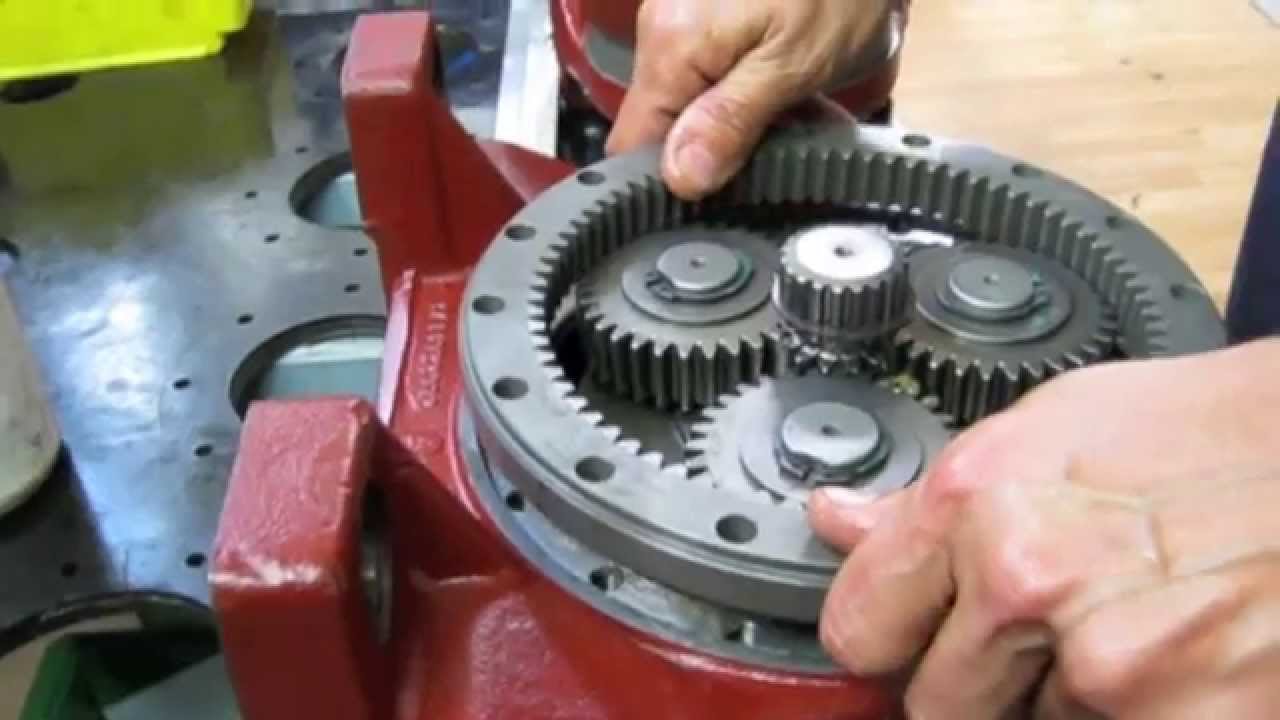
The operation of the planetary gear is based on a set of gears that work in harmony. At the center is the sun gear, which directly receives energy from the motor.
As it rotates, it moves the planetary gears around it. These smaller gears are connected to a support called the carrier, which keeps everything in place.
Surrounding these gears is a piece called the ring gear, which has inward-facing teeth.
This gear can remain fixed or rotate in the opposite direction, depending on the design of the gearbox. This arrangement provides a reduction in speed and a proportional increase in torque, all smoothly and continuously.
Uniform Load Distribution
One of the main advantages of the planetary gear is its ability to distribute load evenly.
Instead of concentrating force on a single gear, the system divides the effort among several planetary gears. This allows for bearing heavy loads without compromising performance or causing premature wear.
Additionally, the compact design of the gearbox makes it ideal for equipment that requires strength in a small space. Therefore, it is used in vehicle transmissions, heavy machines, winches, and many other industrial systems.


Main Components of The Reducer
The planetary gearbox consists of four basic elements, each with a specific function:
- Sun Gear: located at the center of the system and receives energy from the motor. Its rotation drives the other gears.
- Planetary Gears: rotate around the sun gear and transmit motion.
- Ring Gear: surrounds the planetary gears and defines the direction and rhythm of the reduction.
- Carrier: is the support that keeps the planetary gears in the correct position and allows their movement.
These components, combined, ensure efficient, durable, and adaptable operation in different industrial contexts.
Difference From Other Types of Reducers
What differentiates the planetary gearbox from other speed reducers is precisely its compact design and the way it transmits torque.
The circular arrangement of the gears allows for better use of space, in addition to providing greater power density. This means that the system can deliver more force with less volume, which is essential in applications where space is limited.
Practical Applications in Industry
Planetary reducers are present in various areas of industry. They are used in:
- Cane Diffusers
- Grinding Systems
- Rolling Mills
- Calenders
- Winches
- CNC Machines
- Transport Systems
- Packaging Lines
- Electric Vehicles
- Medical Equipment
The versatility of this type of reducer allows it to adapt to different operational demands while ensuring performance and durability.
Importance of Maintenance
Like any mechanical equipment, the planetary gearbox requires care. Well-planned maintenance increases its lifespan, prevents unexpected breakdowns, and reduces costs with emergency repairs.
Maintenance can be done either preventively or predictively. Preventive maintenance consists of periodic reviews, performed even without symptoms of failure.
Predictive maintenance uses sensors and technology to indicate the ideal time for maintenance, avoiding losses.
Lubrication as a Critical Factor
Lubrication is an essential step for the proper functioning of the planetary gearbox. The gears are in constant motion, generating friction.
Without adequate lubrication, this friction can cause accelerated wear, increased temperature, and even system failures.
The correct use of lubricants reduces friction, noise, and vibration, as well as helping with heat dissipation. Efficient lubrication is synonymous with a longer lifespan and more stable operation.
The planetary gearbox is much more than just a transmission component. It represents efficiency, economy, and reliability in industrial processes.
With a clever system of gears and proper maintenance, this equipment ensures constant productivity, fewer failures, and greater operational safety.






Be the first to react!